

 Slovenská verzia
Turnip
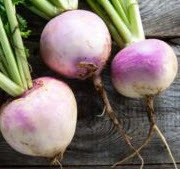
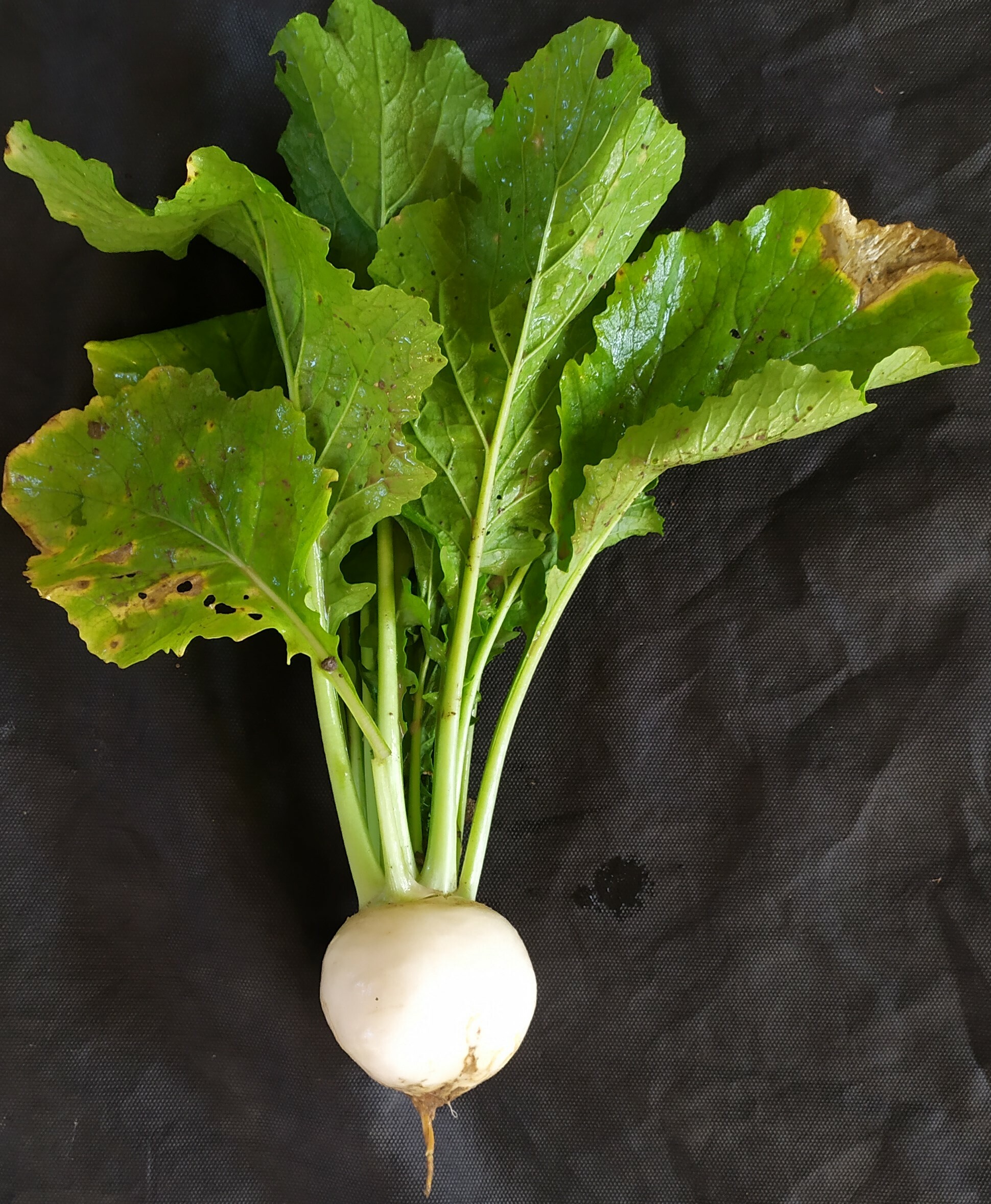
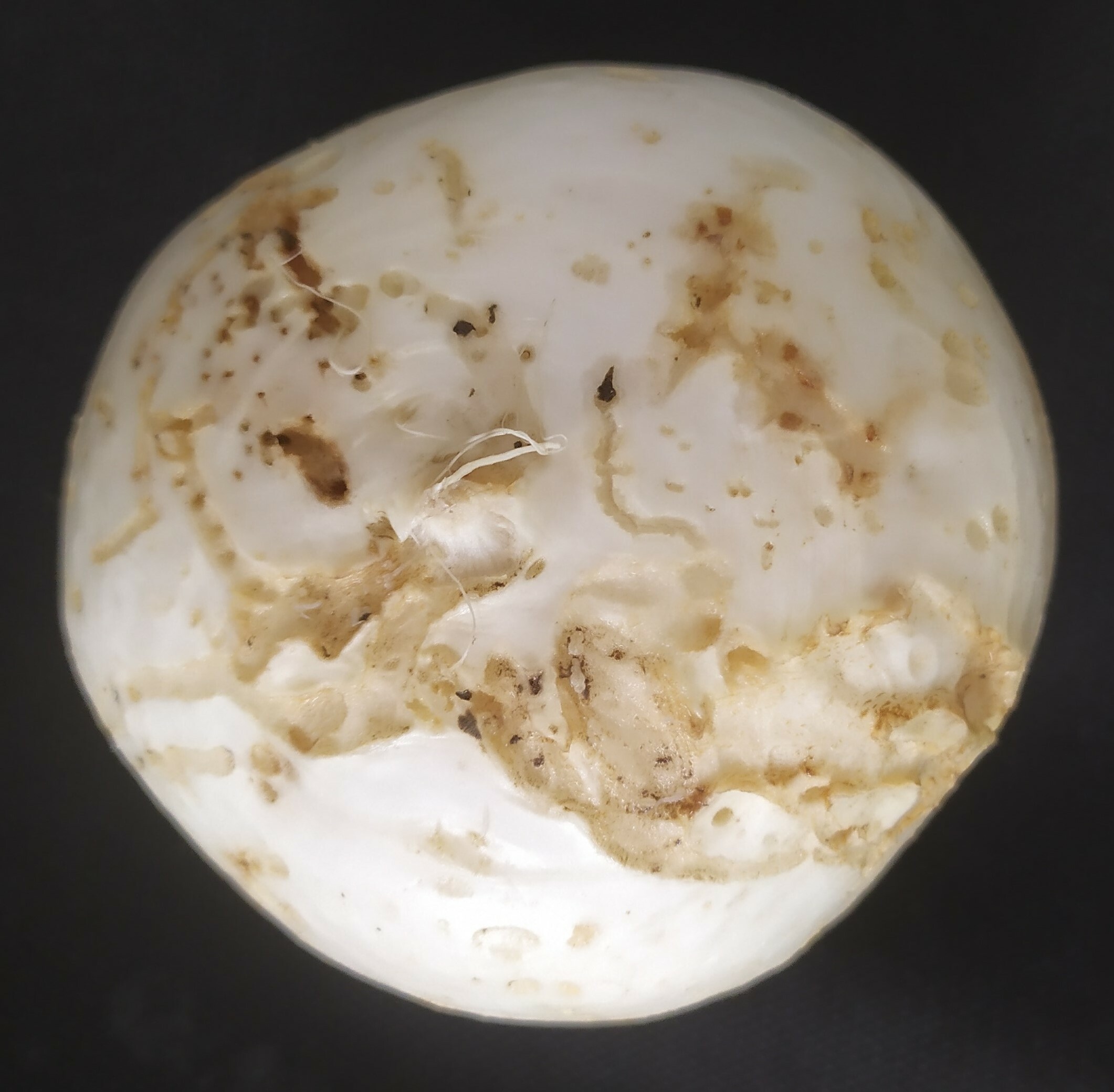
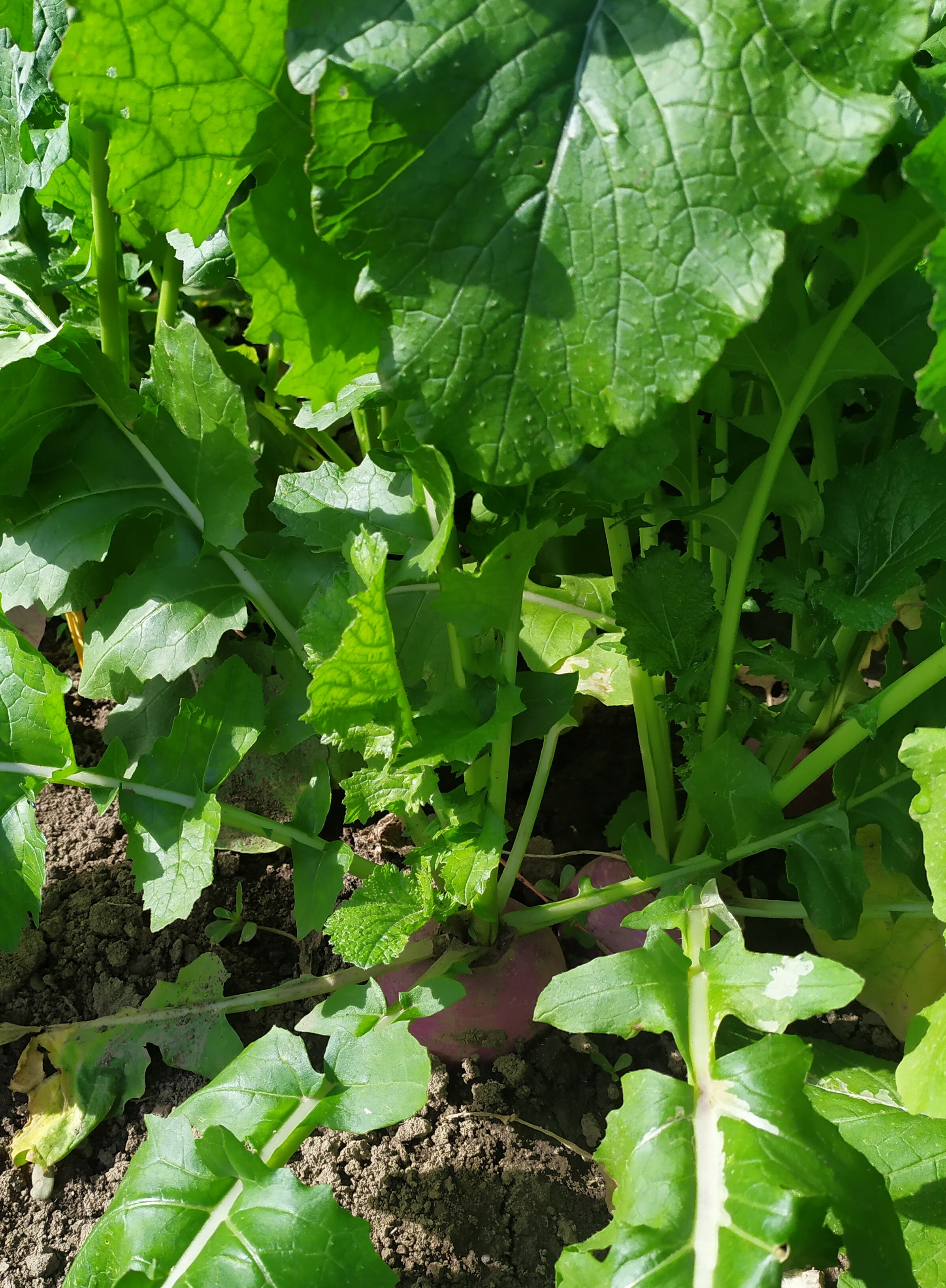
Short description of the species
Usage
- roots: direct consumption in fresh form (similarly as radish), ingredient to salads, side dish, grilling, baking, steaming, chips production - young leaves: saladsEnvironmental requirements, fertilization and inclusion in the crop rotation
Turnip can be grown on all types of soil, but higher yields are achieved in deep, permeable loamy soils with a good supply of nutrients. Turnip belongs to the 2nd fertilization line, like most root vegetables (Rubatzky and Yamaguchi, 2012). This crop likes direct sunlight, and it grows even at relatively low temperatures from 4.5°C. The optimal temperature range for cultivation is 15.5°C-18°C; a drop in temperature below 10°C can cause the plant to flower (Welbaum, 2015; Lim, 2015). The crop requires irrigation. After sowing, large amounts of water must be applied to start and accelerate germination. During the growing season, turnips require regular irrigation (Zaman and Hedayetullah, 2022).
Cultivation
During the germination period of turnip seeds, the temperature should range from 15°C-29 C (Sheikh et al., 2020). Sowing is carried out in rows spaced 0.20-0.45 m apart. In the case of denser sowing, the plants need to be unified after emergence at a distance of 0.08-0.10 m in the row, while turnip is sown to a depth of 15-20 mm (Jůzl and Elzner, 2014). The vegetation period from sowing to harvest lasts approximately 55 - 70 days, depending on the variety grown. The approximate yield of this crop is 22 t/ha with correctly selected agricultural techniques (Roger and Rix, 1995; Welbaum, 2015; Lim, 2015). Harvesting is mainly done manually (Zaman and Hedayetullah, 2022). Storage of bulbs is suitable in rooms with low temperature (around 0°C) and high relative humidity for 2-6 months (Rubatzky and Yamaguchi, 2012).
Diseases and pests
The problem of diseases and pests in turnips is the same as in turnips.
Labeling Plants with QR Codes
At the Faculty of Horticulture and Landscape Engineering at SPU in Nitra, we've created a project that offers visitors to our plantings a new way to discover the beauty and intriguing aspects of plants. Each plant in our plantings has its own unique QR code. All a visitor needs to do is scan this code with their smartphone.
Encyclopedy
Informácie
Kontakt
Fakulta záhradníctva a krajinného inžinierstva
Tulipánová 7, 949 76 Nitra
phone +421 (37) 641 4229 — study department
email henrieta.budayová@uniag.sk



Copyright © 2026 Faculty of Horticulture and Landscape Engineering