

 Slovenská verzia
- home
- Fruits - general part
- Stone fruits
- Tart cherry
Tart cherry
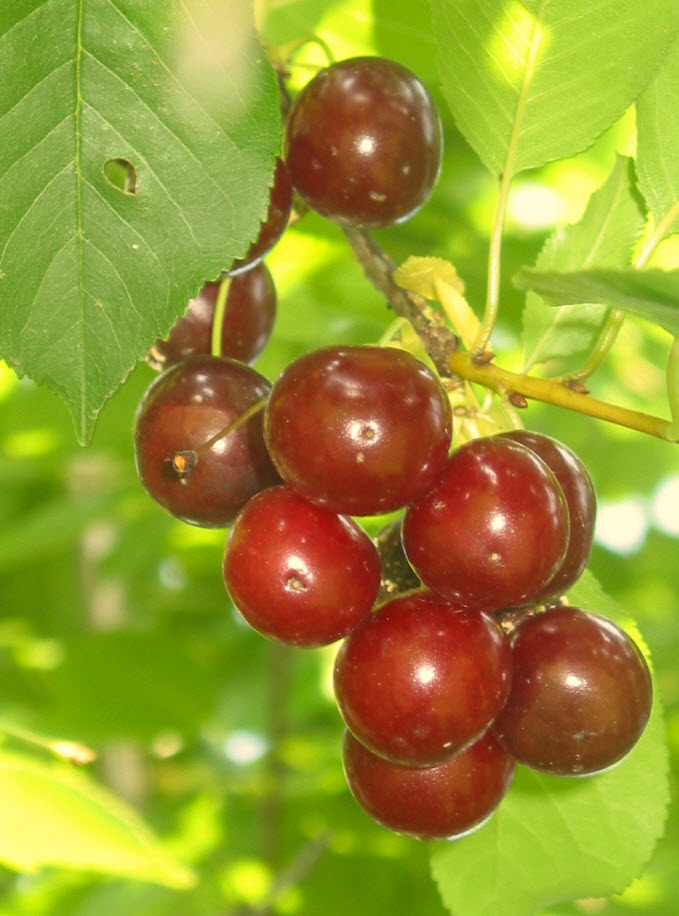
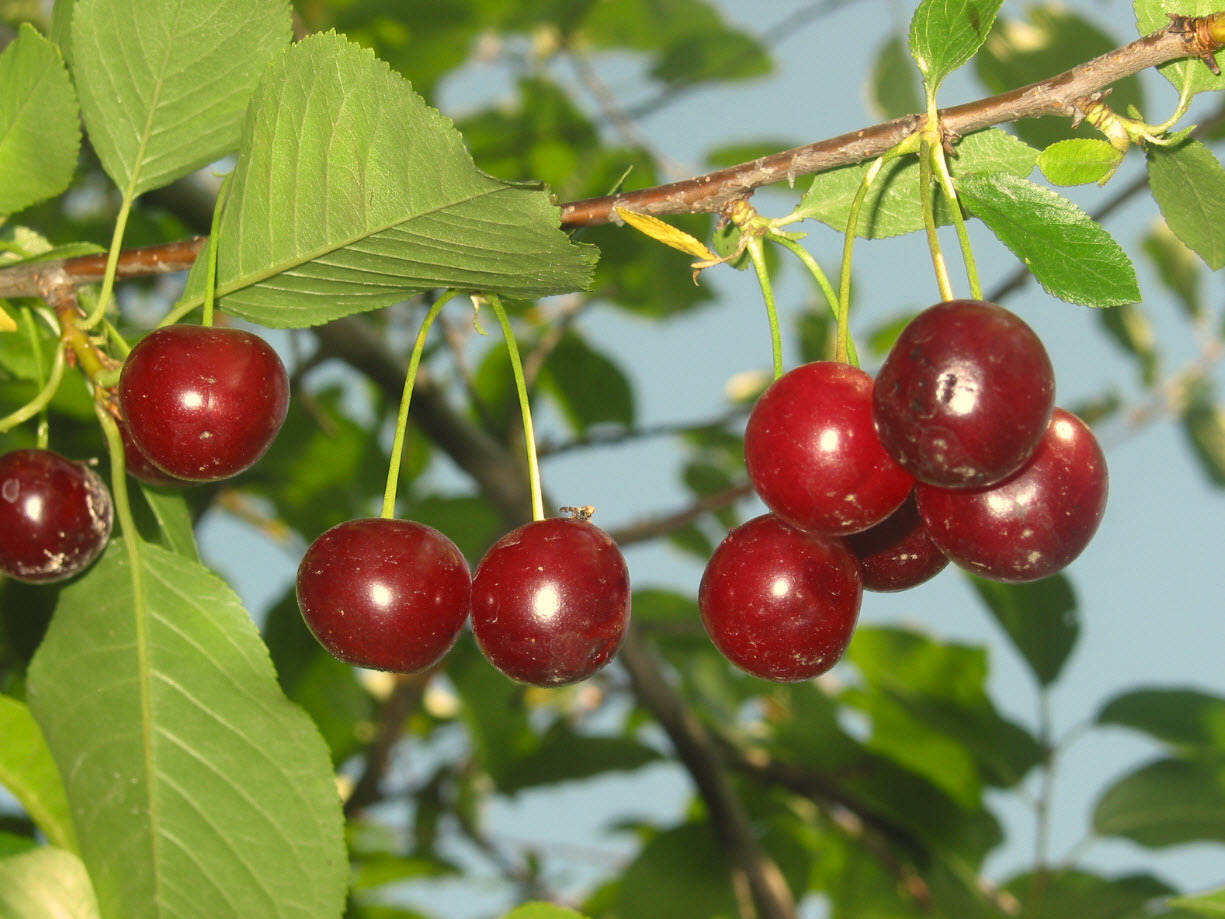
Sour cherries are not among the most popular fruits, while they have a wider use in terms of processing and also contain more valuable substances.
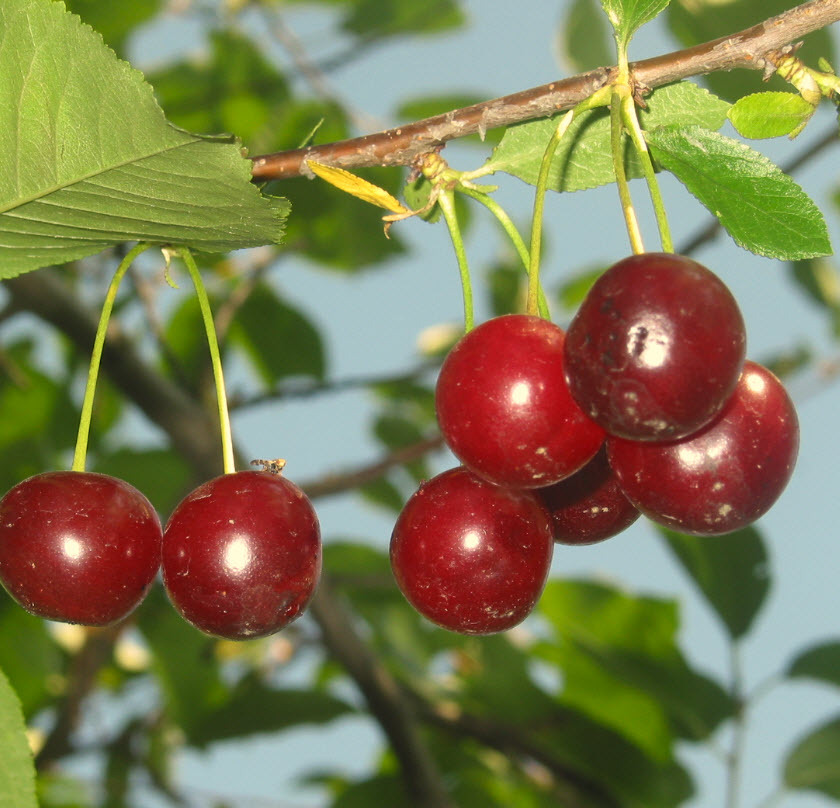
Short description of the species
Interesting
It is not only the taste that makes sour cherries so valuable. Thanks to its red color, the fruit is rich in antioxidants, which help you avoid several chronic diseases, such as heart disease and cancer. It also contains a large amount of vitamins A, C and B, but the mineral content is also significant.Usage
direct consumption, processing into nectar and juices, distillation, jams, wineSuitable growing locations
Sour cherries are less demanding on the soil than cherries, they can also be grown on shallower soils, the pH can be even more acidic than cherries (5.5-6.5). However, they also do not tolerate cold and wet soils. Locations up to 200-400 m.a.s.l. are optimal. with an average annual temperature of 8-10°C and an annual rainfall of 600 mm. Closed locations with late spring frosts are unsuitable.
Suitable rootstocks
Since sour cherries are closely related to cherries, the same types of rootstocks as for cherries are suitable.
Suitable varieties
As a result of the lack of interest of consumers and the market for fresh fruit, there is less motivation for breeders to supply the market with high-quality new varieties that would also be important from a European point of view. which is a great pity, because sour cherries are very neglected in terms of direct consumption. Therefore, late Morela is still the standard in the assortment, but we also recommend the varieties Morelenfeuer, Érdi Bötermö, Újfehértói Furtös, Morina, Gerema and Karneol.
Diseases and pests
diseases: monilio blight of shoots, brown rot, spots and holes in the leaves
pests: cherry blossom borer, Japanese drosophila, aphids
Labeling Plants with QR Codes
At the Faculty of Horticulture and Landscape Engineering at SPU in Nitra, we've created a project that offers visitors to our plantings a new way to discover the beauty and intriguing aspects of plants. Each plant in our plantings has its own unique QR code. All a visitor needs to do is scan this code with their smartphone.
Encyclopedy
Informácie
Kontakt
Fakulta záhradníctva a krajinného inžinierstva
Tulipánová 7, 949 76 Nitra
phone +421 (37) 641 4229 — study department
email henrieta.budayová@uniag.sk



Copyright © 2026 Faculty of Horticulture and Landscape Engineering