

 Slovenská verzia
- home
- Vegetable crops
- Miscellaneous vegetable
- New Zealand spinach
- New Zealand spinach
New Zealand spinach
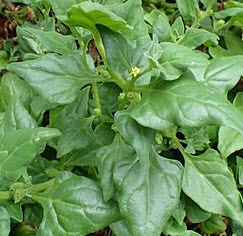
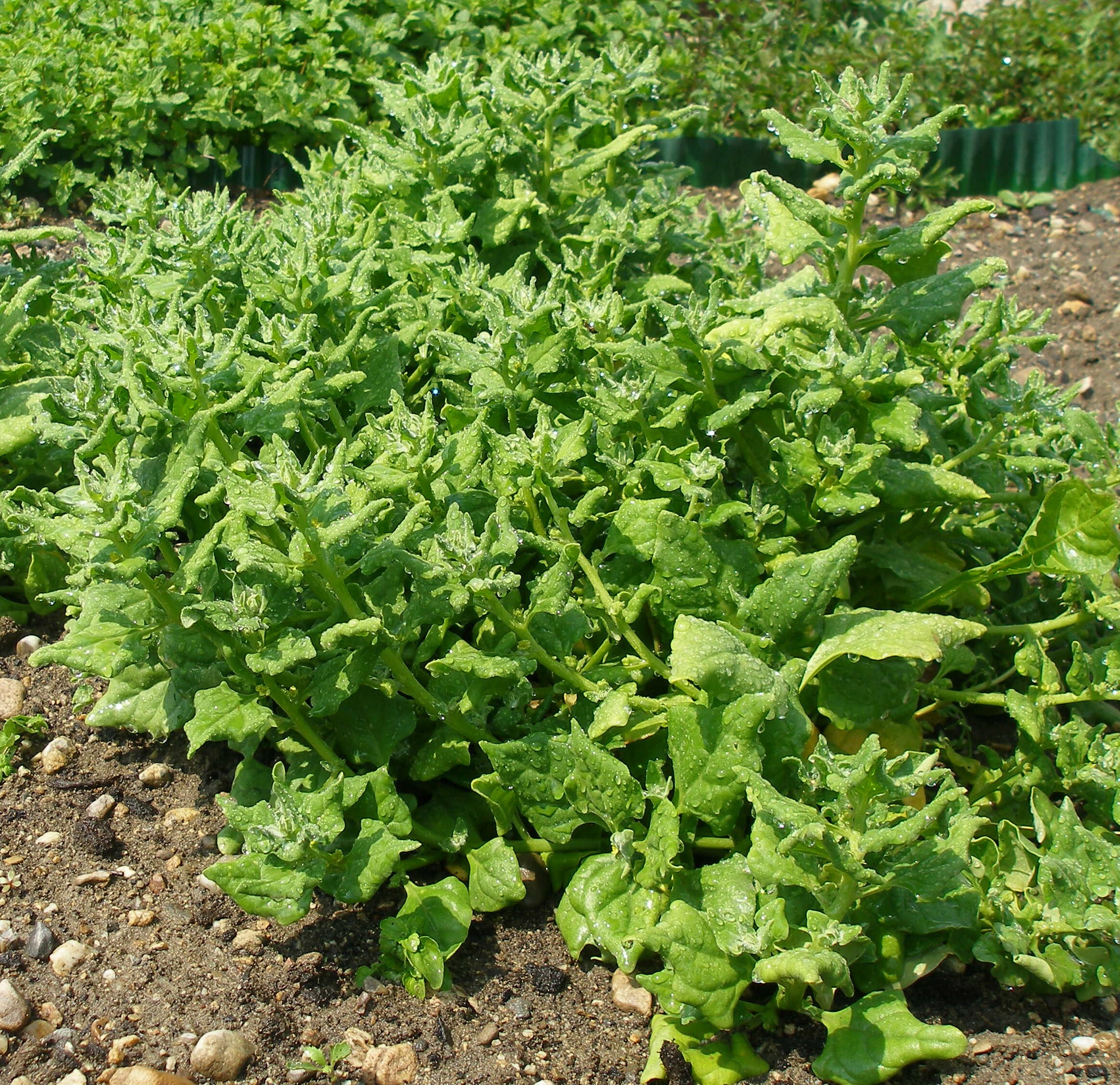
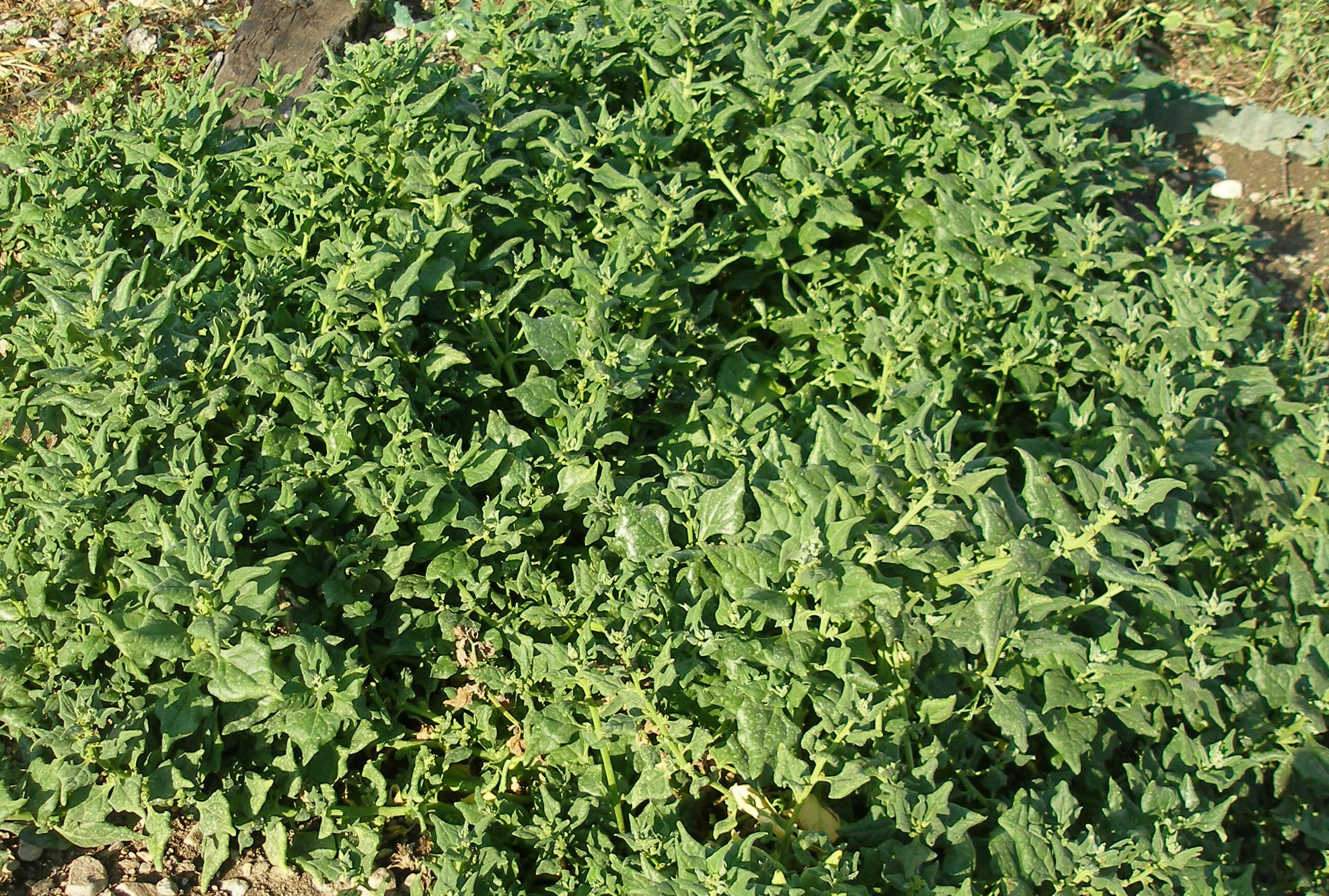
Short description of the species
Usage
- similarly like spinachNutritional composition and nutritional importance
Fresh shoots of the four-stemmed plant can be eaten raw, but the leaves are usually cooked. 100 g of leaves contain 94 g of water, 1.5 g of protein, 0.2 g of fat, 2.5 g of carbohydrates, 58 mg of Ca, 28 mg of P, 0.8 mg of Fe, 4400 IU of vitamin A, 0.04 mg of thiamine, 0.13 mg of riboflavin, 0.5 mg of niacin, 15 μg of folic acid and 30 mg of ascorbic acid. It provides 59 kJ/14 calories (Grubben, 2004). Much of the calcium in this plant is present in the form of oxalates and is not available to the human body. Consumption in its raw state is not recommended due to the high content of saponins (Grubben, 2004). In a reference amount of 100 g, the four-lobed plant is particularly rich in vitamin K. Research on laboratory animals has shown that the whole plant has significant antiulcerogenic (anti-ulcer) activity. The active substances have been determined to be sterylglucosides and cerebrosides (Grubben, 2004). The four-lobed plant is therefore a common garden plant with potential medicinal uses (Aphis, 2004; Grubben, 2004; Roskruge, 2011).
Environmental requirements, fertilization and crop rotation
New Zealand spinach prefers moderately moist conditions, but there is evidence that it is drought-tolerant (Hara et al., 2008). It occurs on dunes, beaches, salt marshes and other coastal sites (Abe, 2006; Roskruge, 2011). The plants are reasonably salt-tolerant, although young plants may not tolerate as much salinity as mature plants. Four-bellied toad is also tolerant of a variety of soil types, preferring a pH of 5.8-7.5 (Roskruge, 2011). It is reported to prefer frost-free sites (Grubben, 2004; Roskruge, 2011), although in some of its native ranges it can grow in much colder locations (e.g. Wisconsin, Connecticut, Oregon and Washington in the USA or Suffolk in the UK). This fact suggests that if the seeds have time to mature during the growing season, freezing temperatures will not damage them (Buddenhagen, 2014). From a fertilization perspective, the soil should be sufficiently supplied with nutrients to achieve rapid crop growth. Nitrogen fertilizer is suitable to be applied as a side dressing (to the plant) to stimulate regrowth after harvest. 30 t/ha of harvested shoots consumes approximately 60 kg N, 15 kg P2O5 and 105 kg K2O. The total recommended fertilizer application per 1 ha is 100 kg N, 25 kg P2O5 and 150 kg K2O.
From a crop rotation perspective, broadleaf clover should not be grown after potatoes or in their vicinity, as they share some common pathogens. On the contrary, it is recommended to include crops from the Brassicaceae family in the crop rotation, at least once every three years, as no common soil pathogens have been identified so far (Roskruge, 2011). Other crops with which broadleaf clover should be rotated include Amaranthus sp. and Zea sp.
Cultivation
New Zealand spinach is grown from seeds that are easy to produce. The seeds are hard and can be stored for a very long time without losing viability. Approximately 15 kg of seeds are used to plant one hectare of land. The slow germination of seeds can be irregular in an interval of up to 20 days (Roskruge, 2011). To ensure uniform germination, it is therefore recommended to soak the seeds in water for 24 hours before sowing. If we plan to establish the culture from seedlings, then sprinkle the seeds in the planters with a 1-4 cm thick layer of soil. The seedlings are planted in the stands when they have 6-7 leaves, at a distance of 30-50 cm from each other in the row and 100 cm between the rows. Soaked seeds can also be sown directly in the field. Propagation by stem cuttings is not practiced. Because the initial growth of the plants is slow, young 4-leaf clover can be grown continuously from the beginning of the growing season in alternating rows with other vegetables with a short growing season (Grubben, 2004). During cultivation, the plants reach the harvest stage in 50-55 days from the day of sowing, depending on the weather (Roskruge, 2011).
When mature, one plant easily covers 1 m2 of soil, mulching is not necessary. The crop competes well with weeds, making weed control unnecessary. Although the crop is drought-tolerant, it needs to be irrigated (6 mm of water/day) during dry periods to produce high-quality biomass. When the stand becomes unfit, old plants can be carefully removed by pulling them out. New understory plants growing from self-seeding enter the production phase very quickly (Grubben, 2004). Harvesting begins when the central stem and lateral shoots have grown to a height and length of more than 0.30 m, approximately 6-8 weeks after germination. The 150-200 m long growth tops are cut manually or mechanically. The plant responds to harvesting by spraying, and further harvesting can be carried out at weekly intervals over a period of several months. With regular pruning, the plant can be a short-lived perennial in warm areas of the world. The older leaves, including the stems and seeds, are not eaten because they have a bitter taste and fibrous texture. The first harvest is usually around 1 kg of fresh shoots per m2, with continuous harvesting at regular intervals for 3-4 months, the total yield of fresh biomass is around 3 kg per m2 (Grubben, 2004).
Diseases and pests
This species is known for its susceptibility to a number of viral diseases, including Potato Andean mottle comovirus and Beet leaf curl rhabdovirus (EPPO, 2011). The susceptibility of the species to various viral damage has been demonstrated in several countries around the world during the solution of various research tasks. In addition to viral diseases, the species is frequently attacked by fungal diseases; in New Zealand, the rust Puccinia tetragonia, syn. Uredo novae-zelandiae (McKenzie, 1998) is the primary host of this rust. Although this disease does not kill the plant, the leaves are unmarketable and unusable. Other important pathogens include black mold (Alternaria alternata), gray mold (Botrytis cinerea), Cercospora sp., Helminthosporium sp. and alfalfa wilt (Verticillium alboatrum) (Duncan, 2004). International research has confirmed that nematodes (Meloidogyne hapla, Meloidogyne incognita) are among the pests, which attack the roots of the plants, causing subsequent crop damage (Duncan, 2004). Among aphids, the cotton aphid (Aphis gossypii) and the peach aphid (Myzus persicae) are considered to be significant pests (Knight, 2001). Heavy infestations by aphids can deform leaves. Aphids can also be vectors of viruses. In some locations, various species of mites and snails can also cause damage to crops.
Labeling Plants with QR Codes
At the Faculty of Horticulture and Landscape Engineering at SPU in Nitra, we've created a project that offers visitors to our plantings a new way to discover the beauty and intriguing aspects of plants. Each plant in our plantings has its own unique QR code. All a visitor needs to do is scan this code with their smartphone.
Encyclopedy
Informácie
Kontakt
Fakulta záhradníctva a krajinného inžinierstva
Tulipánová 7, 949 76 Nitra
phone +421 (37) 641 4229 — study department
email henrieta.budayová@uniag.sk



Copyright © 2026 Faculty of Horticulture and Landscape Engineering