

 Slovenská verzia
- home
- Fruits - general part
- Miscellaneous fruit
- Sea buckthorn
Sea buckthorn
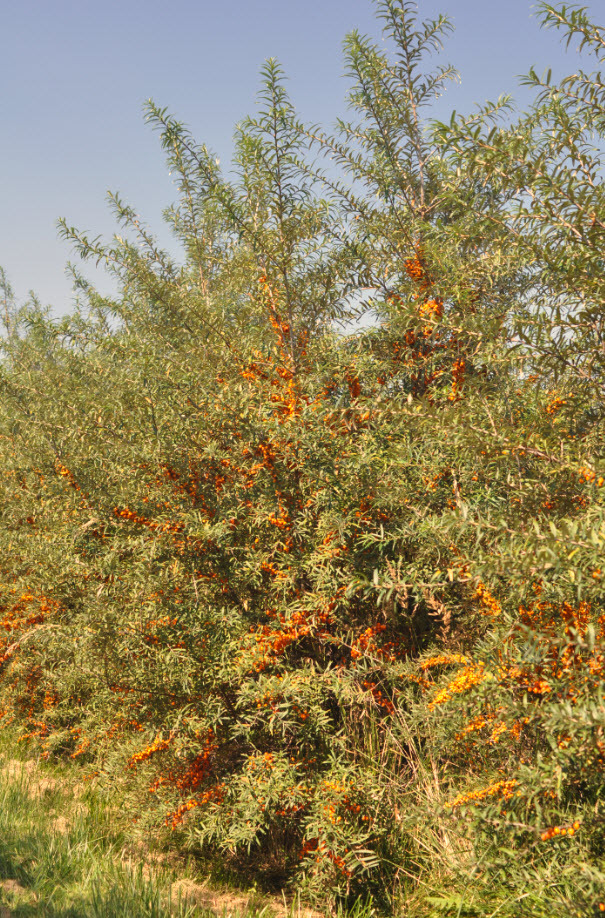
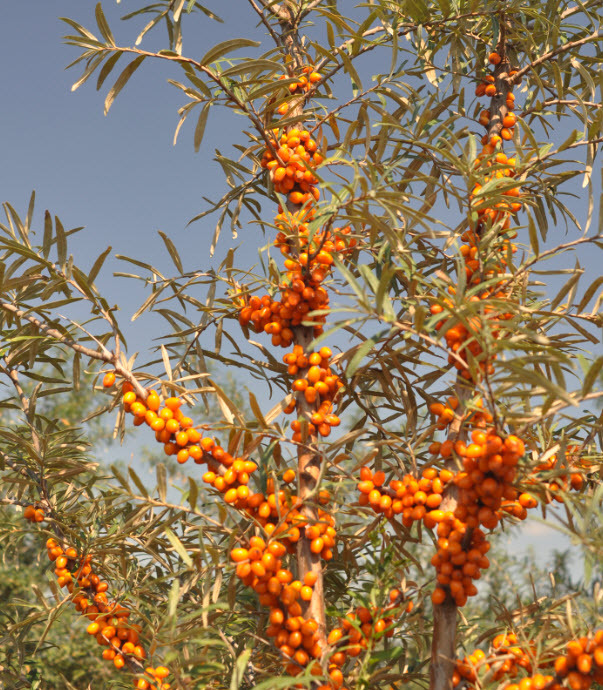
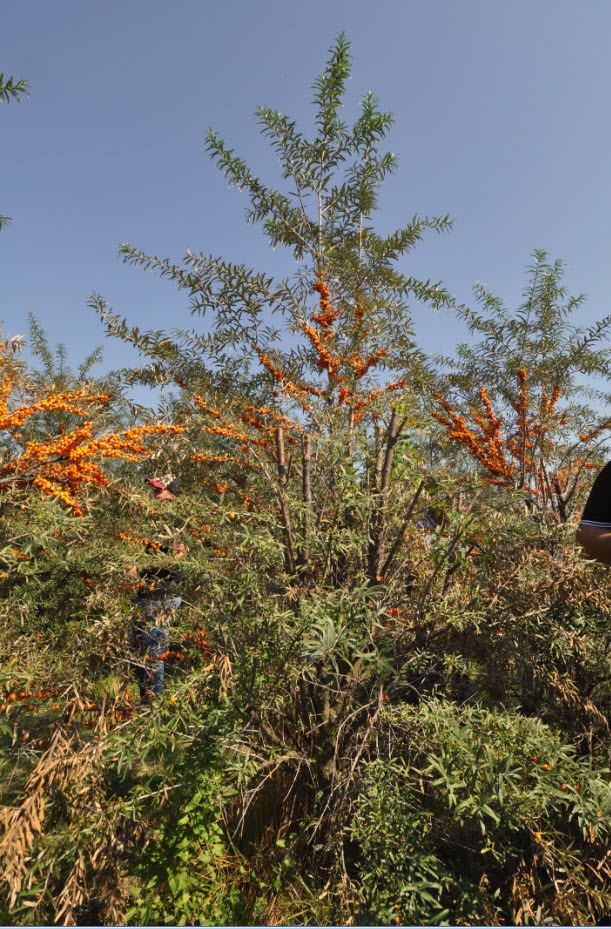
Sea buckthorns are deciduous shrubs, the height of which usually varies from 0.5 to 6 m with an adequate width.
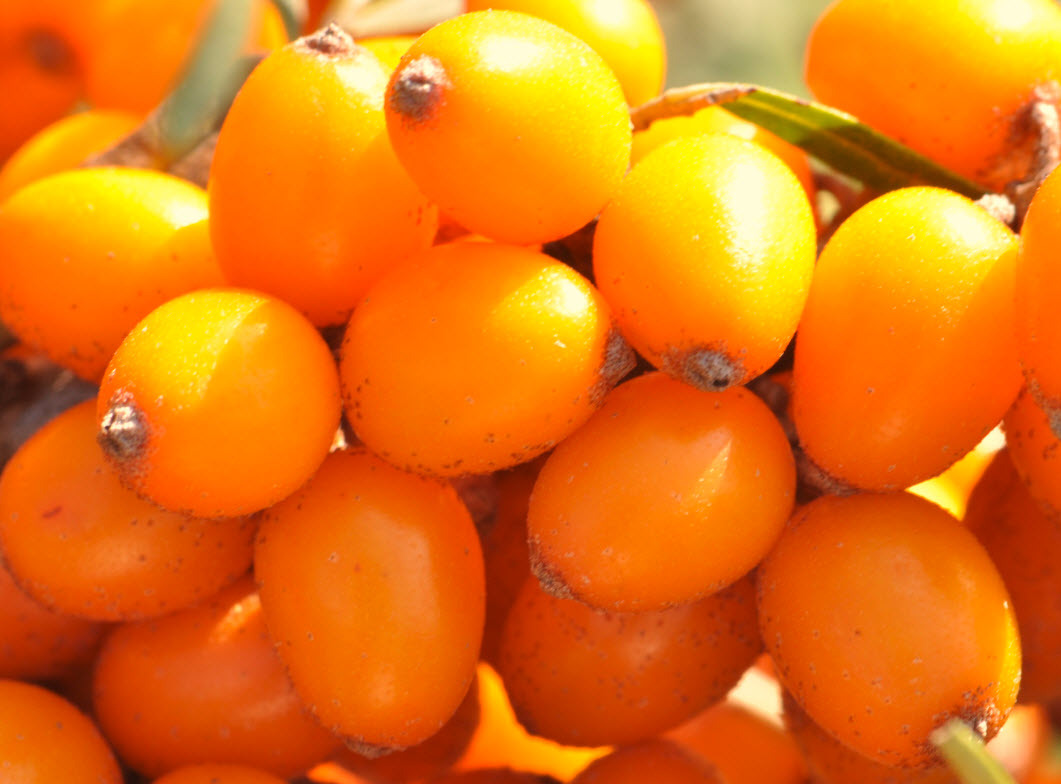
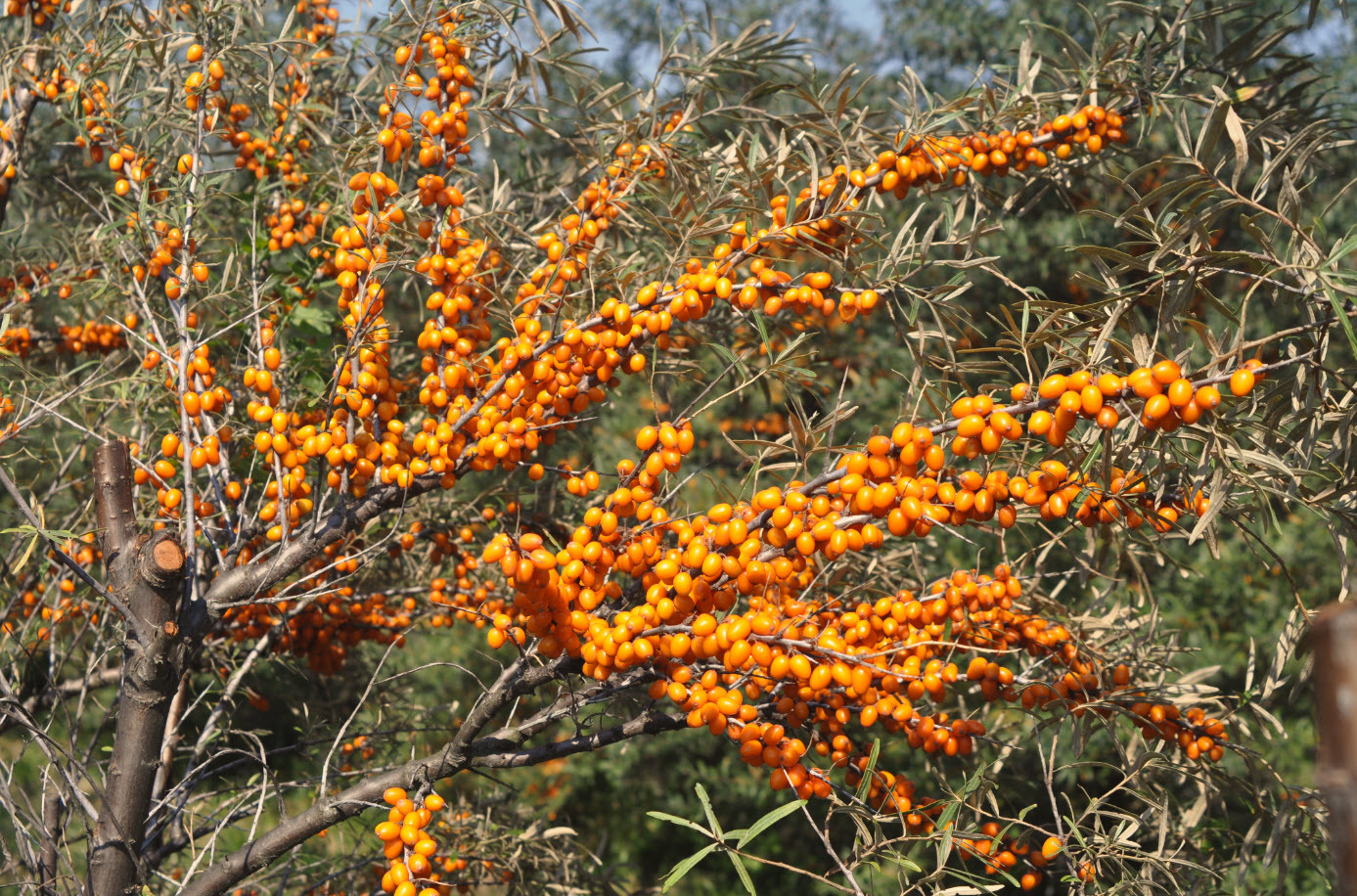
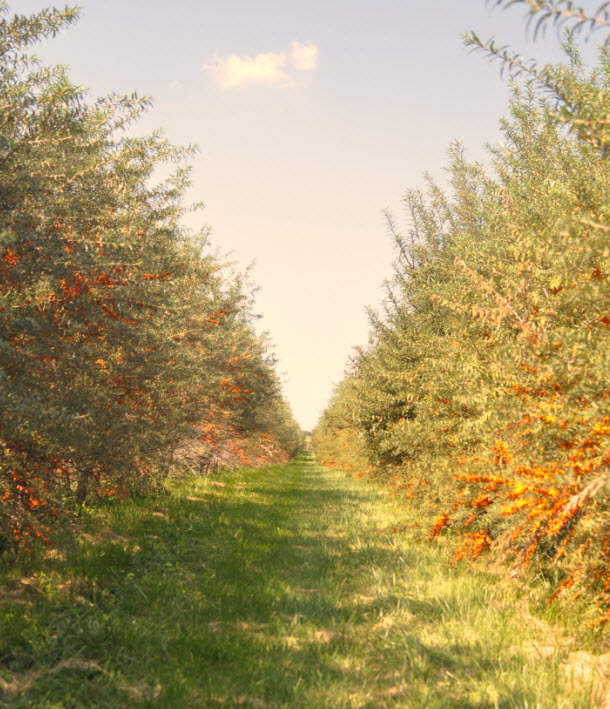
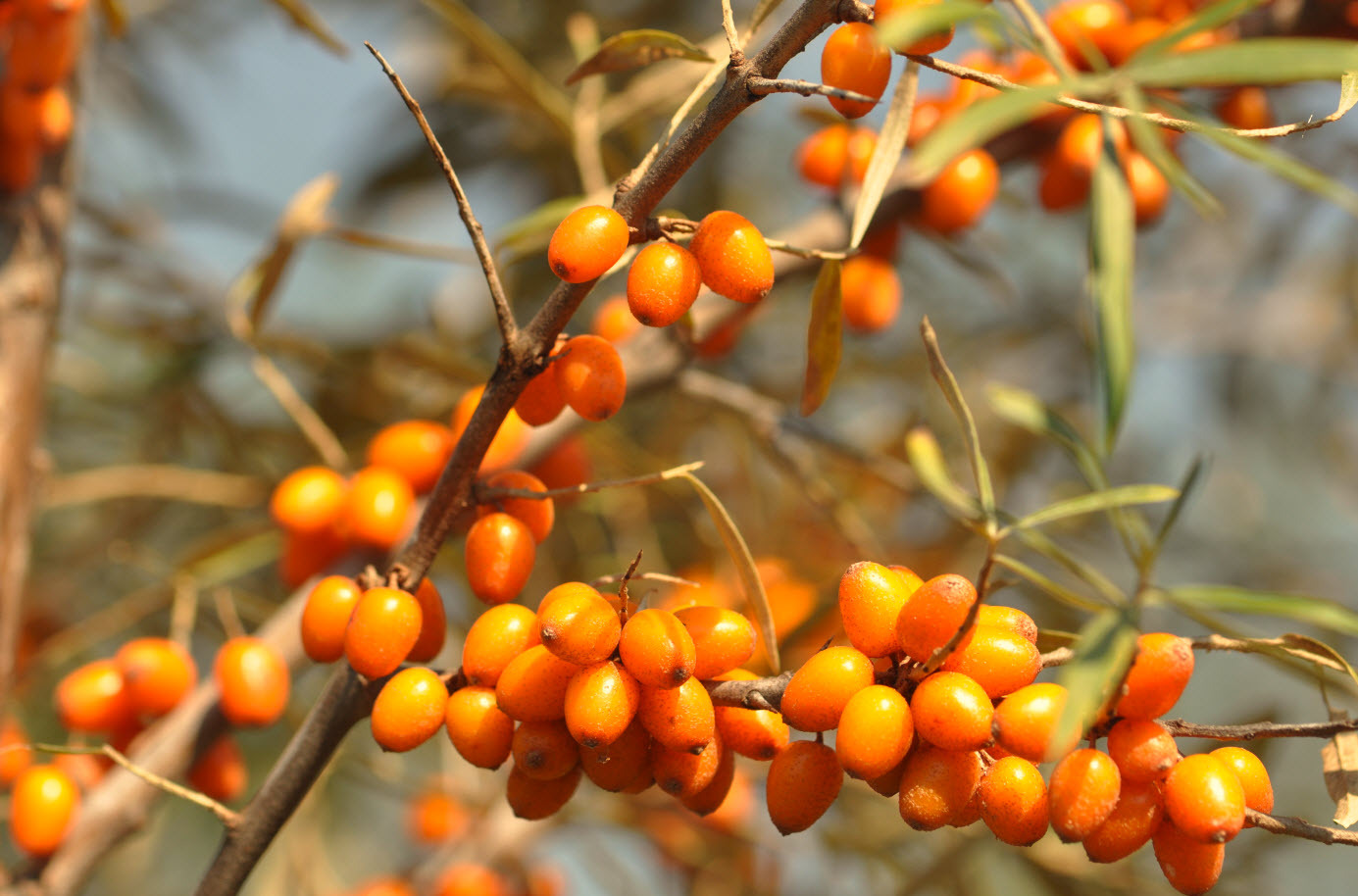
Short description of the species
Interesting
Used in ancient Greece as horse feed to promote weight gain and a shiny coat. In translation, the generic Latin name "Hippophae" literally translates as "shiny horse".Usage
Sea buckthorn has been used for centuries in Europe and Asia as a food and also as a plant due to its pharmaceutical properties. Anecdotal reports suggest that sea buckthorn was used in ancient times to reduce fever, relieve various inflammations, counteract toxicity and abscesses, and cleanse the lungs, colds and coughs, but also tumors and growths, especially of the stomach and esophagus.Suitable growing locations
They are also suitable for marginal cultivation areas, they thrive on well-drained, light to medium sandy-clay soil and are undemanding in nutrition, we grow it without chemical spraying. It has medium tolerance to saline soils. The optimum soil pH is 6-7. Although drought tolerant, a minimum of 400 mm of rainfall per year is required to ensure a good fruit yield. Sea buckthorn is cross-pollinating, so female plants necessarily need a pollinator. The ratio of male and female plants is 1:8. It also grows very well in areas with heavy air pollution. It tolerates drought and low temperatures well. The birth rate is high and regular. It almost does not suffer from diseases and pests.
Growing technology
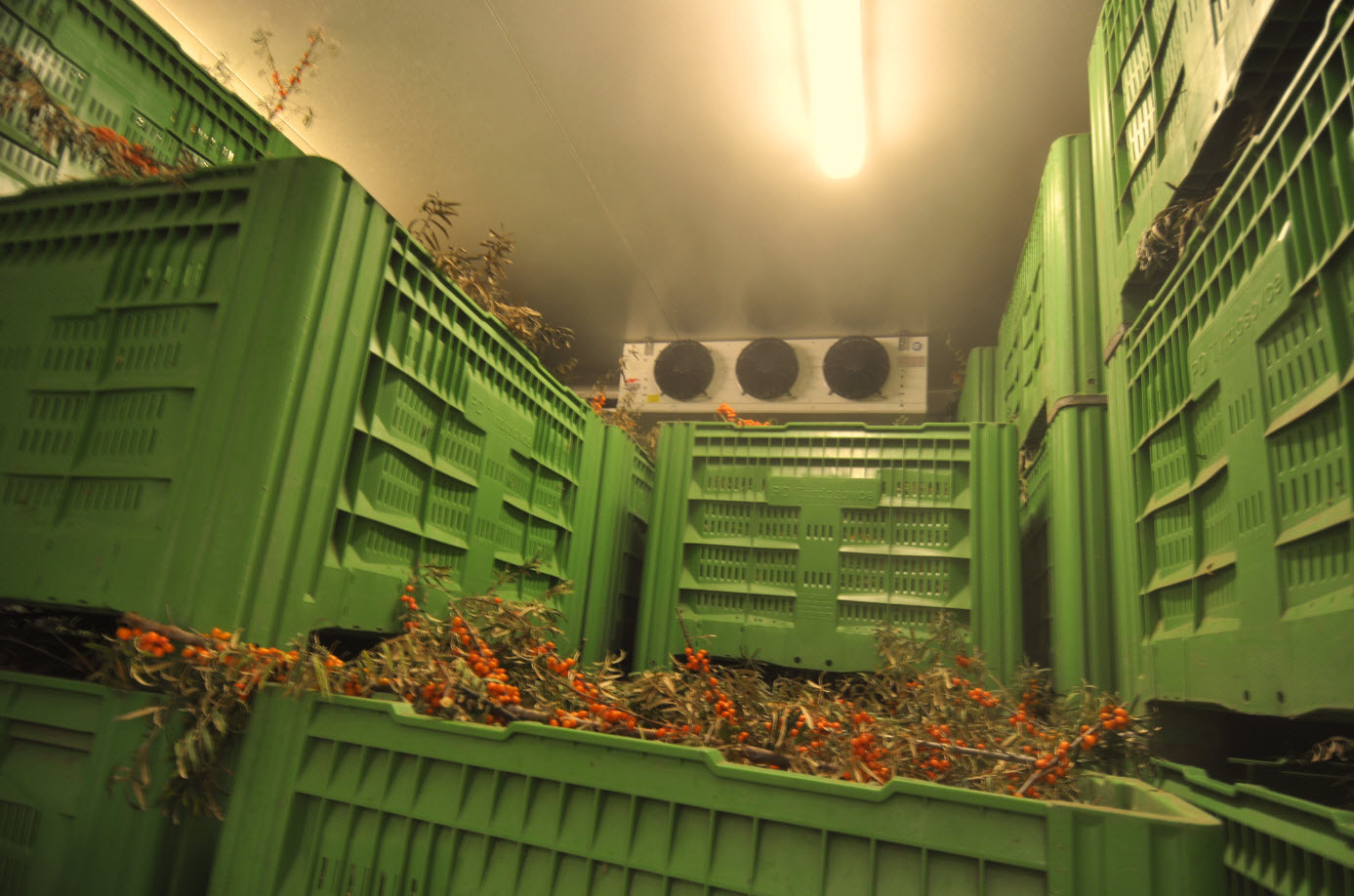
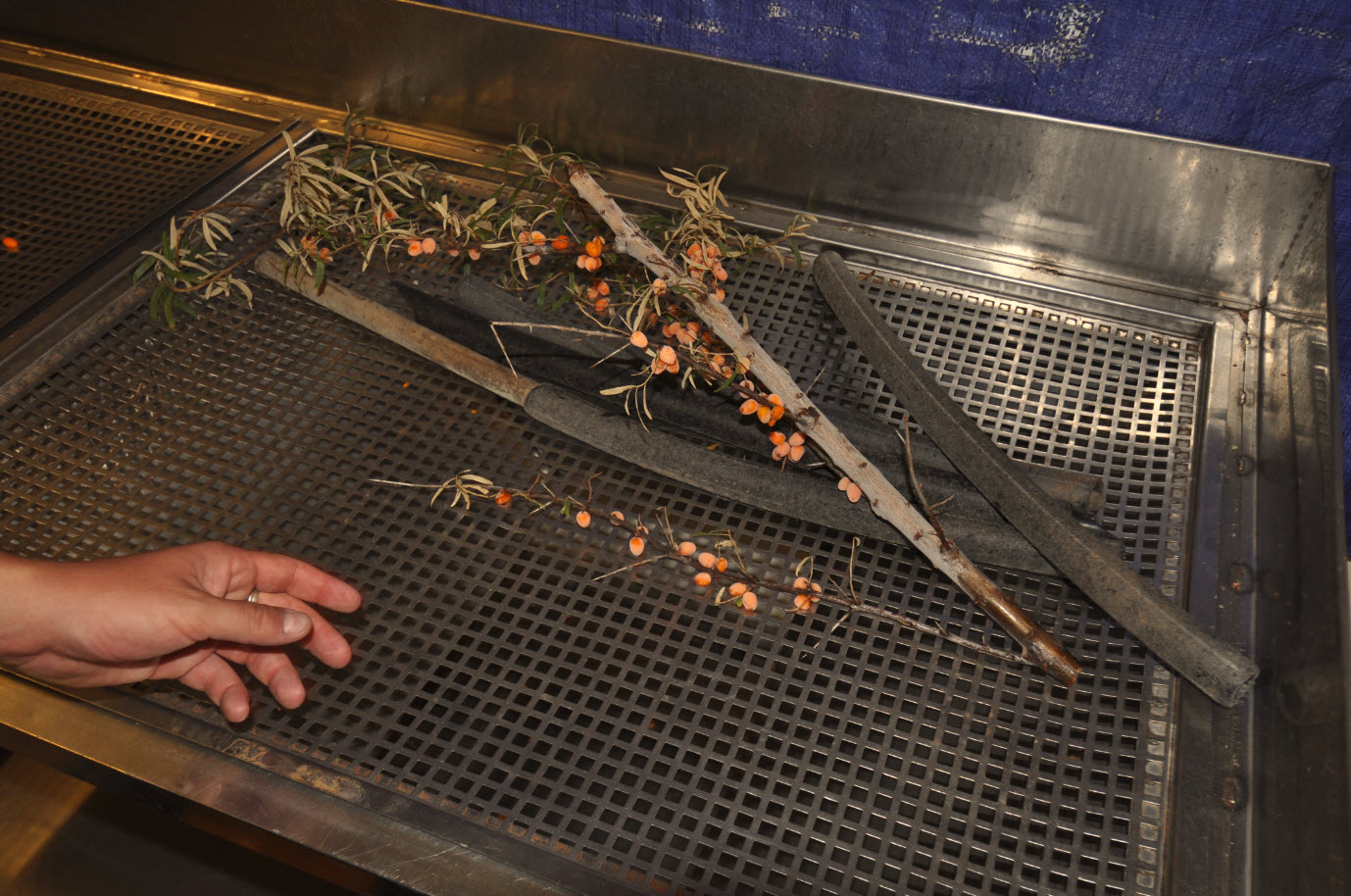
The ratio of male and female plants is 1:7-8. It forms a bush with 10 to 12 skeletal branches. After planting, the shoots are shortened by one to two thirds and weak branches and branches with flower buds are removed. In the following years, during the spring cut, 2 to 3 basic shoots are selected every year, which should be slightly shortened to support branching. In the first 2 years after planting, parts with flower buds are removed so as not to slow down the growth and establishment of the bush. As part of the maintenance cut, all lying branches and weak branched wood are also removed, on which, as a rule, lower quality fruits are formed. After reaching the desired number of branches, the 2 to 3 oldest branches from the base are always removed during the spring cut and replaced by the same number of strong basic shoots. In years with an excessive set of flower buds, it is recommended to control fertility by thinning the fertile wood. Another effective way is to harvest the fruits by cutting the branches with the fruits themselves, which are then completely frozen and then crushed with rubber sticks, when the fruits are very easily separated from the mother branch. As part of the harvest, the entire bush is not cut, but only one half of it, as it grows on two-year-old wood, in order to ensure the continuity of the harvest over the years.
Suitable varieties
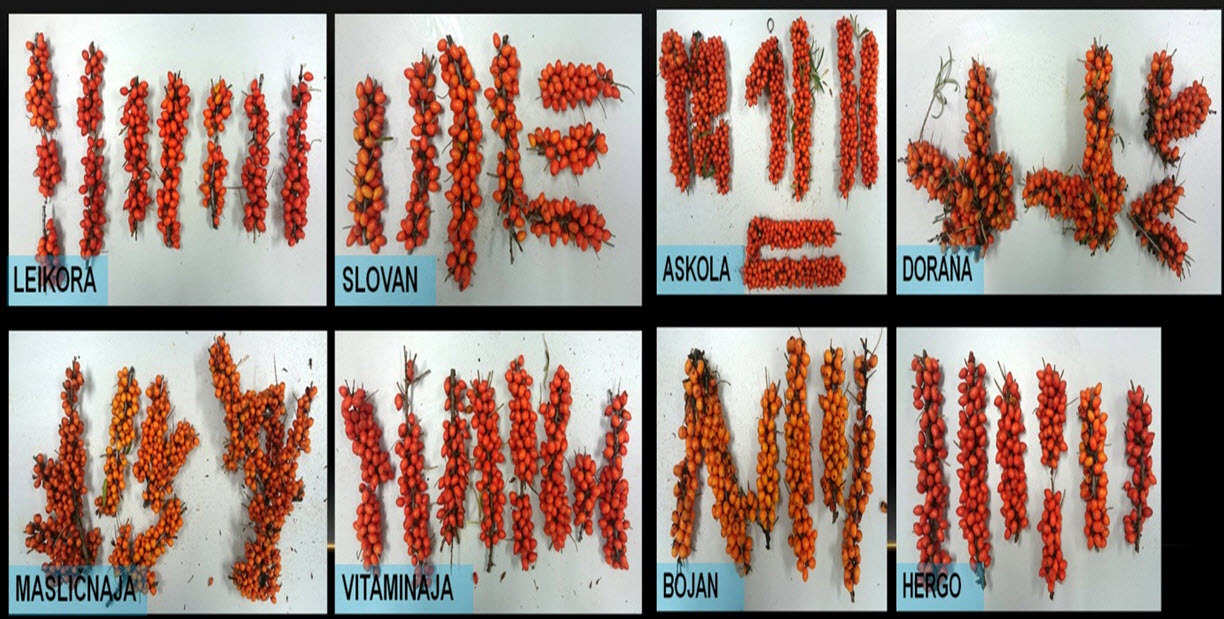
Practically all commercially available varieties can be planted, such as Askola, Hergo, Leikora, Vitaminnaja, Polmix (male), Slovan, Dorana, Slunéčko.
Diseases and pests
diseases: verticillium wilt (V. dahliae, V. albo-atrum, V. longisporum, V. nubilum, V. theobromae and V. tricorpus), canker (Stigmina hippophaes) and dieback (Fusarium, Diaporthe (Phomopsis), gray rot ( Botrytis cinerea), powdery mildew (Erysiphe spp.), anthracnose (Colletotrichum spp.).
pests: Japanese Drosophila (Drosophila suzukii), birds and mammals
Labeling Plants with QR Codes
At the Faculty of Horticulture and Landscape Engineering at SPU in Nitra, we've created a project that offers visitors to our plantings a new way to discover the beauty and intriguing aspects of plants. Each plant in our plantings has its own unique QR code. All a visitor needs to do is scan this code with their smartphone.
Encyclopedy
Informácie
Kontakt
Fakulta záhradníctva a krajinného inžinierstva
Tulipánová 7, 949 76 Nitra
phone +421 (37) 641 4229 — study department
email henrieta.budayová@uniag.sk



Copyright © 2026 Faculty of Horticulture and Landscape Engineering