

 Slovenská verzia
Pursley
Short description of the species
Interesting
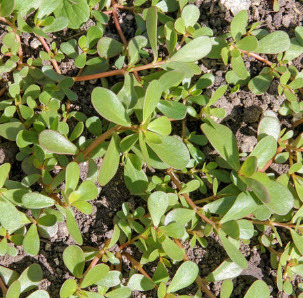
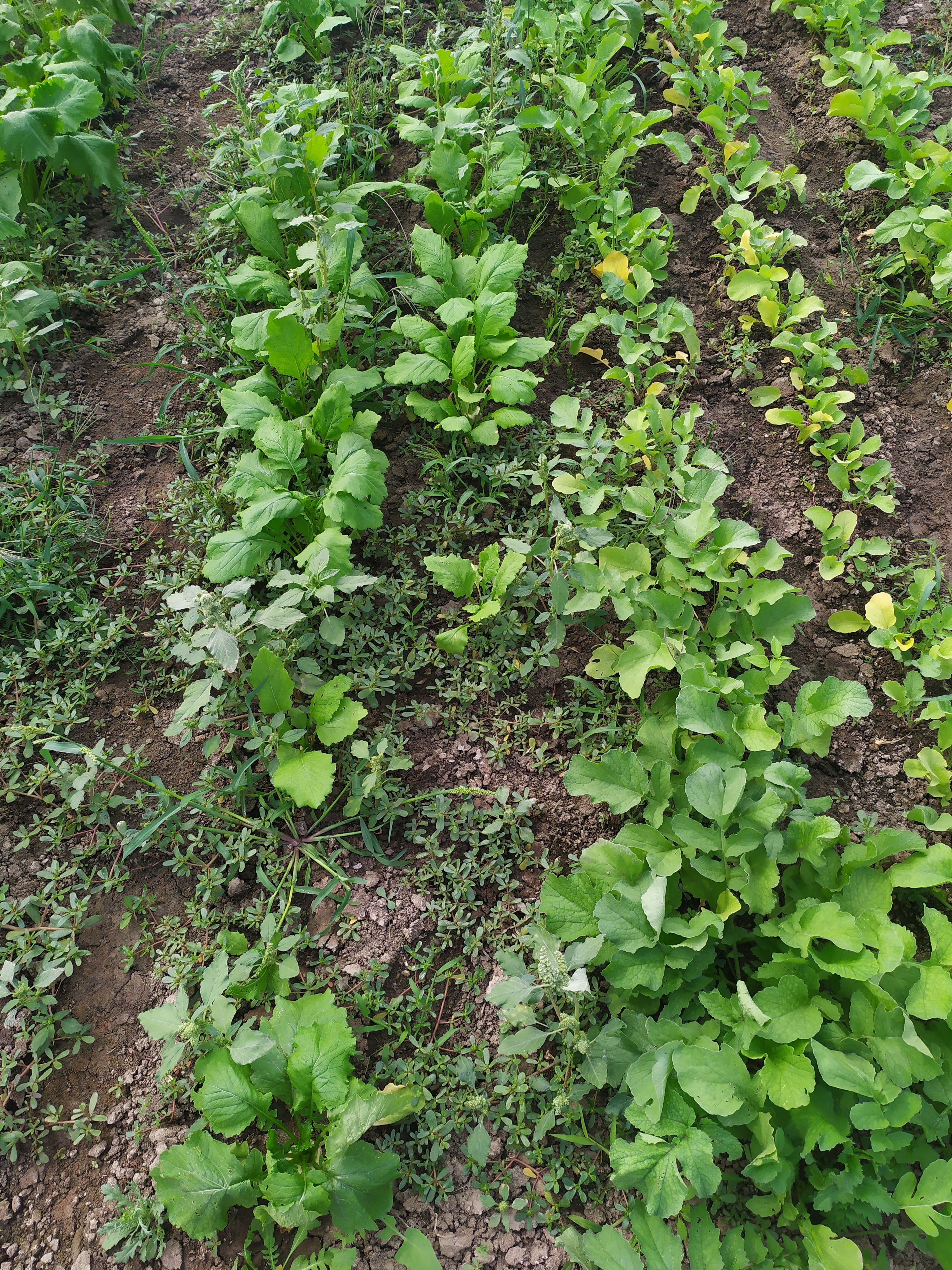
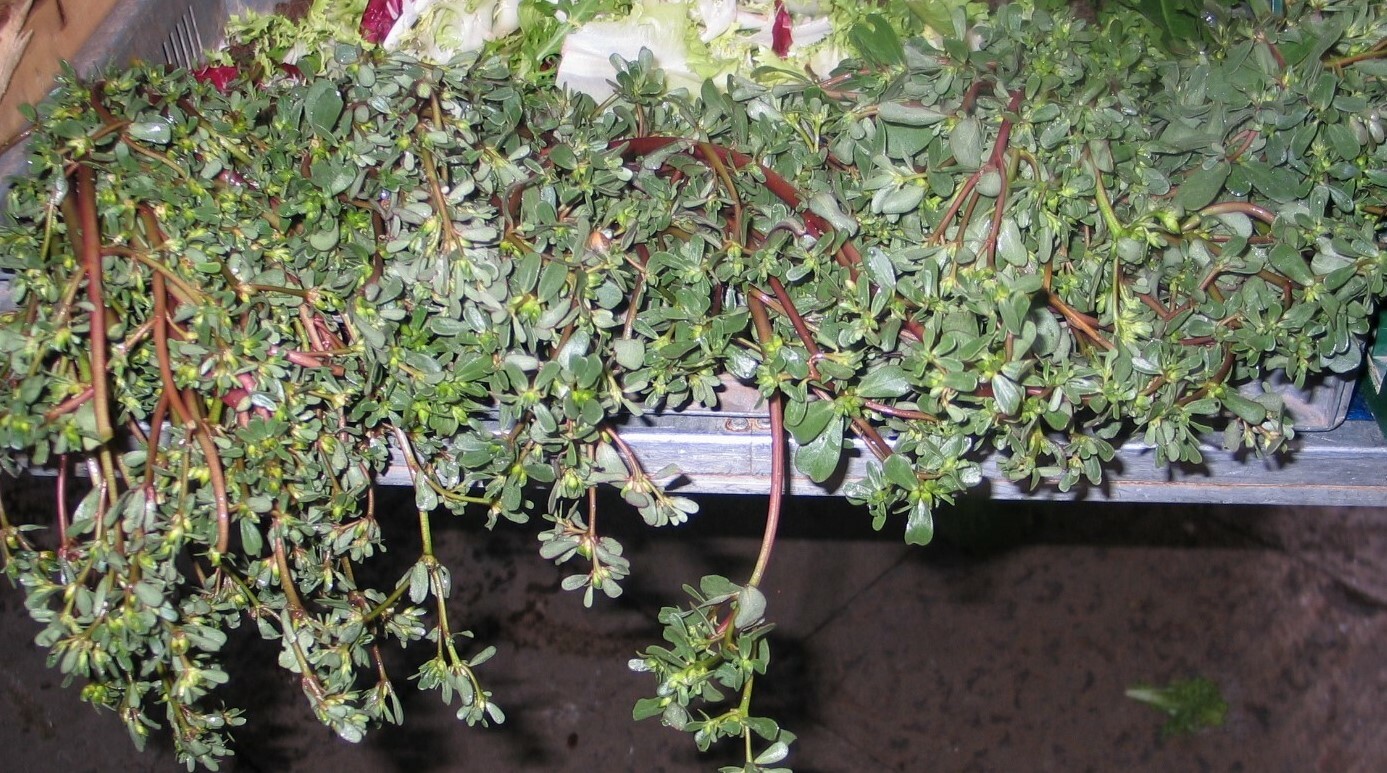
Pursley is often-occuring weed in the field or gardens. It is very poupar vegetable species in the south of Europe, e.g. in South France. It is characterized by significant health-promoting properties.Usage
- fresh: salads - processing: boiling, steaming, soups, conservation (pickling like capers or cucumbers) - seeds: flour production (Africa)Environmental requirements, fertilization and inclusion in the crop rotation
While pursley is an annual plant in our climate, it can grow as a perennial in tropical conditions (CABI, 2021). The initial development of the plant is slow, but after 2 weeks it accelerates significantly. It quickly develops a root system and stem. Research shows that development is not affected by photoperiod (Grubben, 2004). The flowers do not open on cloudy days or days when the temperature is below 21°C. Once opened, they remain open for four hours. No pollinators were observed during the three-year study (CABI, 2021). The flower is self-pollinating and the fruits ripen 7-12 days after flowering. The seed is easily distributed into the environment by water, wind or animals. Purslane is characterized by a high rate of photosynthesis at high light intensity and temperature, which is why it is often a weed in fields. It also occurs in open areas, grasslands and scrublands, from sea level to an altitude of 2600 m.
Since it requires temperatures from 15°C to 40°C for optimal growth, with some cultivars having a temperature optimum of 35°C, it is usually grown as a summer crop. Purslane is not frost-resistant. It requires sufficient water during cultivation. It is tolerant of a wide range of soils, but prefers sandy or loamy soils (Grubben, 2004) with a pH of 5.6-7.2 (Schlaghecken, 2021). It is tolerant of high salt content in the soil. In natural conditions, purslane reproduces by self-sowing or by rooting of separated stem parts (Grubben, 2004).
Light is required for seed germination, but temperature requirements are variable. Seeds germinate at temperatures ranging from 10°C in the USA to 40°C in India, but the maximum temperature limit for germination is 50°C (CABI, 2021).
From a fertilization perspective, it is ideal to fertilize the purslane pre-crop by applying organic manure at a rate of 20-80 t/ha. 40 kg/ha of urea can be applied 3 weeks after sowing. To produce quality biomass, purslane requires regular irrigation at 3-4 day intervals during the dry season (Grubben, 2004).From a cropping perspective, purslane can be used as a catch crop, and during one growing season it can remove up to 210 kg/ha of chlorides and 65 kg/ha of sodium from the soil when grown at 6.5 dS/m, which subsequently allows the growth of plants sensitive to soil salinity (Ceyhun et al., 2008).
Cultivation
Pursley is usually propagated generatively by seed, with local landraces or some improved cultivars with larger leaves, such as ‘Rumi’ grown in Sudan, often used for commercial production. Green-leaved and golden-yellow forms are sold in Europe (Grubben, 2004). Purslane seeds are very small. The weight of 1000 seeds is from 0.1 to 0.5 g, with about 20 kg of seed used to sow 1 ha. Fresh seeds require light for germination, but this requirement disappears with older seeds. Sowing depth significantly affects germination. When sowing to a depth of 6 cm, germination is completely inhibited (Grubben, 2004), but germination can be damaged by as little as 5 mm of soil applied to the seeds (Schlaghecken, 2021). It is therefore recommended to sow the seeds by sprinkling (without sorption) on the soil and then lightly covering them with compost or light soil. Since purslane roots shallowly and the sowing is dense, the soil should be nutritious (Grubben, 2004).
The optimal temperatures for germination are 20-25°C. For row sowing, a row spacing of 20-30 cm is recommended. Outdoor sowing is recommended from April to early August, depending on the region. April sowing can be covered with non-woven fabric (Schlaghecken, 2021). Harvesting can begin approximately 3-4 weeks after sowing, with a total of 2-3 cuts made at 2-3 week intervals. Cutting of the herbs should be done low to stimulate the growth of new stems. Harvesting can also be done once, with the growth being destroyed. After 6 to 8 weeks of cultivation, when the plants begin to flower, the biomass loses quality, the leaves and stems become hard and bitter. The harvest in the tropics ranges from 12 to 17 t/ha, but some sources also report a harvest of 50 t/ha (Grubben, 2004). After harvesting, purslane is usually stored in plastic boxes with high relative humidity for 2-5 days and a temperature of 0-1°C (Grubben, 2004).
Diseases and pests
Pursley has several pathogens causing economic damage to the stands. However, their infection pressure is largely influenced by the location where the cultures are established. Serious diseases include, for example, Aspidiella hartii, Candidatus Phytoplasma trifolii, Albugo spp., Dichotomophthora portulacae, Drechslera indica, Helminthosporium portulacae (Drechslera portulacae) and several strains of Actinomycetes (Grubben, 2004). Among the pests, some species of aphids are important, as well as Hercinothrips femoralis, beet root nematode (Heterodera schachtii), white-lined sphinx (Hyles lineata), Hypogeococcus pungens, Scirtothrips dorsalis, Baris lanata and Spodoptera exigua. The mentioned pests cause damage primarily by eating the leaves, stems and fruits of the plant. Purslane root is a host plant for some species of nematodes (Grubben, 2004). In general, however, it can be said that compared to other common crops, purslane is more tolerant to pathogens and pests thanks to its waxy skin.
Labeling Plants with QR Codes
At the Faculty of Horticulture and Landscape Engineering at SPU in Nitra, we've created a project that offers visitors to our plantings a new way to discover the beauty and intriguing aspects of plants. Each plant in our plantings has its own unique QR code. All a visitor needs to do is scan this code with their smartphone.
Encyclopedy
Informácie
Kontakt
Fakulta záhradníctva a krajinného inžinierstva
Tulipánová 7, 949 76 Nitra
phone +421 (37) 641 4229 — study department
email henrieta.budayová@uniag.sk



Copyright © 2026 Faculty of Horticulture and Landscape Engineering