

 Slovenská verzia
- home
- Vegetable crops
- Miscellaneous vegetable
- Mizuna, mibuna
- Mizuna and mibuna
Mizuna and mibuna

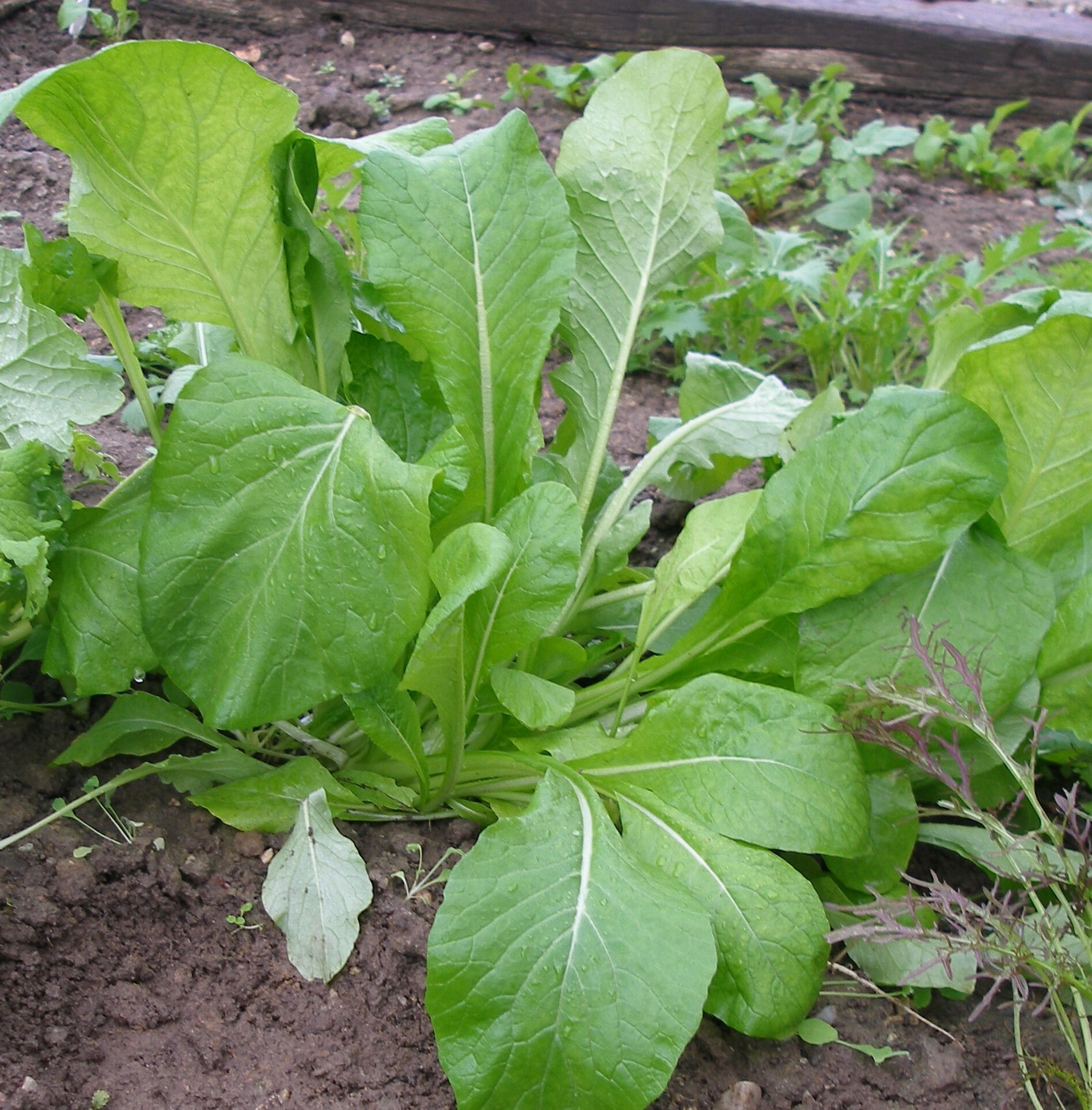
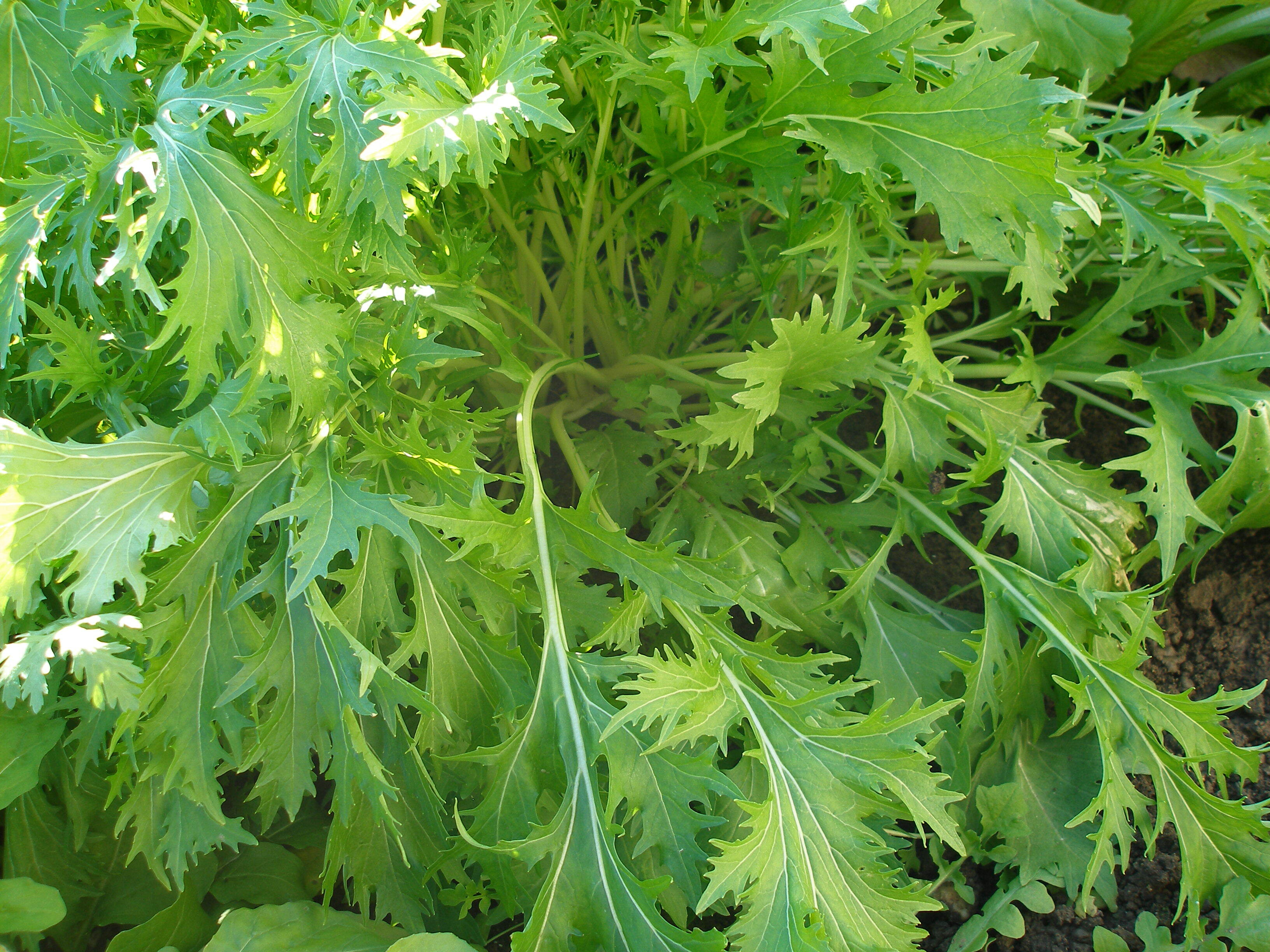
Short description of the species
Usage
- fresh salads; or steaming and side dishEnvironmental requirements, fertilization and inclusion in the crop rotation
Mizuna and mibuna have similar environmental requirements, with the exception of temperature requirements. Mizuna is less demanding on temperature and can withstand frosts down to -15 °C, unlike mibuna, whose plants cannot tolerate stronger frosts (max. up to -5 °C). Plants of both species can be grown in both sunny and slightly shaded locations. Lighter or medium-heavy soils with a good supply of humus are suitable for growing both species, while nutritional requirements are similar to those of lettuce. Like other types of leafy vegetables, mibuna and mibuna are included in the 2nd fertilization line. Regular irrigation is a prerequisite for the production of delicate leaves (Cornell, 2022; Pokluda et al., 2022).
Cultivation
The technology for growing mizuna and mibuna is almost the same. Both species can be grown from direct sowing in spring (March-April) or during summer/early autumn (late July-September) in rows 0.30-0.40 m apart. For continuous leaf collection, it is advisable to carry out gradual sowing at intervals of 1-2 weeks. In the case of denser sowing, it is necessary to unite the plants in the row at a distance of 0.10 m after emergence. Summer sowing is not advisable, because due to high temperatures and sunlight, the plants quickly rush into flower and the quality of the leaves deteriorates. When growing, it is advisable to use mulching between the rows, which speeds up the harvest and keeps the leaves clean. When sowing in summer, it is recommended to cover the crop with white non-woven fabric, as the plants can be intensively attacked by leafhoppers, or other pests. We can start harvesting the first leaves approximately 3-4 weeks after sowing (depending on the weather). When harvesting, it is possible to harvest the leaves individually, but the entire leaf rosette is usually harvested. Like other leafy vegetables, mizuna and mibuna have a short shelf life, max. 7 days at a temperature of 2-8 °C (Cornell 2022; Pokluda et al., 2022).
Diseases and Pests
The problem of disease and pest occurrence in mizuna and mibuna is the same as in Chinese mustard.
Labeling Plants with QR Codes
At the Faculty of Horticulture and Landscape Engineering at SPU in Nitra, we've created a project that offers visitors to our plantings a new way to discover the beauty and intriguing aspects of plants. Each plant in our plantings has its own unique QR code. All a visitor needs to do is scan this code with their smartphone.
Encyclopedy
Informácie
Kontakt
Fakulta záhradníctva a krajinného inžinierstva
Tulipánová 7, 949 76 Nitra
phone +421 (37) 641 4229 — study department
email henrieta.budayová@uniag.sk



Copyright © 2026 Faculty of Horticulture and Landscape Engineering