

 Slovenská verzia
- home
- Fruits - general part
- Miscellaneous fruit
- Common medlar
Common medlar
Medlar is a large shrub or small tree from the rose family and has been cultivated since Roman times.
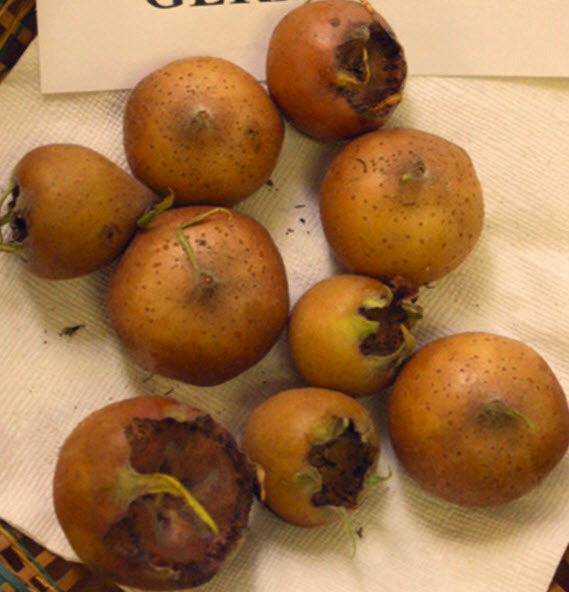
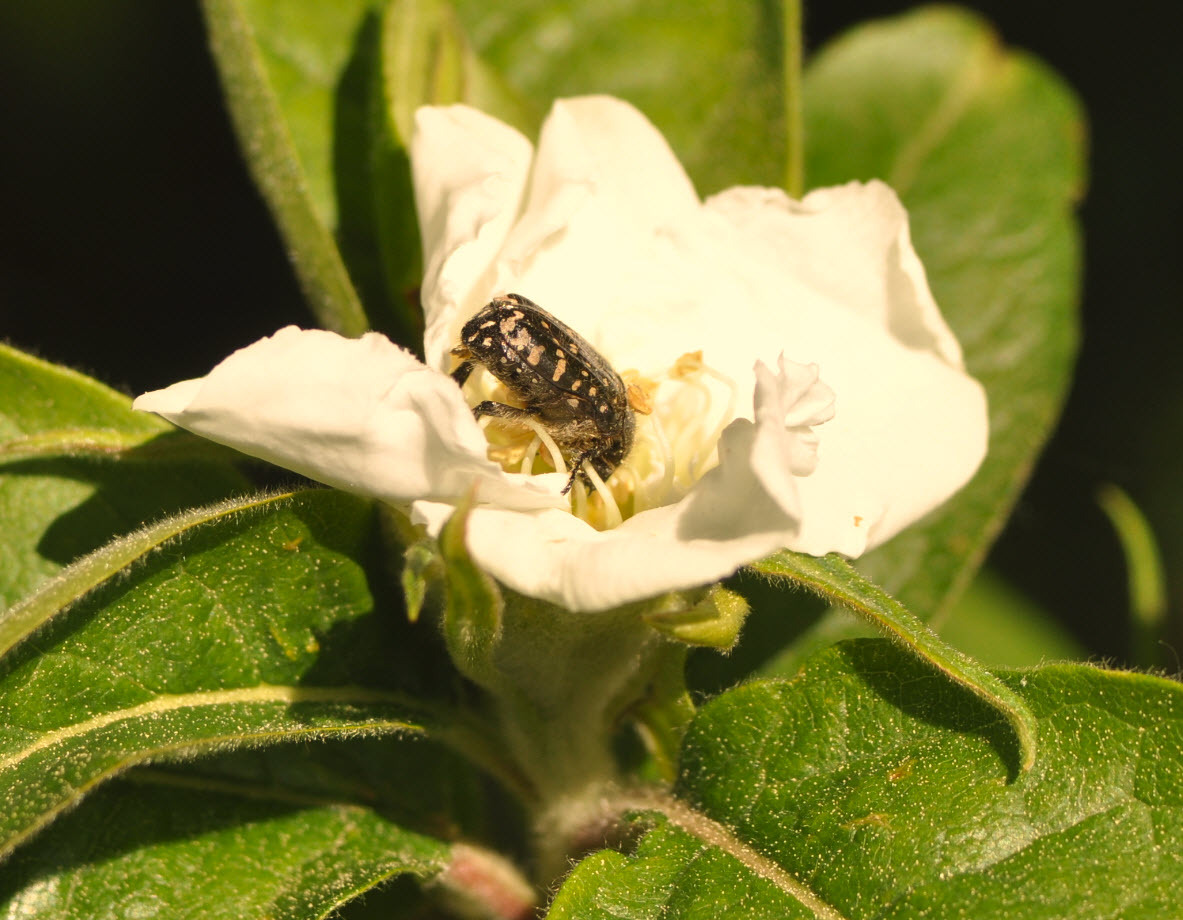
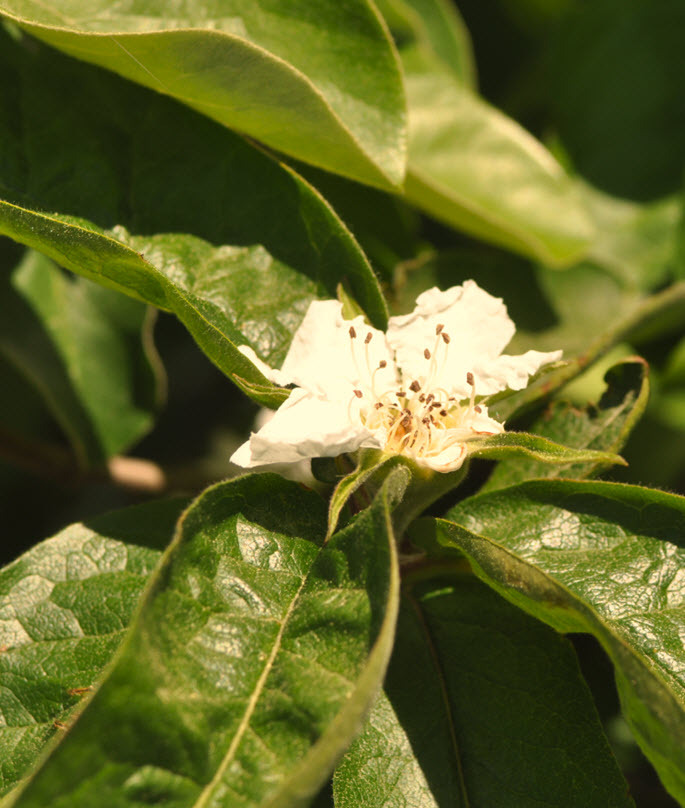
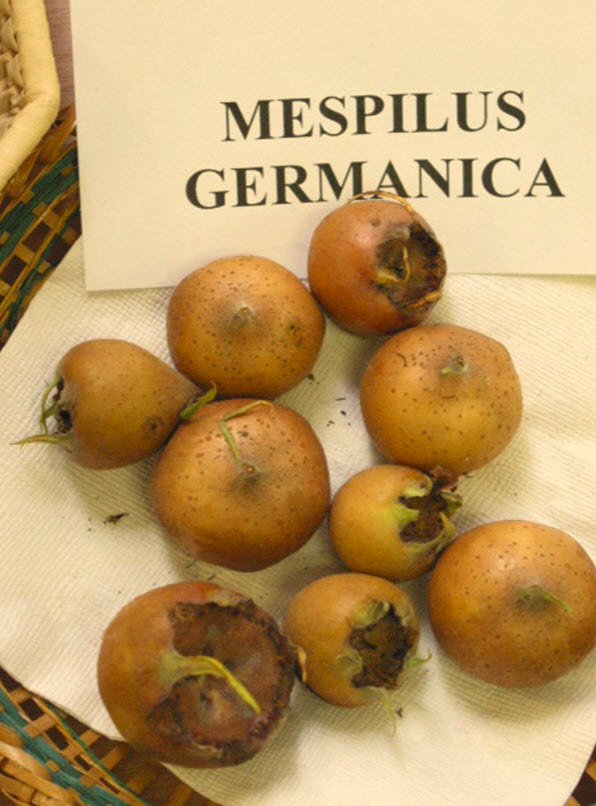
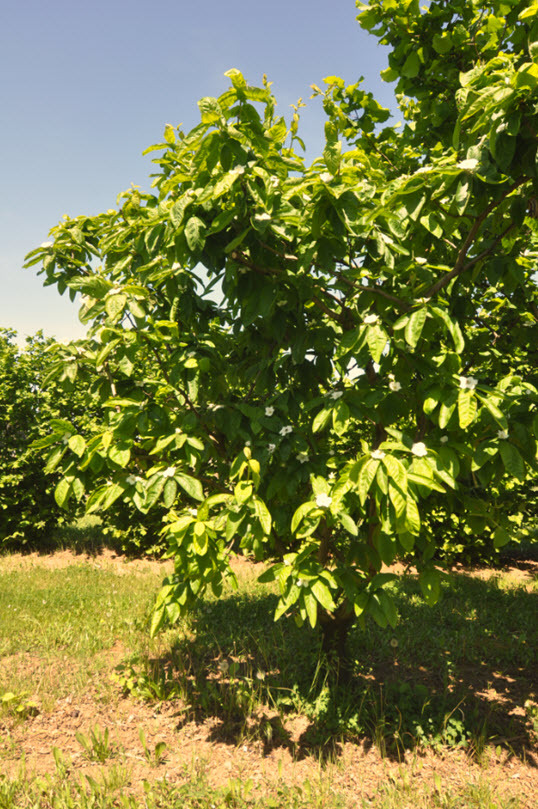
Short description of the species
Interesting
Silver nanoparticles could be synthesized from medlar extract and show antibacterial, antibiofilm activities against multidrug resistance clinical strains of the hospital "superbug" Klebsiella pneumoniae.Usage
fresh consumption, vinegar, pickled, boiled, crushed or dried, but also in the form of sauce, jelly, cheese, jam or syrupSuitable growing locations
This species requires temperate or sub-Mediterranean climatic conditions with warm summers and mild winters. Air temperatures of 18 to 20 °C are mentioned as favorable for growth, frosts down to -20 °C are tolerated, while late spring frosts cause almost no damage. Medlars grow best in deep, fertile, well-drained soil, although they grow in most soil types except very calcareous or poorly drained. They prefer direct sun, but will still produce in partial shade. Leaves and flowers are easily damaged by strong winds and late frosts, so choose a warm, sheltered planting location.
Cultivation technology
In the first year after planting loquats require regular watering. Then water in case of longer periods of drought. Trees in full fertility only require watering during long periods of drought, especially when fruit is forming. The cut of young medlar trees is similar to that for apple and pear trees. It depends on the final form we choose. If you get your tree in good shape in time, only minimal pruning will be necessary in future years. Aim to create a needle-like shape with an open center. Planted loquats in full fertility can be pruned in winter if necessary. This usually just involves removing any thickening, dry or damaged shoots to keep the crown open and airy. It is also possible to shorten branches that are too long, so that they do not form significant arches, on which there are fruits of lower quality. Medlars bear fruit at the ends of small side shoots, so when cutting it is necessary to leave these. As trees are usually grafted, remove all shoots growing both from the trunk and into the rootstock below the grafting site. Medlars are very resistant, healthy and easy to grow. If the crop is insufficient, it may be due to late spring frosts or spring storms that damage flowers and reduce the presence of pollinators. A lack of water can also cause young fruits to drop.
Suitable varieties
Dutch giants, Nottingham, Szentesi rózsa, Sussmispel, Delice des Vannes, Apyrena
Diseases and pests
Medlar is rarely attacked by diseases or pests. In plantings, the larva of the apple leafhopper butterfly (Lithocolletis blancardella) can cause damage. Furthermore, especially in years with high rainfall, brown rot (Monilinia fructigena) can be a problem. It causes brown spots on the fruit and spreads until the fruit rots completely. Loquat can also be infected by powdery mildew Podosphaera clandestina, which can lead to wilting of leaves and buds, as well as loquat leaf spot (Entomosporium mespili), which causes leaf spots. Medlar, like other species from the rose family, is susceptible to bacterial blight (Erwinia amylovora).
Labeling Plants with QR Codes
At the Faculty of Horticulture and Landscape Engineering at SPU in Nitra, we've created a project that offers visitors to our plantings a new way to discover the beauty and intriguing aspects of plants. Each plant in our plantings has its own unique QR code. All a visitor needs to do is scan this code with their smartphone.
Encyclopedy
Informácie
Kontakt
Fakulta záhradníctva a krajinného inžinierstva
Tulipánová 7, 949 76 Nitra
phone +421 (37) 641 4229 — study department
email henrieta.budayová@uniag.sk



Copyright © 2026 Faculty of Horticulture and Landscape Engineering