

 Slovenská verzia
- home
- Vegetable crops
- Miscellaneous vegetable
- Cape gooseberry
- Cape gooseberry
Cape gooseberry
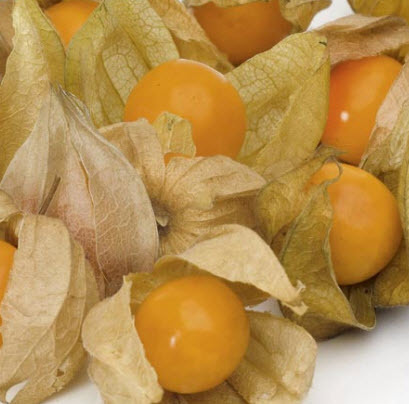
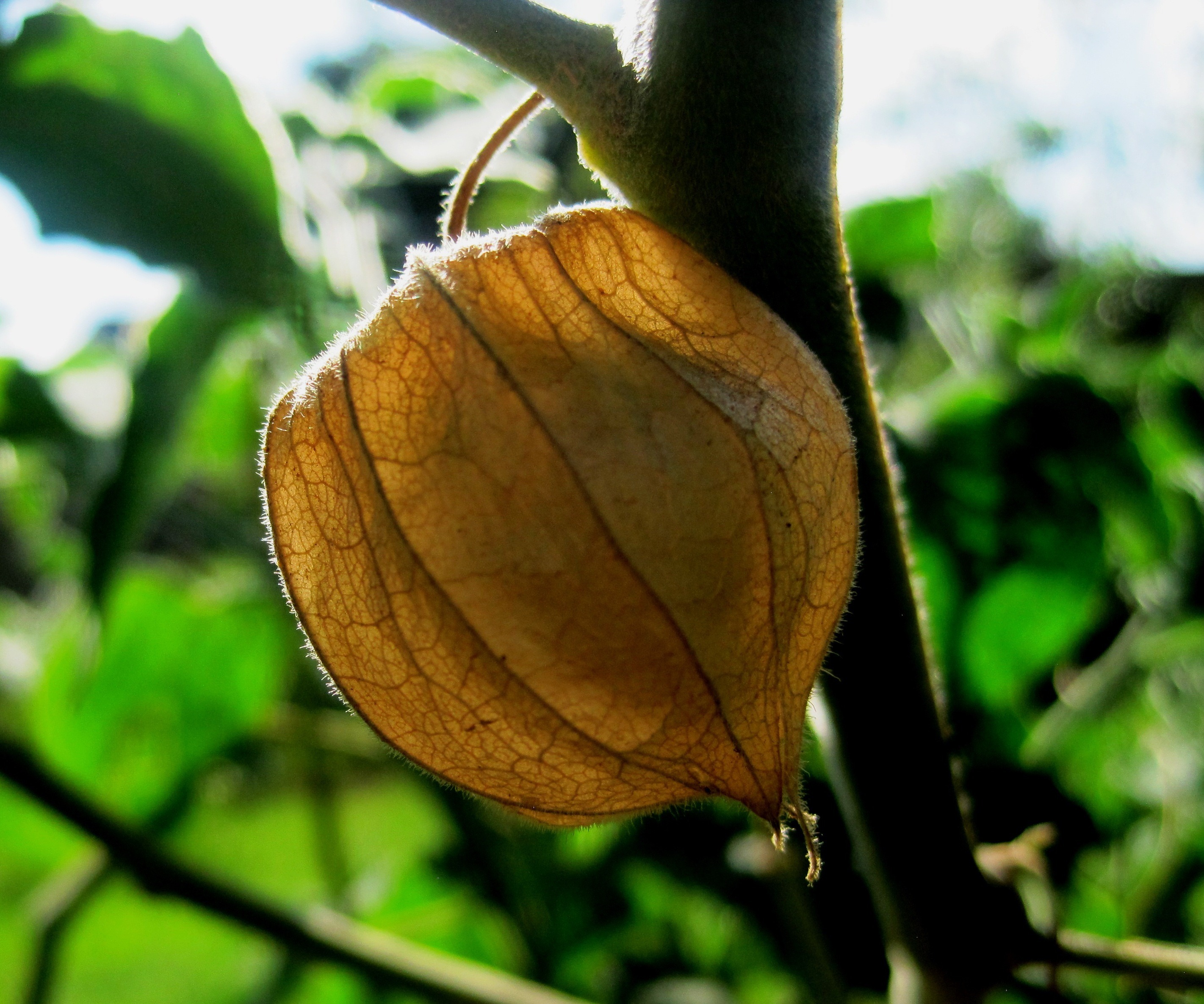
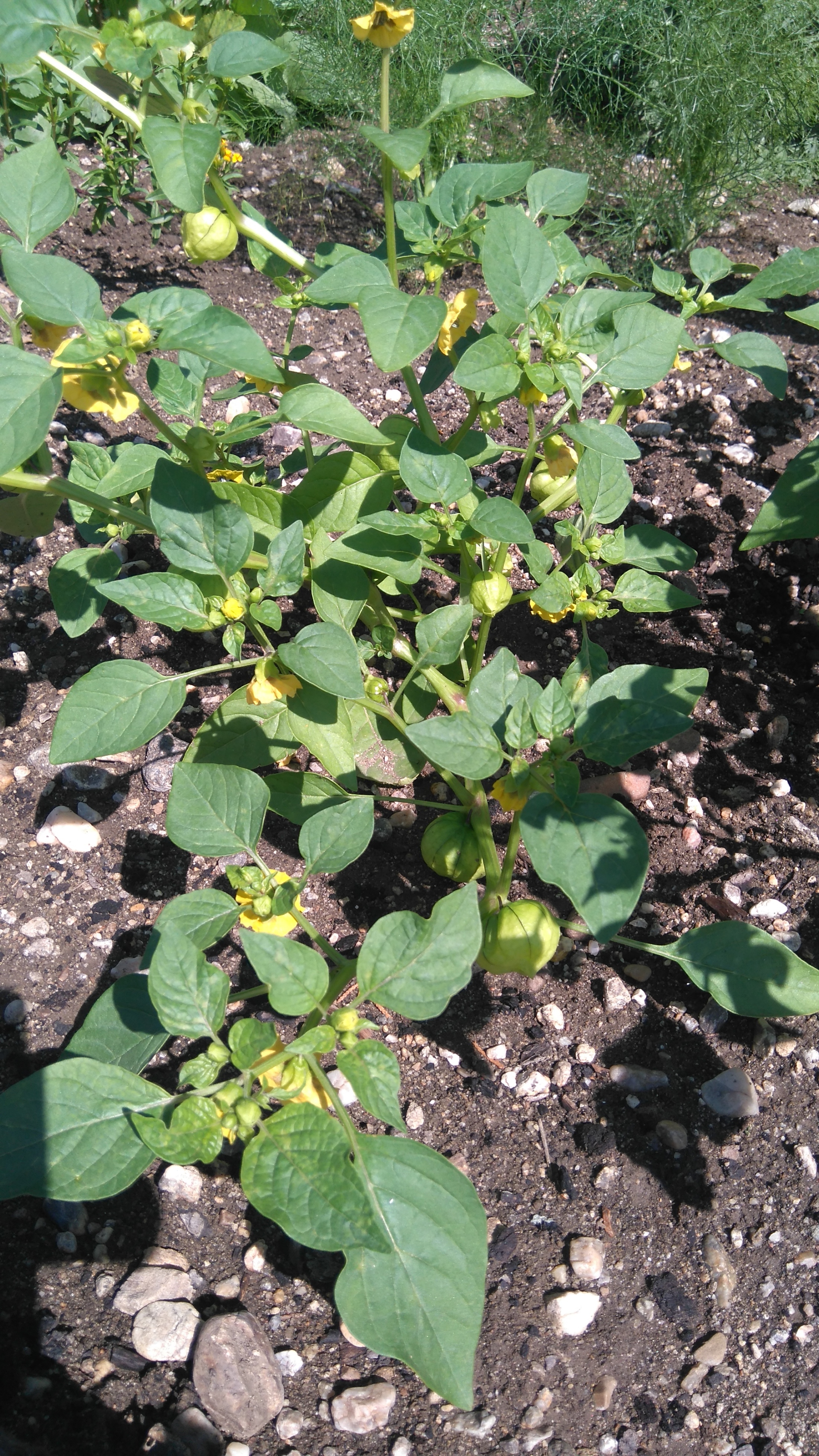
Short description of the species
Usage
- fruits: fresh or dried; juice, salads, desserts, jams, jelly, food decorationEnvironmental requirements, fertilization and crop rotation
Cape gooseberry grows well with an average annual temperature of 13 to 18°C. Daily temperatures of 27-30°C do not appear to affect fruit set (Parker, 2012), although Fischer et al. (2000) noted a decrease in dry matter production when root zone temperatures exceeded 22°C. Irrigation requirements are a minimum of 800 mm during the growing season. Higher irrigation requirements, up to 4300 mm, increase growth and yield if the soil is well drained. Plants become dormant during drought (Parker, 2012). Plants grow in full sun, but can also grow in partial shade, including in a greenhouse. Day length does not play a significant role in flowering, as yields are good both near the equator and at high latitudes. However, Heinze and Midasch (1991) reported that flowering occurred one week earlier at 8 h day length than at 16 h day length, suggesting that the moss is a short-day plant. The plants grow well in any well-drained soil (pH 4.5-8.2), but do best in sandy to gravelly loam soils (Morton, 1987). It does not tolerate heavy or waterlogged soils. Nitrogen is the most important macronutrient (supports longitudinal shoot growth and fruit formation) and boron is the most desirable micronutrient for bryophyte plants. Potassium is related to flowering and fruit formation. Calcium is important for tissue formation and epidermis stability, especially during calyx formation (Santos, 2019). The dose of NPK fertilizers that supports the greatest production of bryophyte fruits, and therefore greater economic benefit, was determined by Santos et al. (2019) at 1200 mg/dm3 N, 3600 mg/dm3 P2O5 and 2400 mg/dm3 K2O. Syropoulous et al. (2022) recorded the highest fruit yield (7.51 t/ha) and the highest average fruit weight (5.32 g) in areas with inorganic fertilization. According to Petríková and Hlušek (2012), the moss plant requires nitrogen in a dose of 100 to 150 kg/ha, supplemented with P and K fertilization. On very fertile alluvial soil, the plant becomes very vegetative and the fruits do not color properly. It can be classified as moderately tolerant to sodium (Miranda et al., 2010) and to cadmium (Thiebeauld et al., 2005).
Cultivation
Growing is similar to that of tomatoes. Seedlings are grown indoors, with sowing starting in mid-March. Since it is sensitive to frost, seedlings are planted in the second half of May in a warm and sunny location in a 1 x 0.6 m planting spacing. The fruits are harvested at botanical maturity from late summer to October. They ripen about 10 weeks after the start of flowering. Around 30-60 fruits, up to 1 kg/m2, can be harvested from one Peruvian mossy vine plant. In commercial conditions, 18-28 t/ha is reported (Muniz et al., 2014). The calyx on the fruits must remain to prevent contamination of the fruits. The fruits crack when overripe. The fruits are sticky, so it is advisable to harvest them with gloves so that the fruits do not deteriorate (Pokluda et al., 2022). The fruits of the moss are climacteric and it is difficult to maintain them at an acceptable quality level when fresh. The optimal temperature plays an important role in storage. According to Olivares-enoria et al. (2017), the most suitable temperature for storing moss fruits is 8 °C. The presence of the calyx does not play a major role in the ripening process during storage. Nevertheless, suitable conditions for longer storage (2 months) are, in addition to the above temperature, 80% RVV and the preservation of the calyx, because its removal stimulates an increase in the surface moisture of the fruits, thereby supporting the growth of mold. The shelf life of the fruits is therefore not terminated by their physiological changes, but by attack by pathogens. Under given optimal storage conditions, moss fruits also retain the relevant content of ascorbic acid and β-carotene.
Diseases and pests
The berry is attacked by pests such as aphids, whiteflies, thrips, snails, caterpillars and larvae, while the fruits are also popular with birds. A specific pest is the red mite, which transmits viruses, inhibits the function of chlorophyll and feeds on the plant sap of the berry. The most important diseases are powdery mildew, alternariosis, stolbur or fusarium wilt.
Labeling Plants with QR Codes
At the Faculty of Horticulture and Landscape Engineering at SPU in Nitra, we've created a project that offers visitors to our plantings a new way to discover the beauty and intriguing aspects of plants. Each plant in our plantings has its own unique QR code. All a visitor needs to do is scan this code with their smartphone.
Encyclopedy
Informácie
Kontakt
Fakulta záhradníctva a krajinného inžinierstva
Tulipánová 7, 949 76 Nitra
phone +421 (37) 641 4229 — study department
email henrieta.budayová@uniag.sk



Copyright © 2026 Faculty of Horticulture and Landscape Engineering