

 Slovenská verzia
Luffa
Short description of the species
Interesting
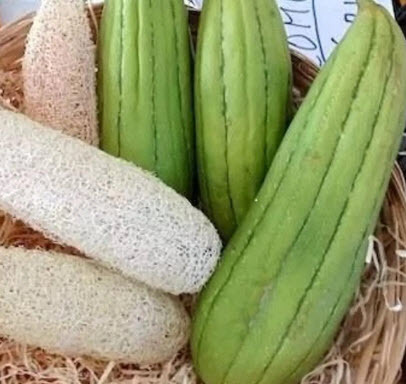
Fully-ripened fruits can be processed and used as abrasive sponge within care about skin.Usage
- young fruits: salads, boiling - seeds: roasting, oil productionEnvironmental requirements, fertilization and inclusion in the crop rotation
Luffa is a subtropical plant that requires a frost-free growing season when grown in temperate regions. A suitable location is where cucumbers, pumpkins and melons can be grown. It cannot tolerate temperatures below 10 °C. For optimal growth, it needs a sunny position, good air circulation, sufficiently moist but not soggy soil and also enough nutrients. In terms of soil type, well-permeable sandy loam is suitable for it. We rank Luffa in the first line, fertilizing with organic fertilizers is usually not enough and nutrients are supplemented with industrial fertilizers. Before planting, it is necessary to perform a soil test and follow the recommendations regarding fertilization for cucumbers. According to El Gendy (2017), a suitable basic fertilization consists of 10 t/ha of manure, 120 kg/ha of superphosphate and 30 kg/ha of potassium. Nitrogen is applied at a rate of 250 kg N/ha in the form of urea and in the same amount 60 days after planting.
Cultivation Luffas have a long growing season, they need a longer time for sufficient fruit ripening compared to, for example, cucumbers, therefore in our conditions they are grown from pre-grown seedlings. Sowing should be started in heated areas in early April. Planting is carried out after the last frost, about 6 weeks after sowing in a greenhouse. The optimal plant spacing is 1.5 x 5m (Davis, 1994), according to various authors it is given in the range from 0.40 - 2.0 m in a row x 1.8 - 5.0 in the inter-row (Benzioni, 1988; Omafra, 2012; El Gendy, 2017). A high yield of 44.5-47.3 t/ha was achieved with plants grown on trellises at a planting density of 10,000 and 20,000 plants/ha (Huyskens, 1993). To speed up spring growth in cooler climates, loofahs can be grown in raised beds mulched with black polyethylene sheeting or non-woven fabric. Regular irrigation is required during growth, with drip irrigation being the preferred method.
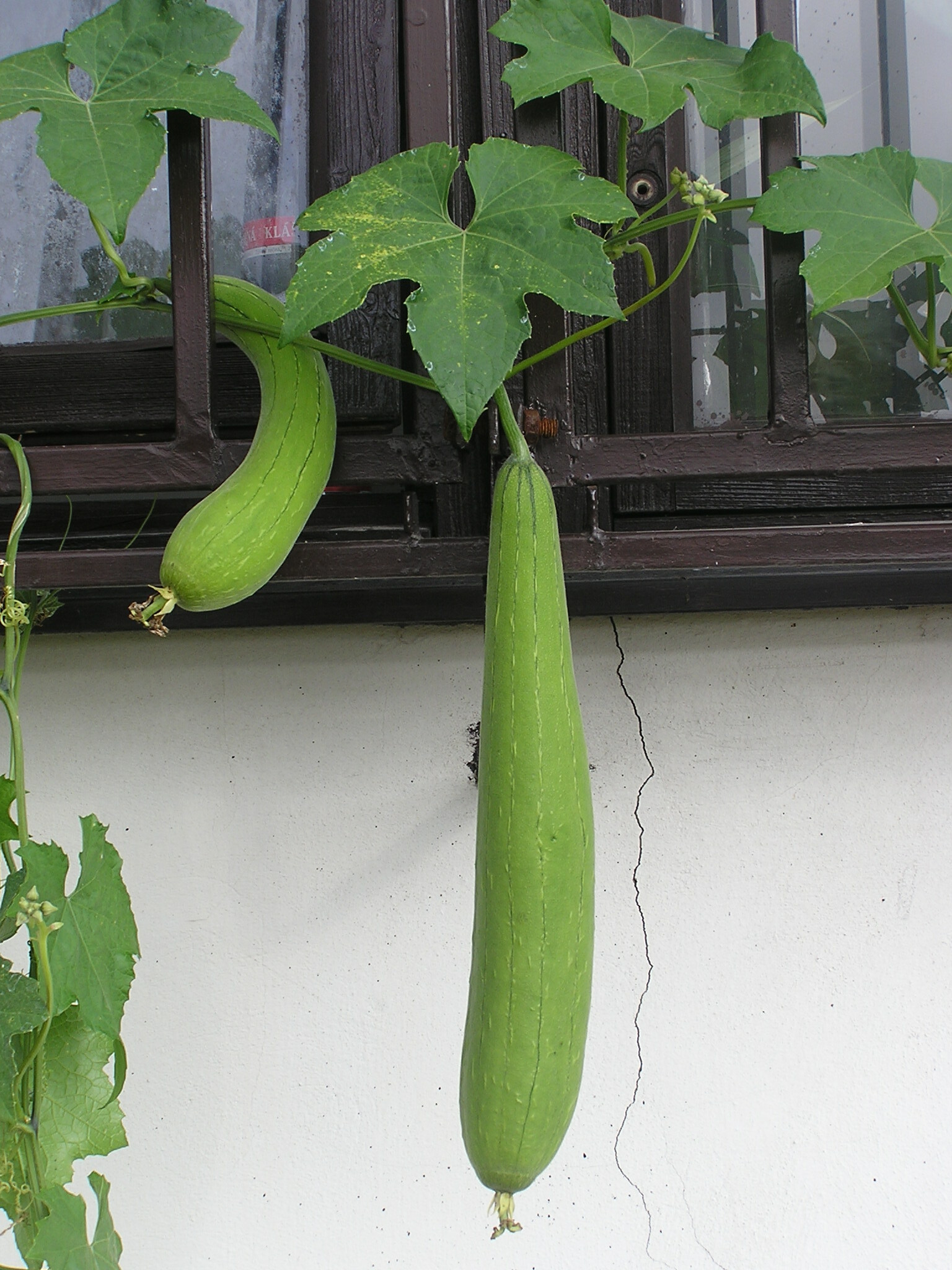
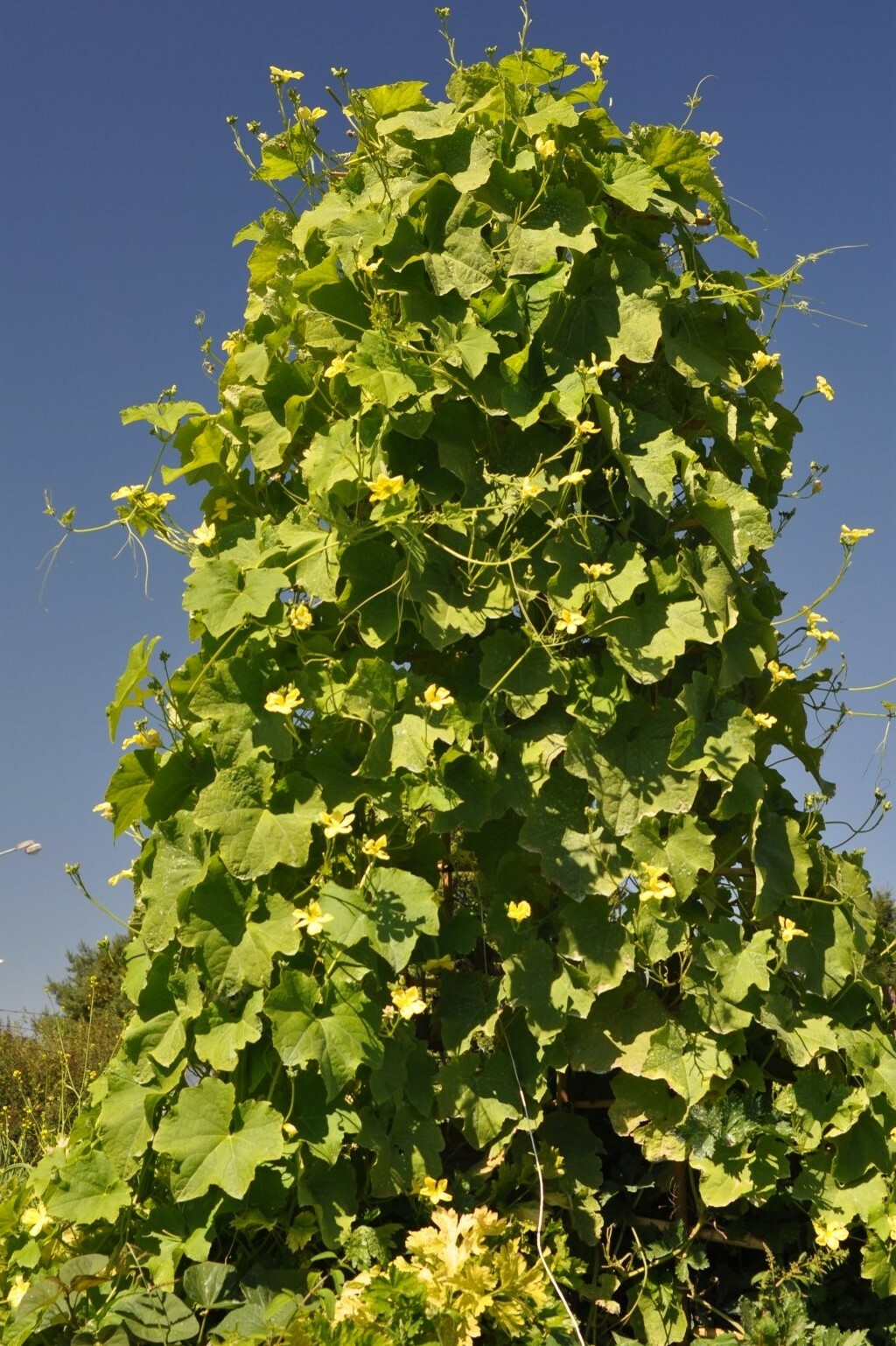
A specific requirement for growing is a stable support, e.g. a solid trellis, which is preferable to bamboo poles, as the plants intertwine and do not climb well unless tied regularly. If loofah gourds come into contact with the ground, the result is usually fruit rot and malformed gourds. The most common type of trellis is a vertical trellis, which is similar in design to that used for cucumbers, but must be very strong! To support the weight of the mature fruit, posts placed 3 m apart are recommended. The upper horizontal support should be a thick wire or cable. Several more wires can be run horizontally between the upper wire and the ground (Davis, 1994). The plants can grow up to 7 m, but this is an exception.
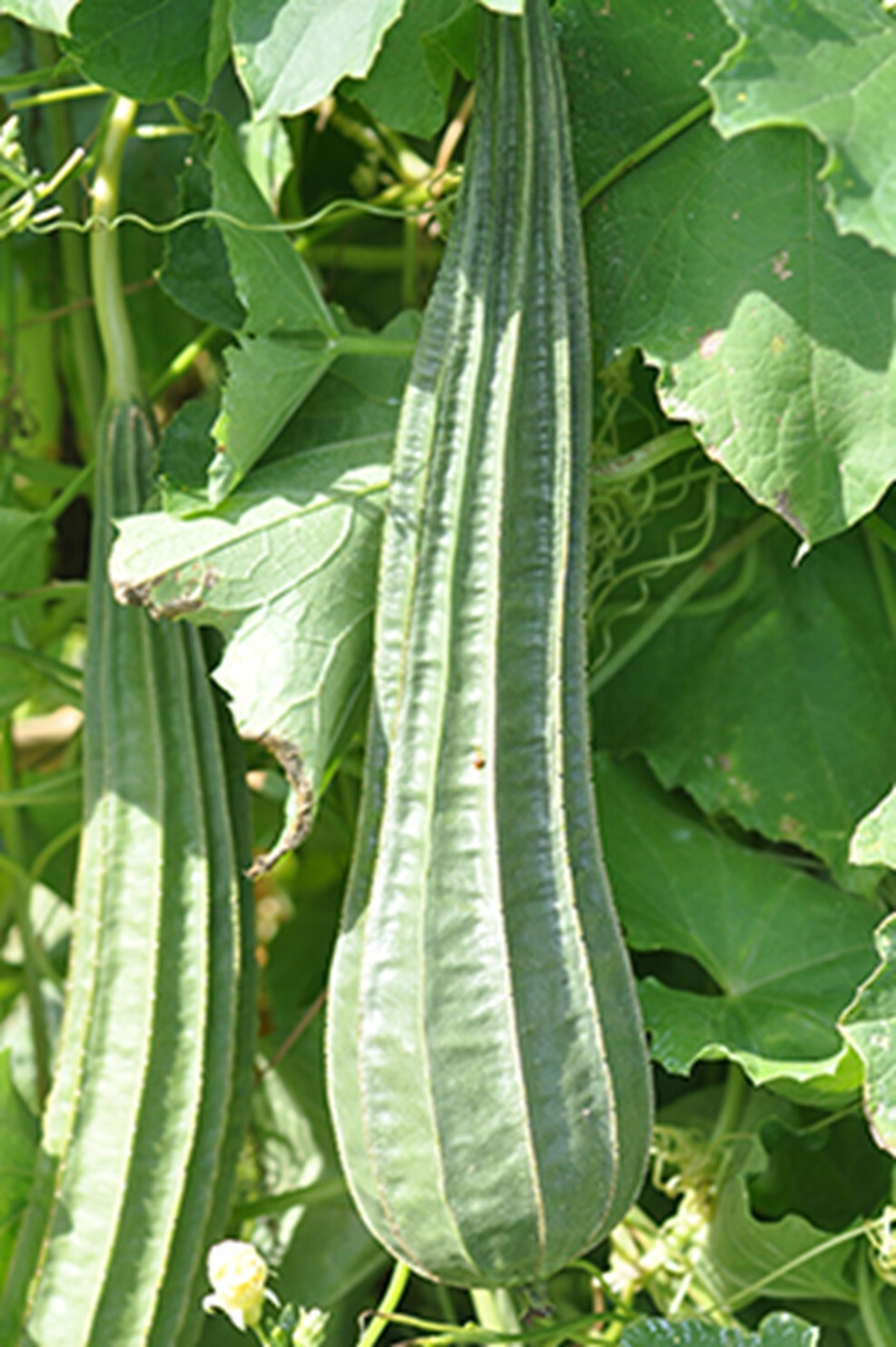
The first harvest - for culinary use - is carried out from 60 to 90 days after planting, depending on the cultivar; for industrial use of fibers, the fruits are harvested from 100 to 140 days after planting. For eating, we harvest loofah fruits smaller than 30 cm. Manual harvesting for consumption is multiple, gradual, in the appropriate size of the fruits. Since the immature fruits do not yet have a hardened skin, gentle handling is necessary to avoid injury. During storage, optimal conditions are with relative humidity (RH): 85-90% and at a temperature: 10-12 °C. Young fruits are sensitive to low temperatures, damage and negative changes can occur even at a temperature below 10 °C (Hlel, 2019).
The harvest of fruits intended for industrial use of fiber is a one-time event at the botanical (physiological) maturity of the fruits (Omafra, 2012), when the inner fibrous part is already of the best quality. Subsequently, the loofah fruits are stripped of their upper layers by peeling; if the loofah is overripe, entire strips of skin can be peeled off by squeezing. However, beware of late autumn frosts, which can ruin this crop. The fibrous pulp, freed from the cores, must be rinsed with clean water. During commercial processing, e.g. for cosmetic purposes, the loofah fiber is bleached and thus acquires an attractive uniform color.
Diseases and pests
Like other members of the Cucurbitaceae family, loofah is attacked by cucumber beetles (e.g. Acalymma vittatum and Diabrotica undecimpunctata) and aphids (e.g. Aphis gossypii). Diseases include powdery mildew, alternariosis, scab, anthracnose, root rot and damping-off, bacterial wilt, fusarium wilt, phytophthora, septoria leaf spot, and cucumber mosaic virus.
Gastronomic Use
From the point of view of gastronomic use, only the young fruits are consumed as vegetables, and they have a diuretic and laxative effect. Young fruits can be eaten raw like cucumber or cooked like pumpkin. Young leaves, shoots, flower buds, as well as flowers can be consumed after light heat treatment by stewing. The seeds can be roasted as a snack or pressed to produce oil (Hlel, 2017). Ripe fruits are bitter, but the main reason for inedibility is hardened vascular bundles (Grulich, 2015). These cellulose fibers of the dried fruit are used as abrasive sponges in skin care, to remove dead skin and to stimulate blood circulation (Hlel, 2017).
Labeling Plants with QR Codes
At the Faculty of Horticulture and Landscape Engineering at SPU in Nitra, we've created a project that offers visitors to our plantings a new way to discover the beauty and intriguing aspects of plants. Each plant in our plantings has its own unique QR code. All a visitor needs to do is scan this code with their smartphone.
Encyclopedy
Informácie
Kontakt
Fakulta záhradníctva a krajinného inžinierstva
Tulipánová 7, 949 76 Nitra
phone +421 (37) 641 4229 — study department
email henrieta.budayová@uniag.sk



Copyright © 2026 Faculty of Horticulture and Landscape Engineering