

 Slovenská verzia
- home
- Vegetable crops
- Leaf vegetable
- Letucce
- Lettuce
Lettuce
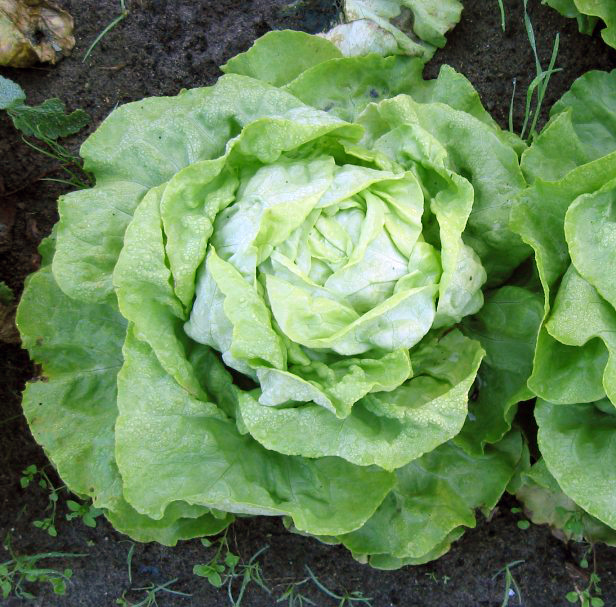
Short description of the species
Usage
fresh and cooked in the form of juice, purée, sauces and othersInclusion in crop rotation and fertilization requirements
Track: II–III
Suitable preceding crops: potatoes, legumes, and forage mixtures; do not include in rotations after spinach and other *Lactuca* species.
Fertilization: farmyard manure applied to the preceding crop; 90–150 kg N·ha⁻¹, 80–130 kg P₂O₅·ha⁻¹, 150–240 kg K₂O·ha⁻¹, and 80–130 kg Mg·ha⁻¹
Varieties:
• According to cultivation season in field conditions:
o Early varieties for spring and autumn cultivation
o Summer varieties – neutral to day length
o Winter varieties – suitable for overwintering
Types of varieties:
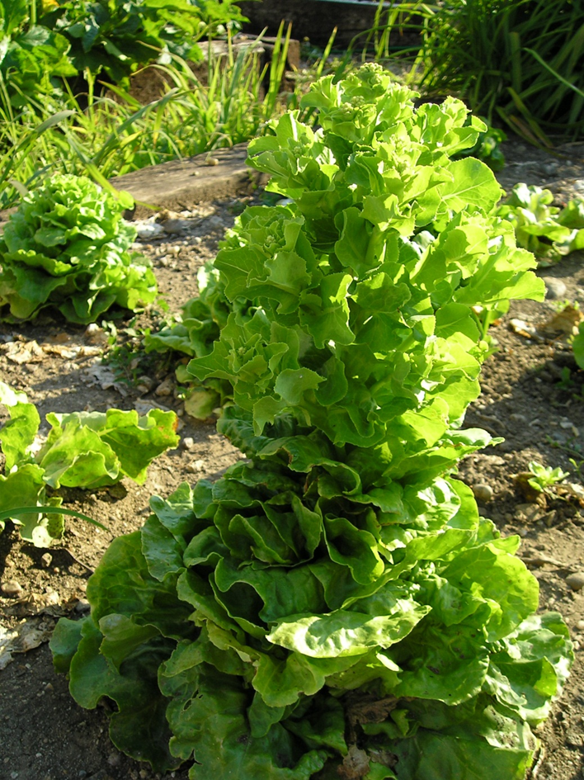
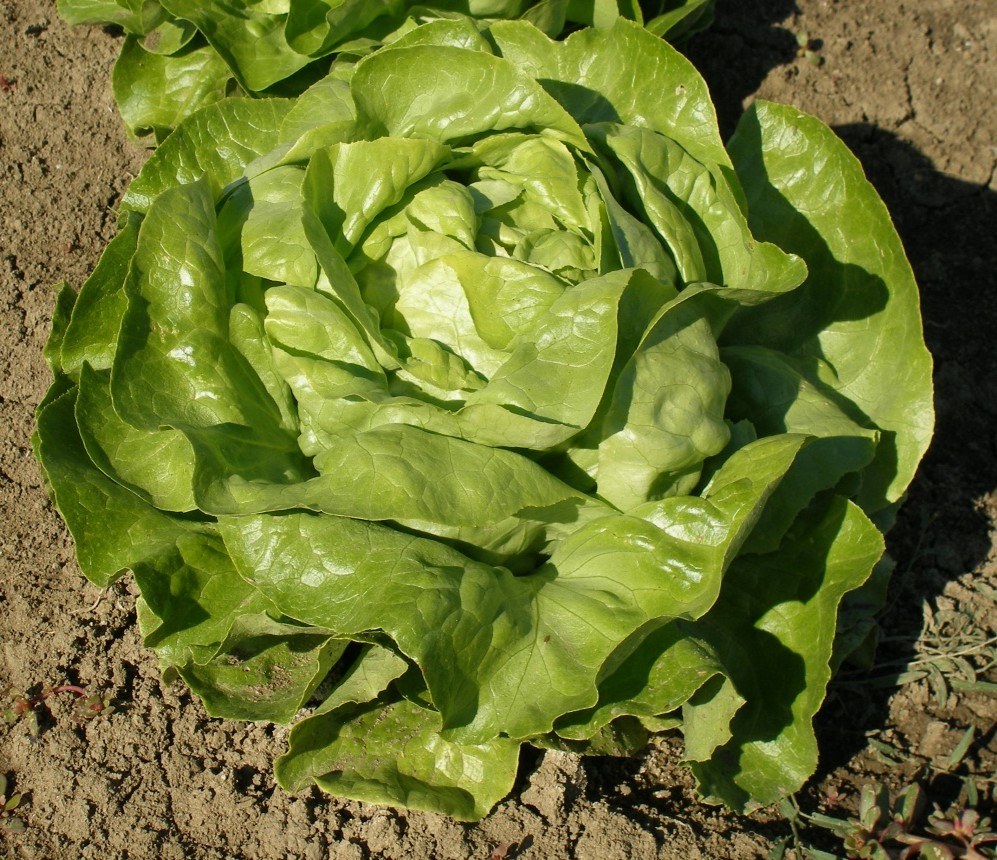
o ‘Buttersalat’ – leaves forming its head are very tender, prone to wilting
o ‘Batavia’ – larger head, less prone to wilting – intermediate type between butterhead and iceberg lettuce
o ‘Frisby’ – intermediate type between butterhead and leaf lettuce
o ‘Krulsalat’ – intermediate type between butterhead and oakleaf lettuce
Agrotechnics of cultivation and harvest
Propagation: generative
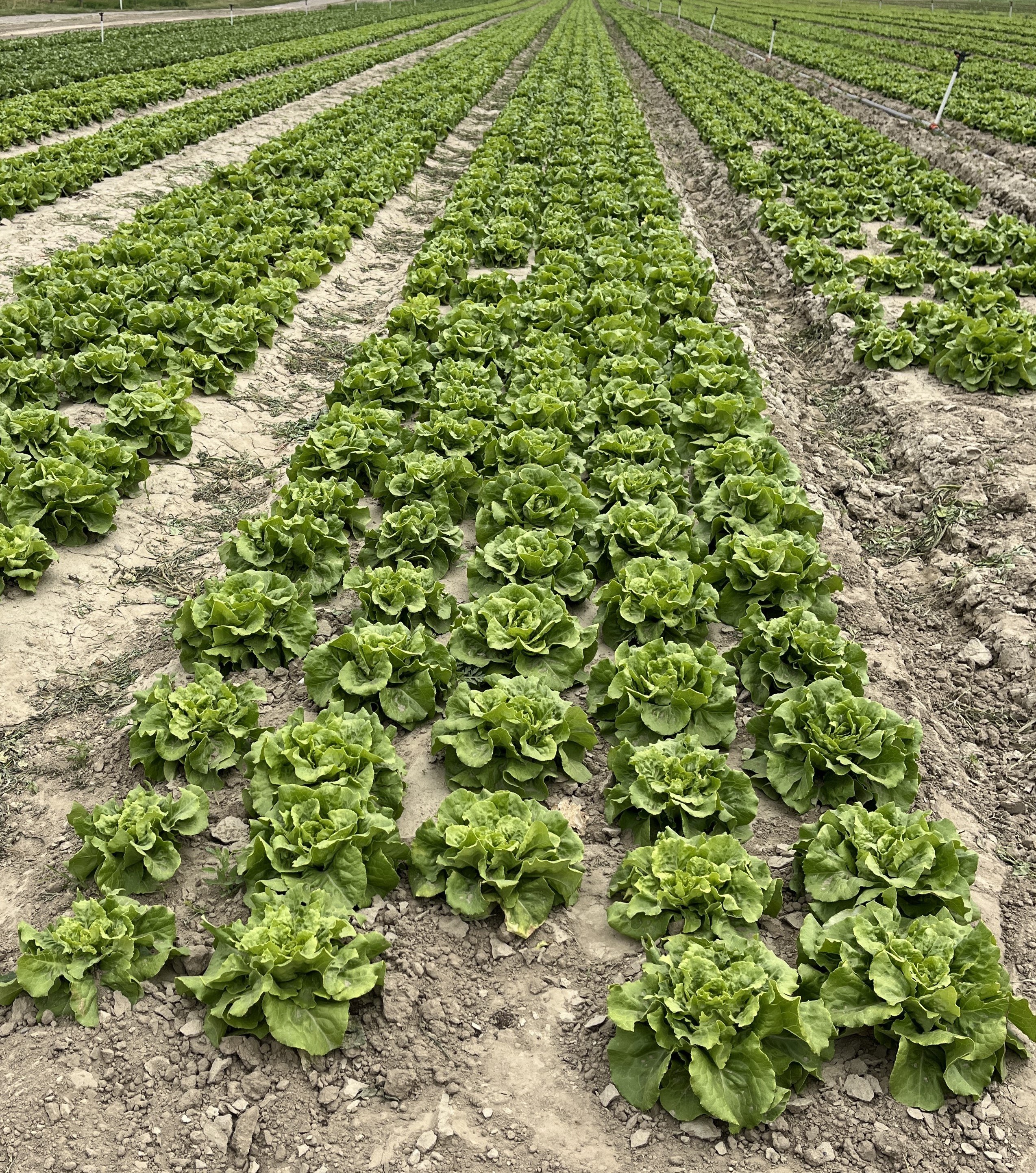
Spacing:• 0.3 m × 0.25–0.3 m
Harvest:
• On small areas by hand thinning
• On larger areas by hand using harvesting platforms
Agrotechnics of cultivation from seedlings – spring cultivation
| Month | I. | II. | III. | IV. | V. | VI. | VII. | VIII. | IX. | X. | XI. | XII. |
|---|---|---|---|---|---|---|---|---|---|---|---|---|
| Sowing/covered areas | X | XX | ||||||||||
| Planting | X | XX | ||||||||||
| Harvest | X | XX |
Agrotechnics of cultivation from seedlings – summer cultivation
| Month | I. | II. | III. | IV. | V. | VI. | VII. | VIII. | IX. | X. | XI. | XII. |
|---|---|---|---|---|---|---|---|---|---|---|---|---|
| Sowing/covered areas | XX | |||||||||||
| Planting | X | XXX | X | |||||||||
| Harvest | XX | XXX | X |
Agrotechnics of cultivation from seedlings – autumn cultivation
| Month | I. | II. | III. | IV. | V. | VI. | VII. | VIII: | IX. | X. | XI. | XII. |
|---|---|---|---|---|---|---|---|---|---|---|---|---|
| Sowing/covered areas | XX | |||||||||||
| Planting | X | X | ||||||||||
| Harvest | X | XX |
Agrotechnics of cultivation from seedlings – winter cultivation
| Month | I. | II. | III. | IV. | V. | VI. | VII. | VIII. | IX. | X. | XI. | XII. |
|---|---|---|---|---|---|---|---|---|---|---|---|---|
| Sowing/covered areas | X | |||||||||||
| Planting | X | X | ||||||||||
| Harvest | XX |
Storage: 2 (3) weeks at a temperature of 0–1 °C and 98% relative humidity
Use: fresh and cooked in the form of juice, purée, sauces and others.
Diseases and pests:
• Physiological disorders: marginal necrosis of lettuce leaves due to calcium deficiency
• Viral diseases: lettuce mosaic virus (LMV), cucumber mosaic virus (CMV)
• Fungal diseases: grey mould (*Sclerotinia sclerotiorum*), downy mildew of lettuce (*Bremia lactucae*), lettuce sclerotinia rot (*Sclerotinia sclerotiorum*)
• Pests: aphids (*Aphidoidae*), slugs and snails, wireworms
Labeling Plants with QR Codes
At the Faculty of Horticulture and Landscape Engineering at SPU in Nitra, we've created a project that offers visitors to our plantings a new way to discover the beauty and intriguing aspects of plants. Each plant in our plantings has its own unique QR code. All a visitor needs to do is scan this code with their smartphone.
Encyclopedy
Informácie
Kontakt
Fakulta záhradníctva a krajinného inžinierstva
Tulipánová 7, 949 76 Nitra
phone +421 (37) 641 4229 — study department
email henrieta.budayová@uniag.sk



Copyright © 2026 Faculty of Horticulture and Landscape Engineering