

 Slovenská verzia
- home
- Fruits - general part
- Miscellaneous fruit
- Black chockeberry
Black chockeberry
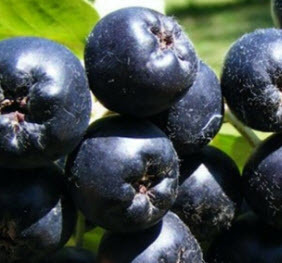
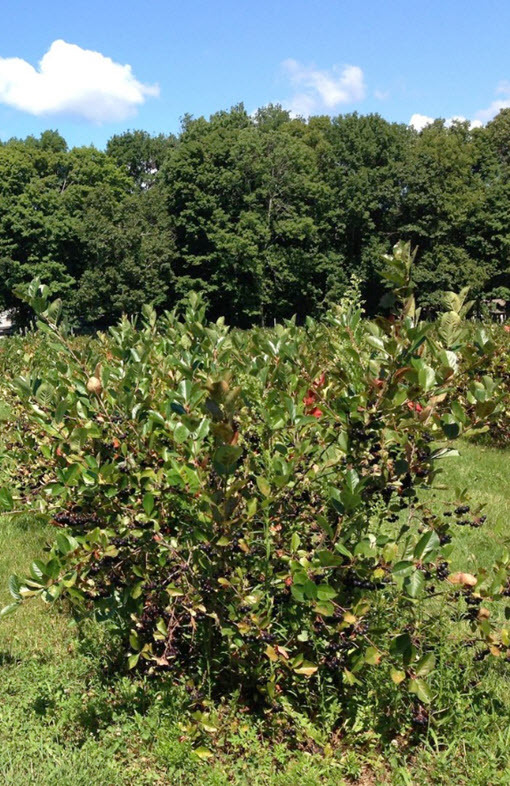
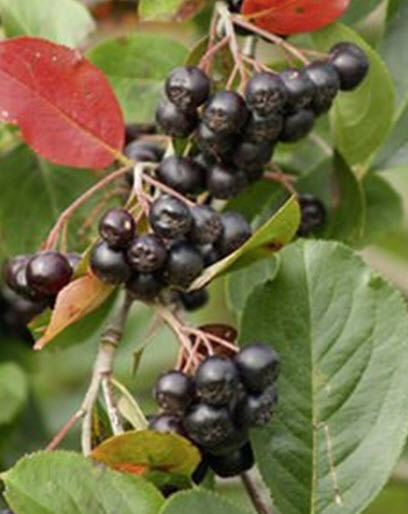
Short description of the species
Interesting
The total content of polyphenols is 1700 mg per 100 g of dry matter, the content of anthocyanins is 1500 mg per 100 g of dry matter and the concentration of proanthocyanidin is 660 mg per 100 g of fresh weight. These values are among the highest so far measured in plants.Usage
fresh consumption, processing (juice, drying, extracts, jam, wine)Suitable growing locations
It can be successfully grown from lowlands to higher mountain locations, it requires moderate to cold locations. The bushes are extremely frost-resistant and can survive temperatures down to -30°C without damage in winter. It likes sunny locations, but can also tolerate partial shade. Aronia has a shallow and compact root system and thrives in soils rich in humus and nutrients, not waterlogged, with a relatively low groundwater level.
Cultivation technology, pruning and training
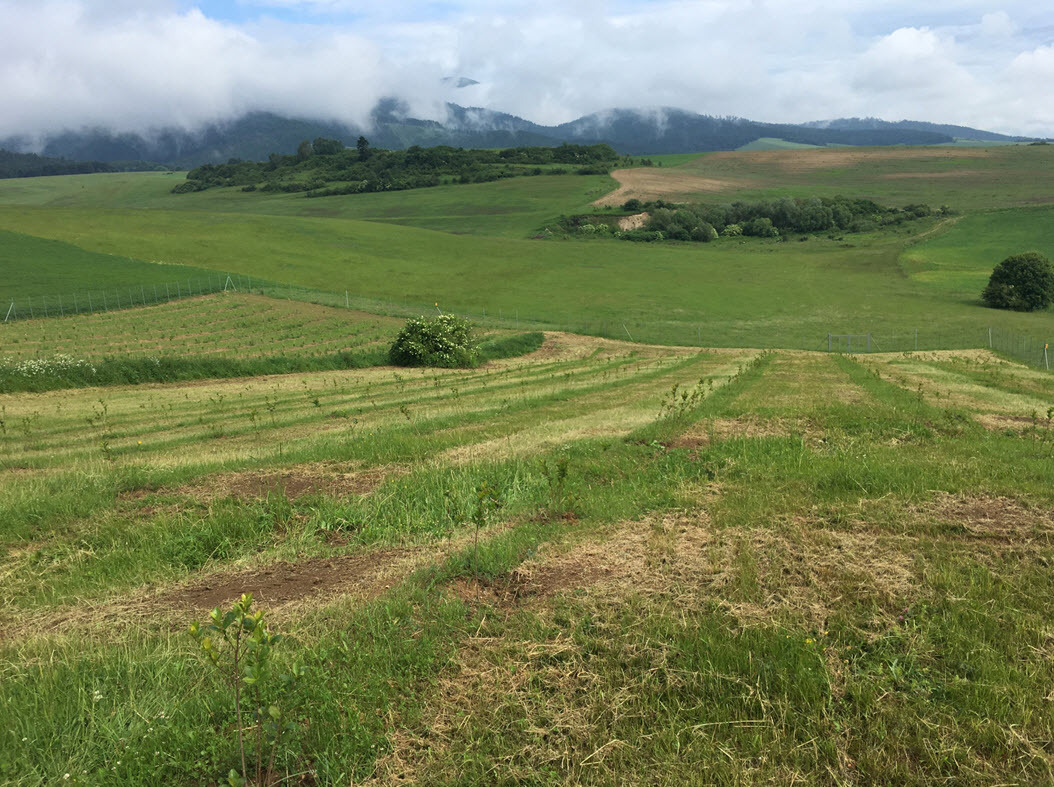
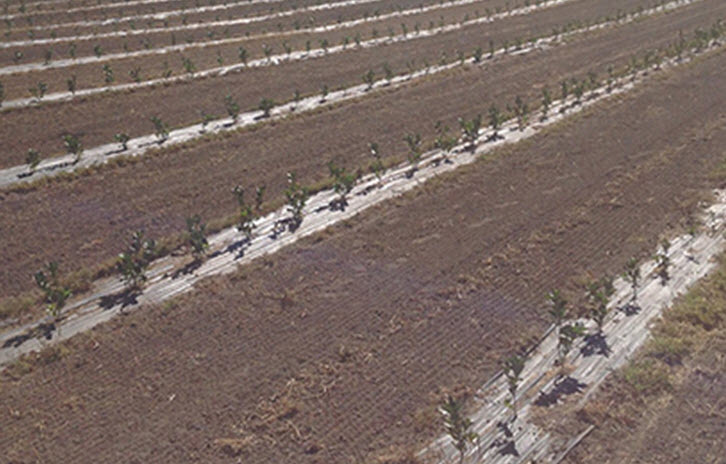
The most common is cultivation in the form of kra. Fertility is ensured by mixed buds located in top and side positions on annual wood and overgrown branches. We plant the seedlings in a clip of 3.0-4.0 x 2.0 m. The shrub consists of 8-10 branches reaching a height of approximately 1.5-2.0 m. After planting, the shoots are deeply shortened (to 4 to 5 buds). In the following year, the elongating shoots are shortened slightly to balance and the number of branches is replenished to 8 to 10. Excess shoots growing from the base of the bush and thickening shoots growing on the branches forming the skeleton of the above-ground part are removed, a detailed cut is usually not necessary, only if necessary removal of damaged branches. After the signs of aging appear, it is necessary to rejuvenate by cutting to transfer to stronger shoots growing from the base of the plant and replanting the branches.
Suitable varieties
If we plan to grow aronia as a sapling, we graft it onto a rowan rootstock at the desired height. Although chokeberry is native to North America, it is widely planted in Europe and Asia. In Russia, Denmark and Eastern Europe, the fruit is used to make juice and wine. Among the available varieties, all of them can be grown in the Slovak Republic. Among the most widespread are Viking, Nero, Autumn Magic.
Diseases and pests
diseases: bacteriosis, scarlet fever, powdery mildew, rust
pests: introduced waxworm, mites, American spinner, spiny beetle, aphids
Labeling Plants with QR Codes
At the Faculty of Horticulture and Landscape Engineering at SPU in Nitra, we've created a project that offers visitors to our plantings a new way to discover the beauty and intriguing aspects of plants. Each plant in our plantings has its own unique QR code. All a visitor needs to do is scan this code with their smartphone.
Encyclopedy
Informácie
Kontakt
Fakulta záhradníctva a krajinného inžinierstva
Tulipánová 7, 949 76 Nitra
phone +421 (37) 641 4229 — study department
email henrieta.budayová@uniag.sk



Copyright © 2026 Faculty of Horticulture and Landscape Engineering