

 Slovenská verzia
- home
- Fruits - general part
- Stone fruits
- Apricot
Apricot
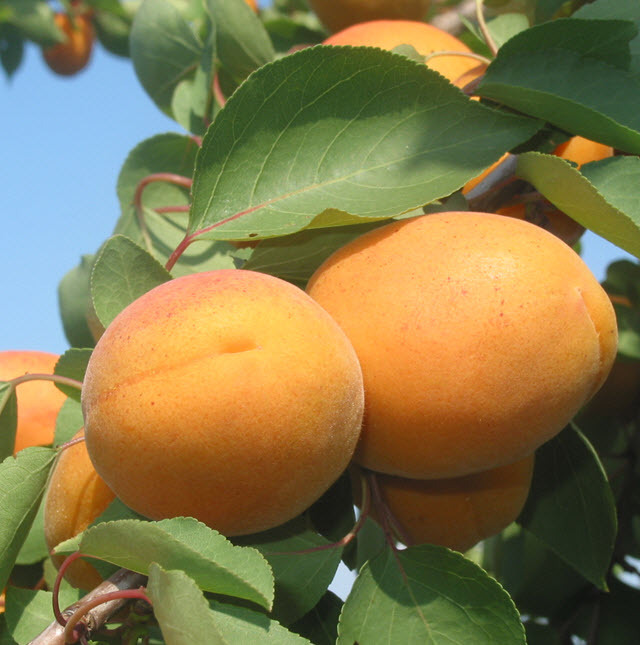
Apricots are among the most attractive fruits in the summer season. With the right varietal composition, it is possible to harvest fruits from the beginning of June to the end of August.
Short description of the species
Interesting
Apricots are tasty, aromatic and highly nutritious, yet low in calories with an antioxidant effect. From a health point of view, apricots can improve bowel function, digestion, vision function, skin health.Usage
direct consumption, nectar processing, drying, distillation, jamsSuitable growing locations
Together with peaches, apricots are among the most demanding trees in terms of temperature. For this reason, we only plant them in the warmest locations with an average annual temperature of 9°C up to an altitude of 300m with an annual average rainfall of up to 600mm. In higher growing locations, they often suffer from frosts, especially during flowering. They require lighter soils and permeable soils. They are sensitive to the height of the groundwater level, and in the absence of air, asphyxiation (death of the roots due to lack of air) can occur, so heavy soils are not suitable. It is very important that the growing position is not closed, because there is a risk of late spring frosts. Slightly sloping locations are optimal, in the warmest locations up to 200 m.a.s.l. also the northern and north-western slopes. Although the onset of vegetation is slower on slopes oriented in this way, this is precisely why the apricot flowers escape the late spring frost. The plains are not very suitable, because there is nowhere for the cold air to escape from them, and plantings on the plains are very often affected by late spring frosts.
Suitable rootstocks
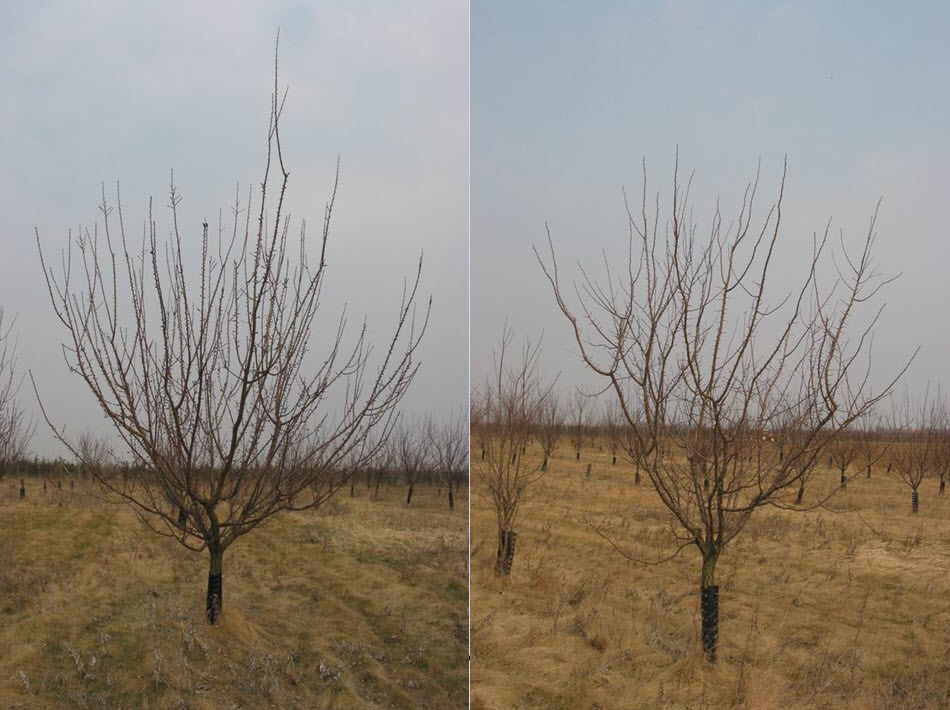
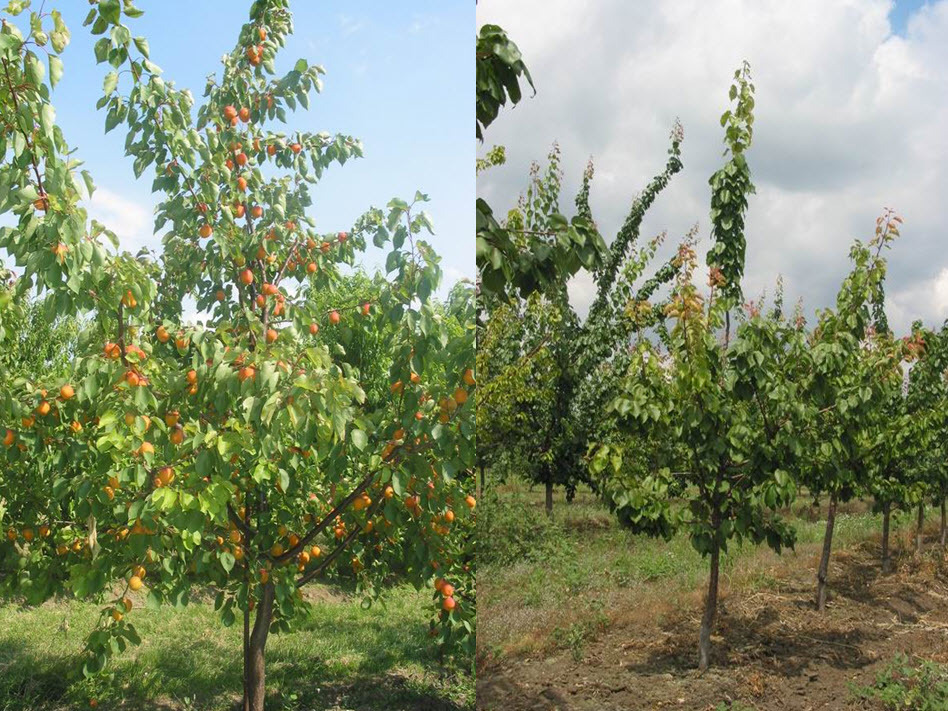
Due to the high spindle-shaped shapes of apricots, the French rootstocks Rubira, Montclar and BSB 1 appear to be the most versatile. While the trees on the Montclar rootstock reach about 80% of the height of the trees compared to the seedlings, the Rubira rootstock reduces growth by 30% and the trees reach about 70% of the size of the apricot seedlings. They are also very suitable for lighter, drier and less nutritious soils, on the contrary, they are unsuitable for heavier soils, clayey, wet and cold soils. They are also unsuitable for soils with a high CaCO3 content, where, in addition to chlorosis and yellowing, there is also a worse affinity with grafted varieties. For the best soils and a shape height of 2.5m, we recommend the rootstock Torinell and Wawit. In the case of apricots on nutritious, highly creditable soils, Torinell becomes the most important rootstock for slender spindle apricots. The rootstock has weaker growth than GF 655/2 and is suitable for asphyxiated soils. The selection of plum rootstocks St. Julien A, or St. Julien 1 and Adesoto. The reduction in growth is about 50% compared to the seedling, and the Adesoto rootstock tolerates drier and more calcareous soils.
Suitable varieties
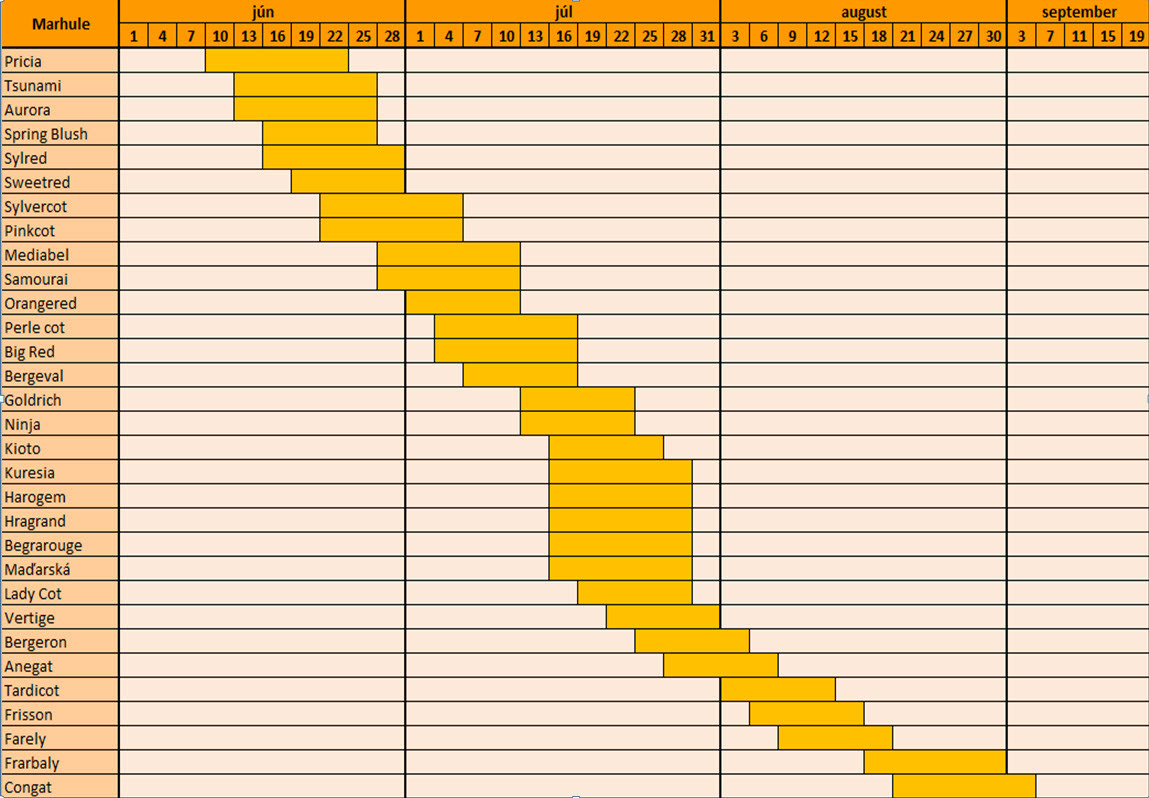
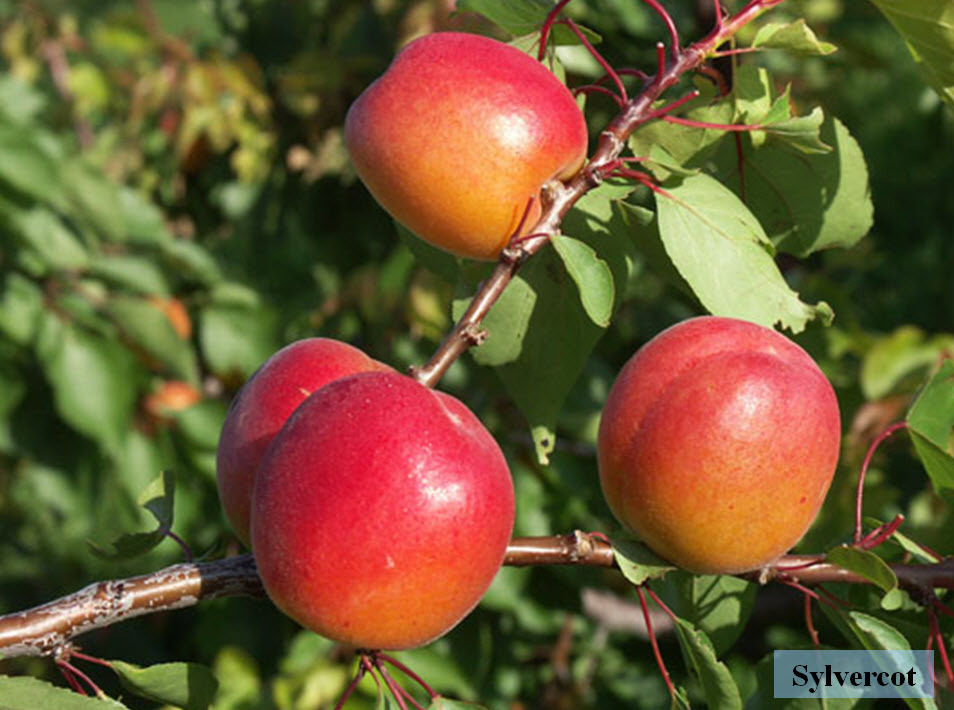
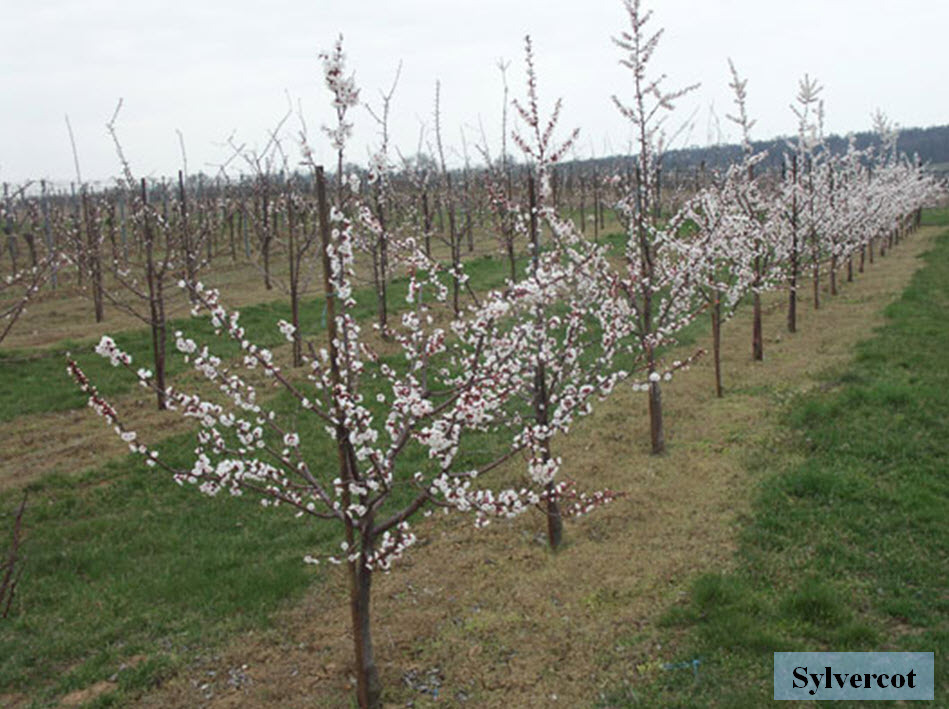
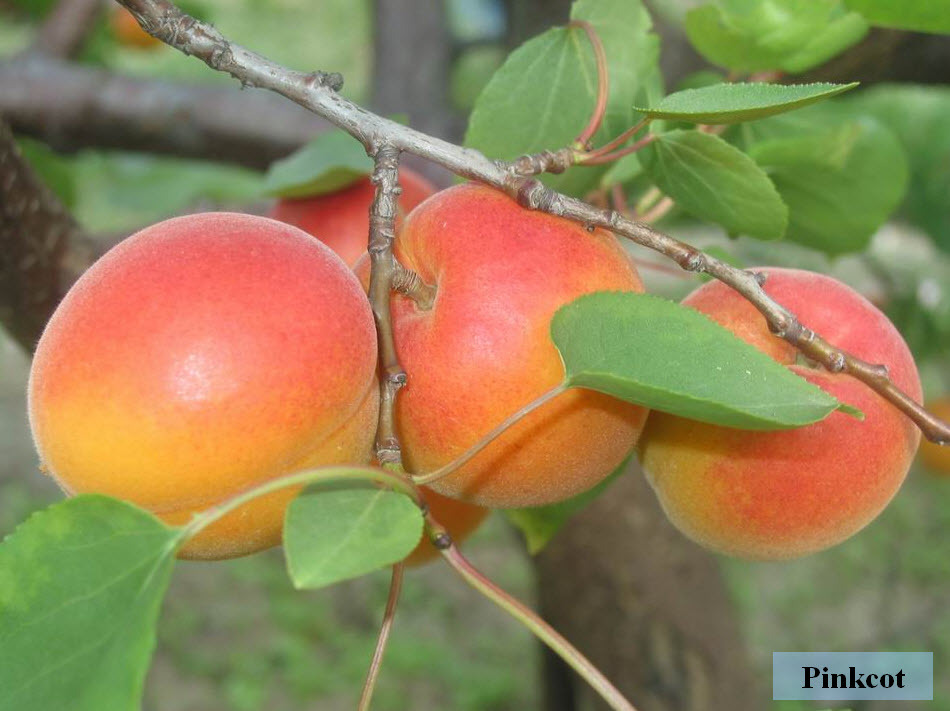
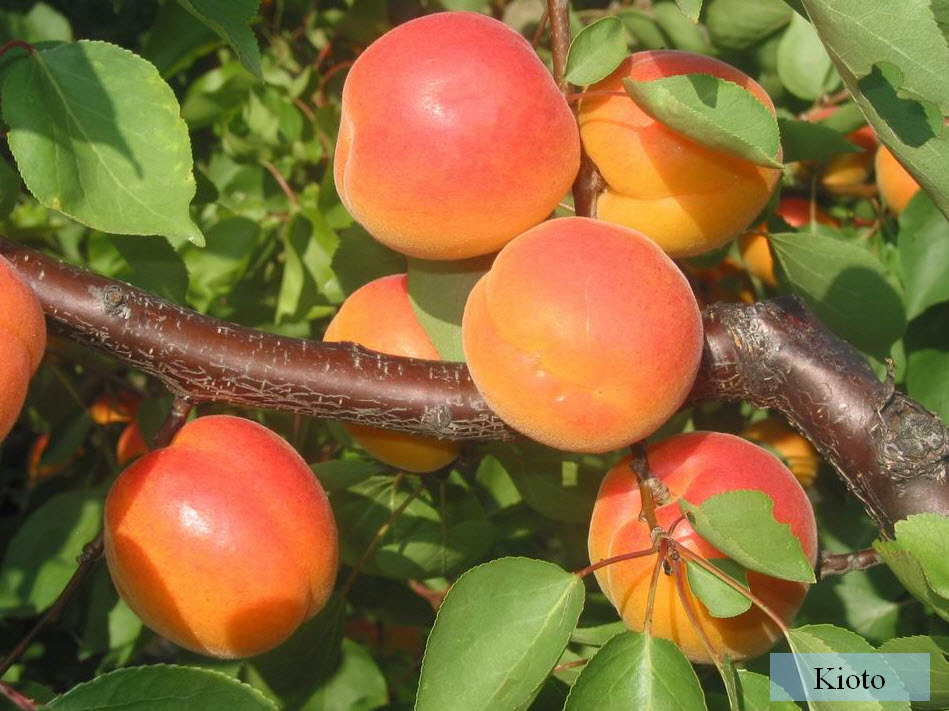
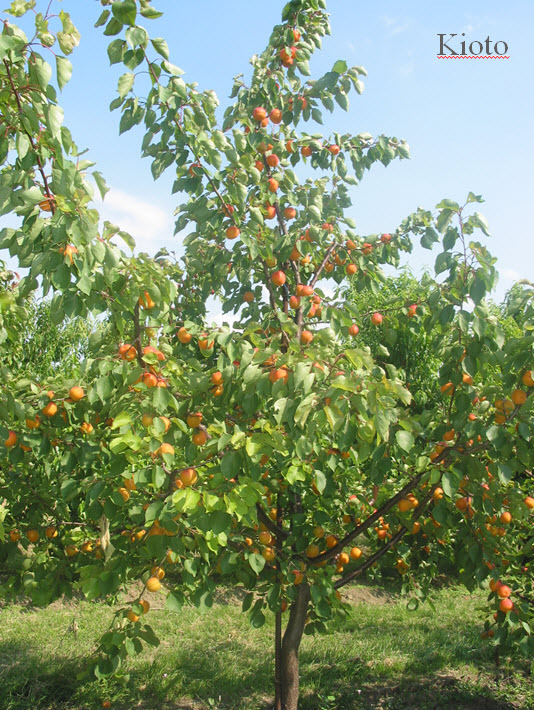
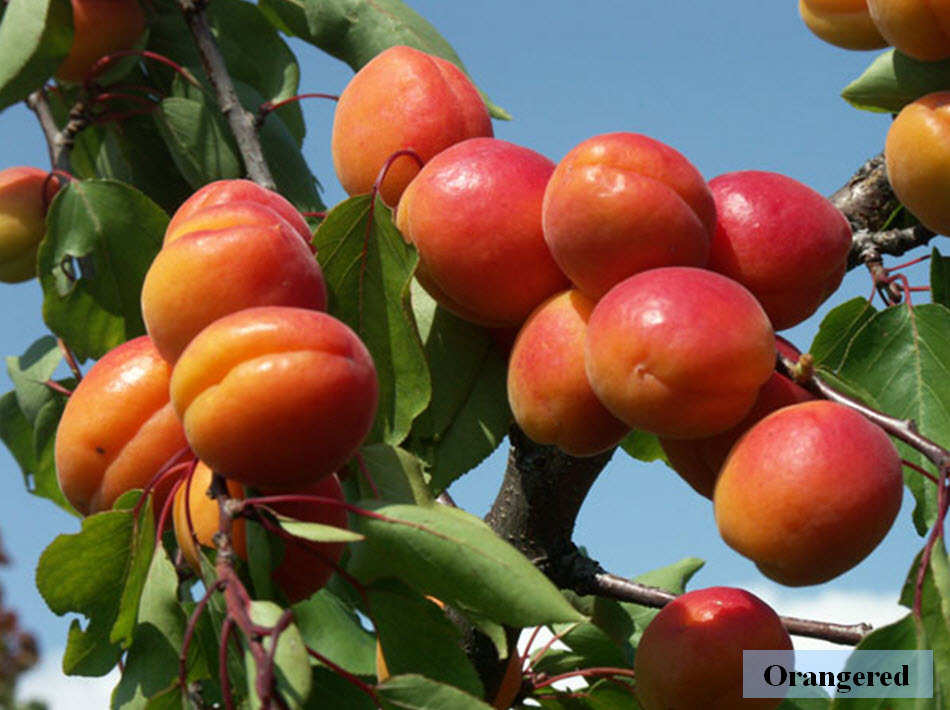
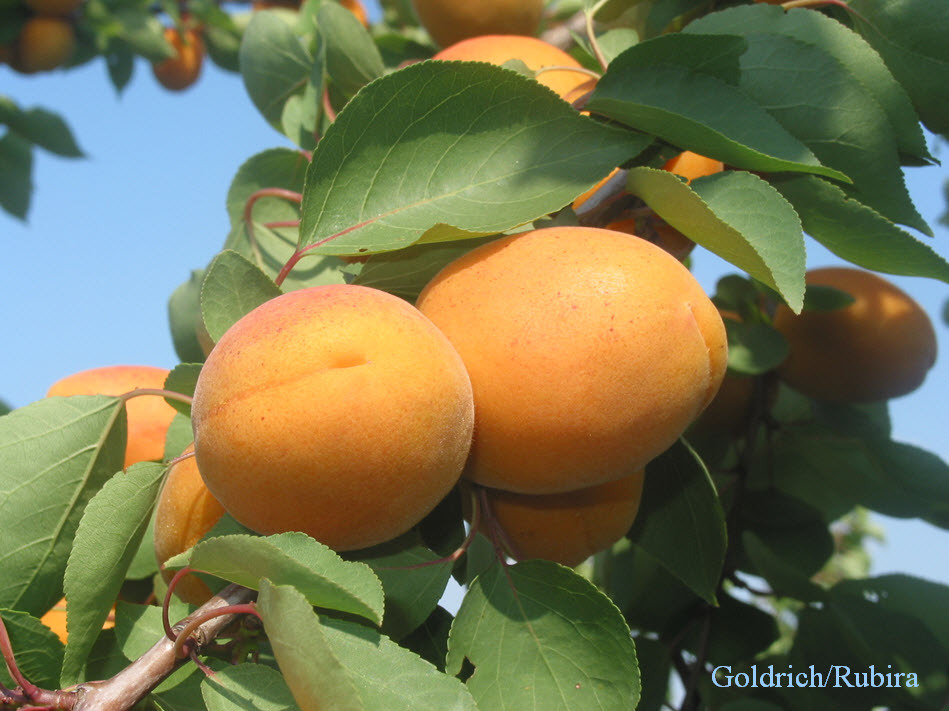
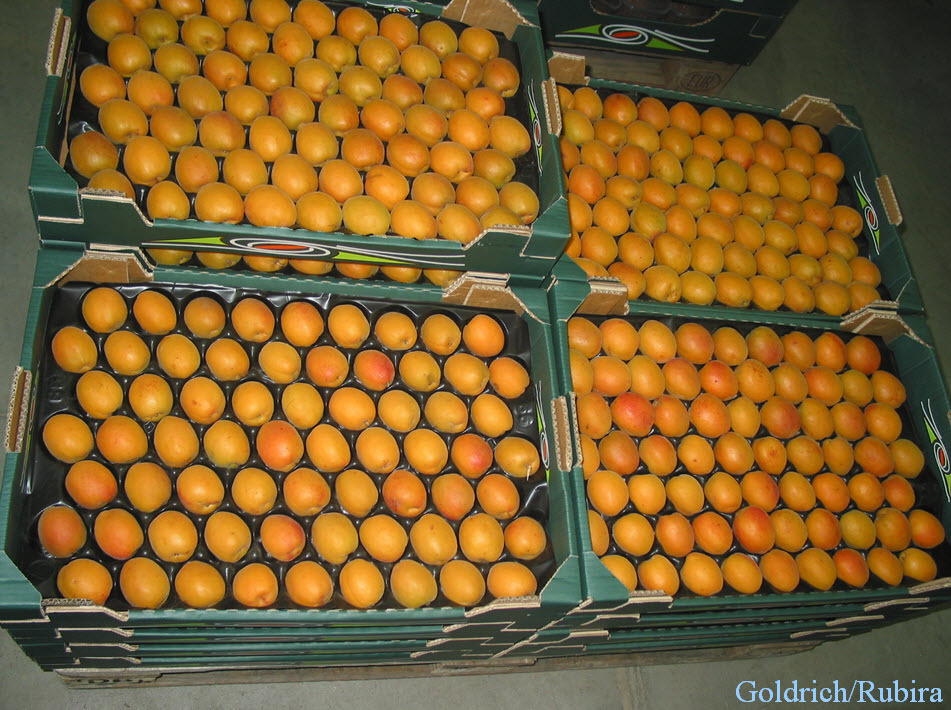
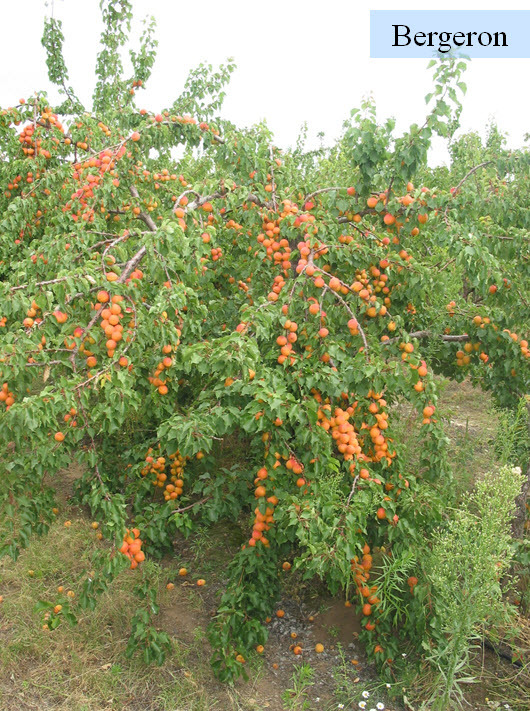
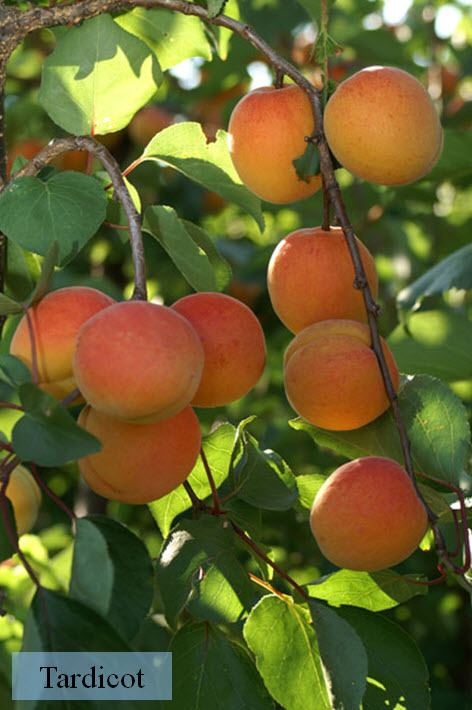
Among all fruit species, we experience the fastest change in the assortment of apricots, even in an interval of 5-7 years. This situation is caused by the huge interest of consumers in this type of fruit, especially in France, Spain and Italy. While in 2010 the early Pinkcot and Sylvercot varieties ripening at the end of June appeared to be of the highest quality, there is currently no interest in them due to the insufficient coloring of the fruits, consumers demand more red color on the skin. The earlier varieties that ripen in early June are the Tsunami and Spring Blush varieties that are currently in high demand, while the Aurora variety is no longer in demand due to the consistency of the flesh and the color of the fruit. Among the medium-late maturing varieties during the month of July, Bergeval and Sefora appear to be promising varieties. The Orangered (Bhart) and Bergarouge varieties are still suitable, while the Goldrich variety, which enjoyed great interest, is no longer attractive due to its color and mainly due to its higher acid content. This ailment can be alleviated by storing it for about 10 days, during which the acids are broken down and the taste is more acceptable. At the end of July, the Anegat variety ripens, which is very attractive from the point of view of consumers. Of the varieties that ripen in August, e.g. Bergeron, Fantasme, or the Tardicot variety, which ripens at the end of August, but has a relatively upright growth and hard wood, requires a firmer and stricter hand in the techniques of two-stage sector cutting, the necessity of summer pruning, if necessary, even twice. With modern apricot varieties, it is therefore possible to cover the whole summer period from the beginning of June to the beginning of September. As an example, it is possible to plant the following varieties with ripening from the first week of June to the first week of September, depending on the weather: Tsunami, Bergeval, Sefora, Orangered, Anegat and Bergeron ( Tardicot).
Diseases and pests
diseases: monilia blight of shoots, brown rot, asphyxia, ESFY, leaf spots and holes
pests: aphids
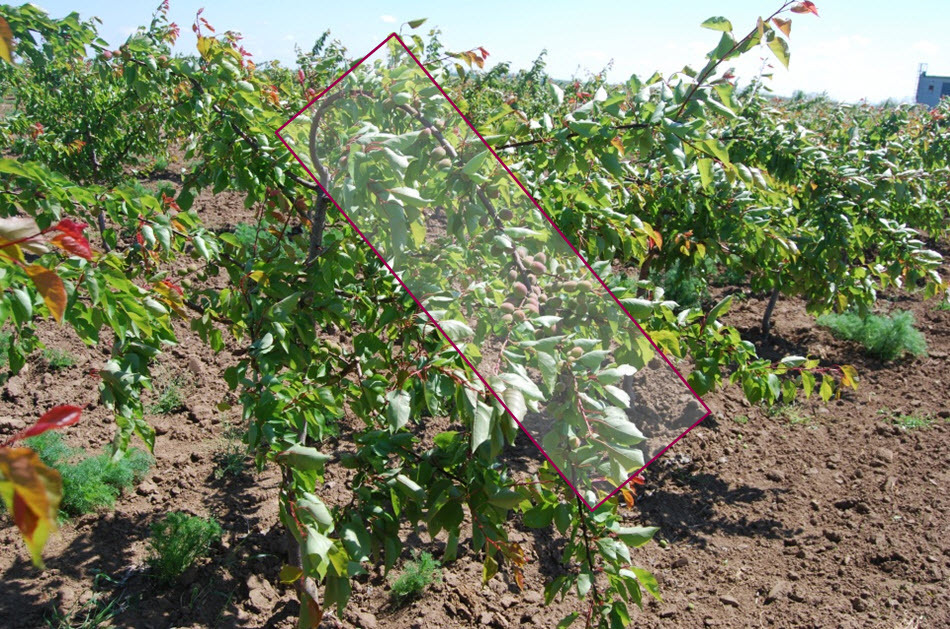
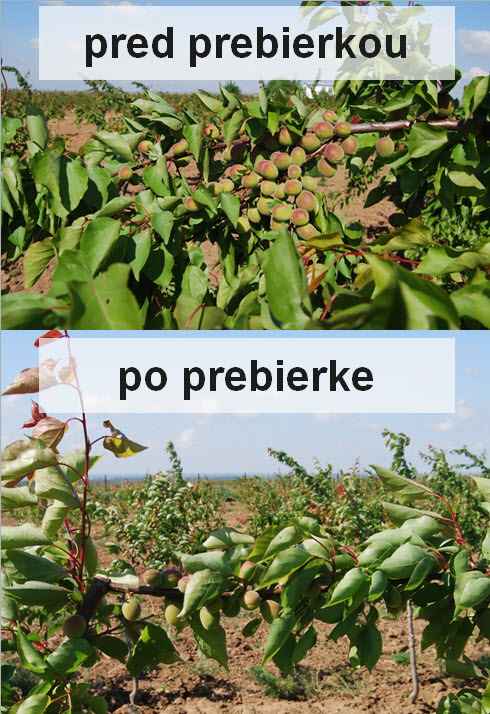
Labeling Plants with QR Codes
At the Faculty of Horticulture and Landscape Engineering at SPU in Nitra, we've created a project that offers visitors to our plantings a new way to discover the beauty and intriguing aspects of plants. Each plant in our plantings has its own unique QR code. All a visitor needs to do is scan this code with their smartphone.
Encyclopedy
Informácie
Kontakt
Fakulta záhradníctva a krajinného inžinierstva
Tulipánová 7, 949 76 Nitra
phone +421 (37) 641 4229 — study department
email henrieta.budayová@uniag.sk



Copyright © 2026 Faculty of Horticulture and Landscape Engineering