

 Slovenská verzia
- home
- Fruits - general part
- Stone fruits
- Sweet cherry
Sweet cherry
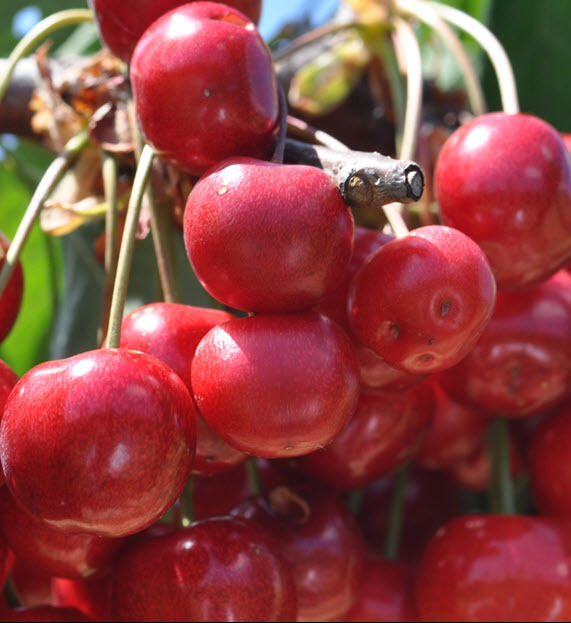
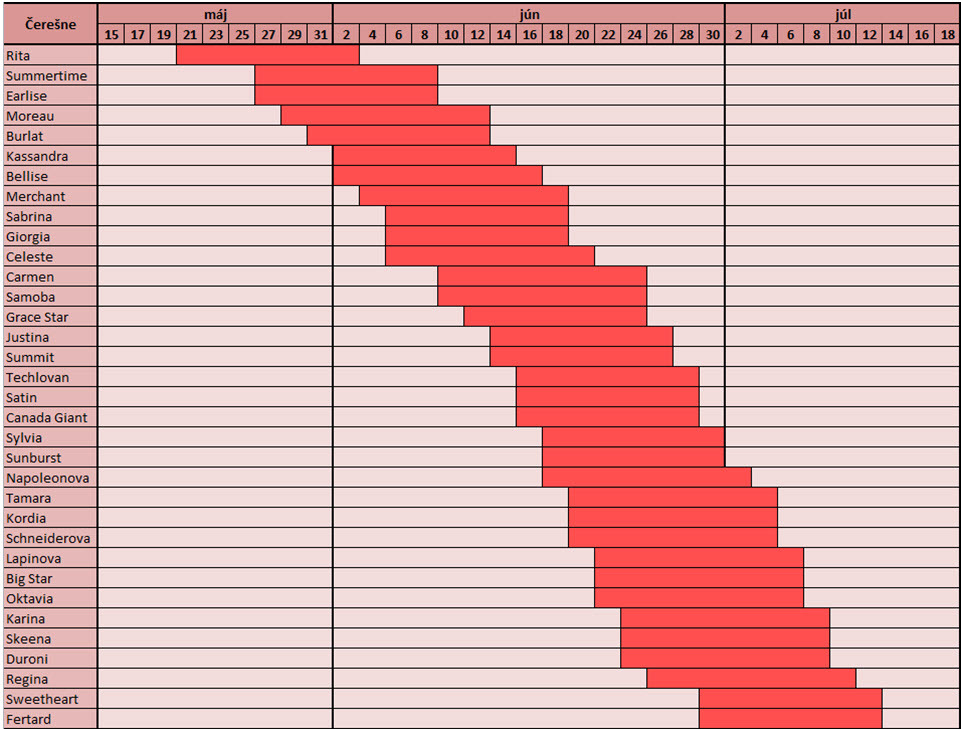
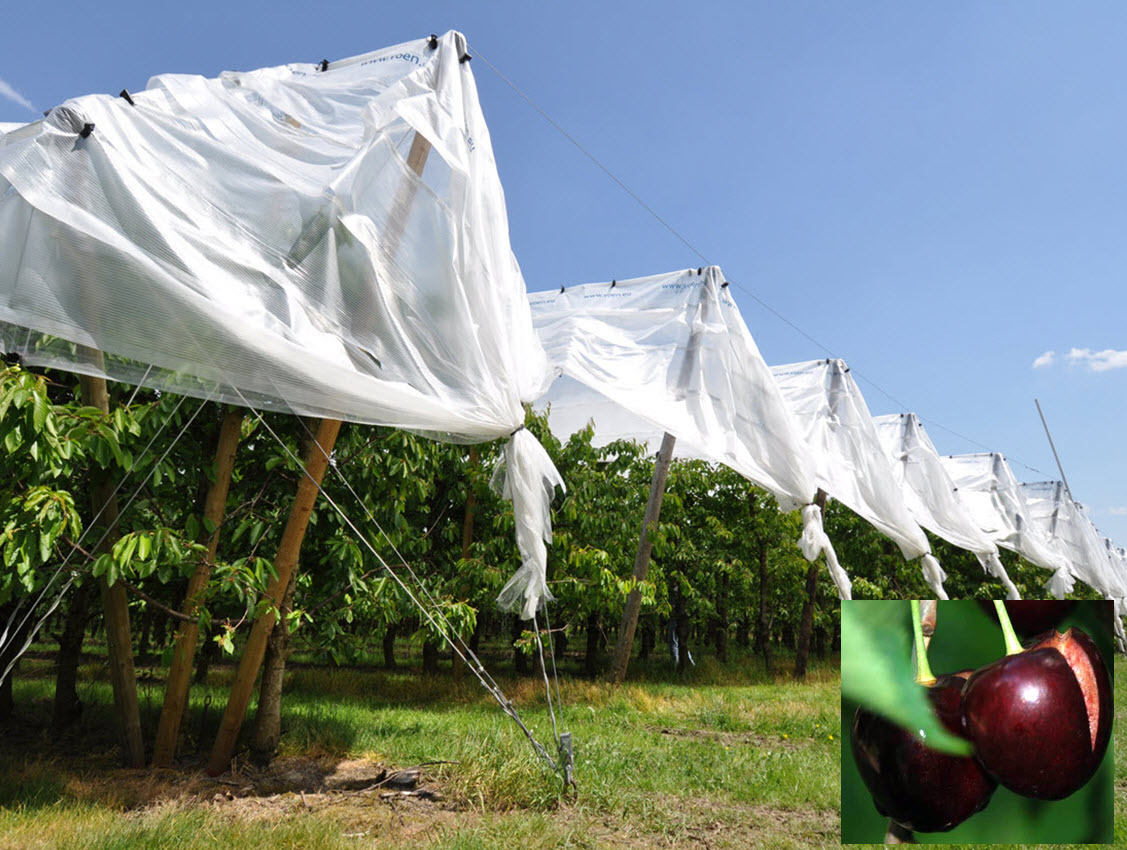
Cherries are among the earliest fruits, which is very welcome after winter. The harvest window lasts 8-9 weeks in our conditions.
Short description of the species
Interesting
Cherries were named after the Turkish city of Cerasus, and Turkey is also the most important producer of cherries in the world.Usage
direct consumption, processing into nectar and juices, distillation, jamsSuitable growing locations
Although the root system of collapsing rootstocks is weaker than in the past, they require deeper, aerated, slightly moist soils with a slightly acidic reaction. In heavy, cold and wet soils, they suffer from gliotosis. Locations up to 200-400 m.a.s.l. are optimal. with an average annual temperature of 8-10°C and an annual rainfall of 600 mm. Closed locations with late spring frosts are unsuitable.
Suitable rootstocks
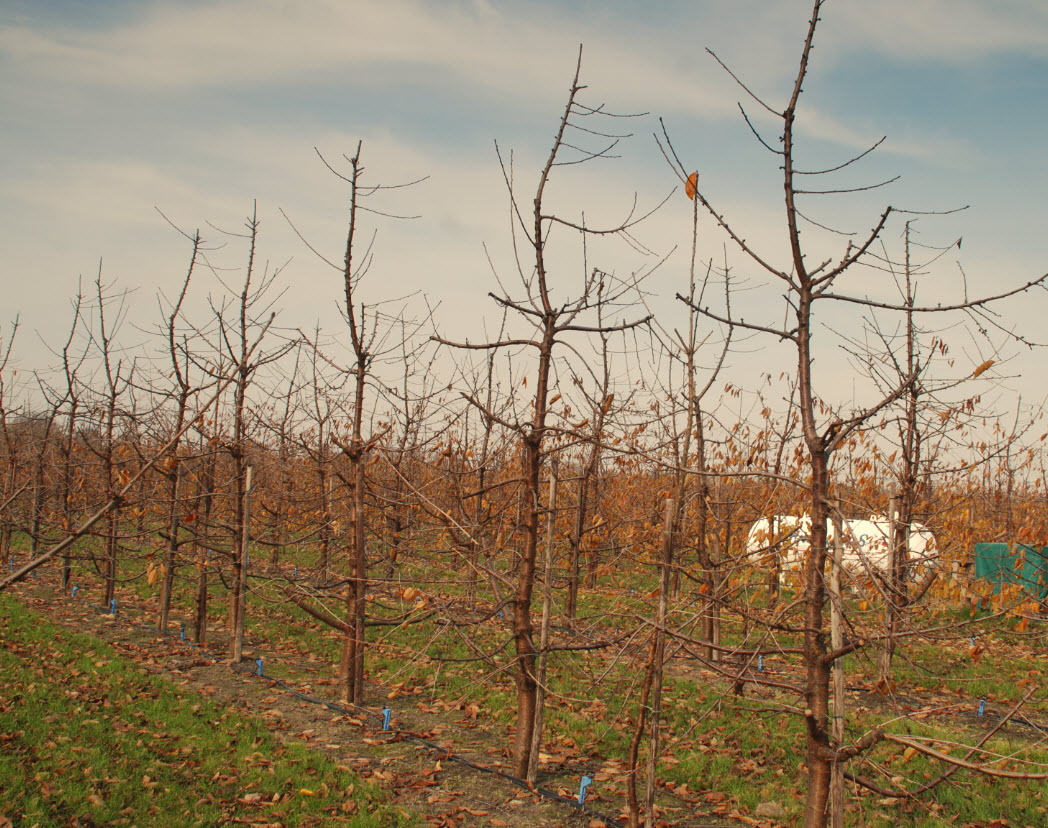
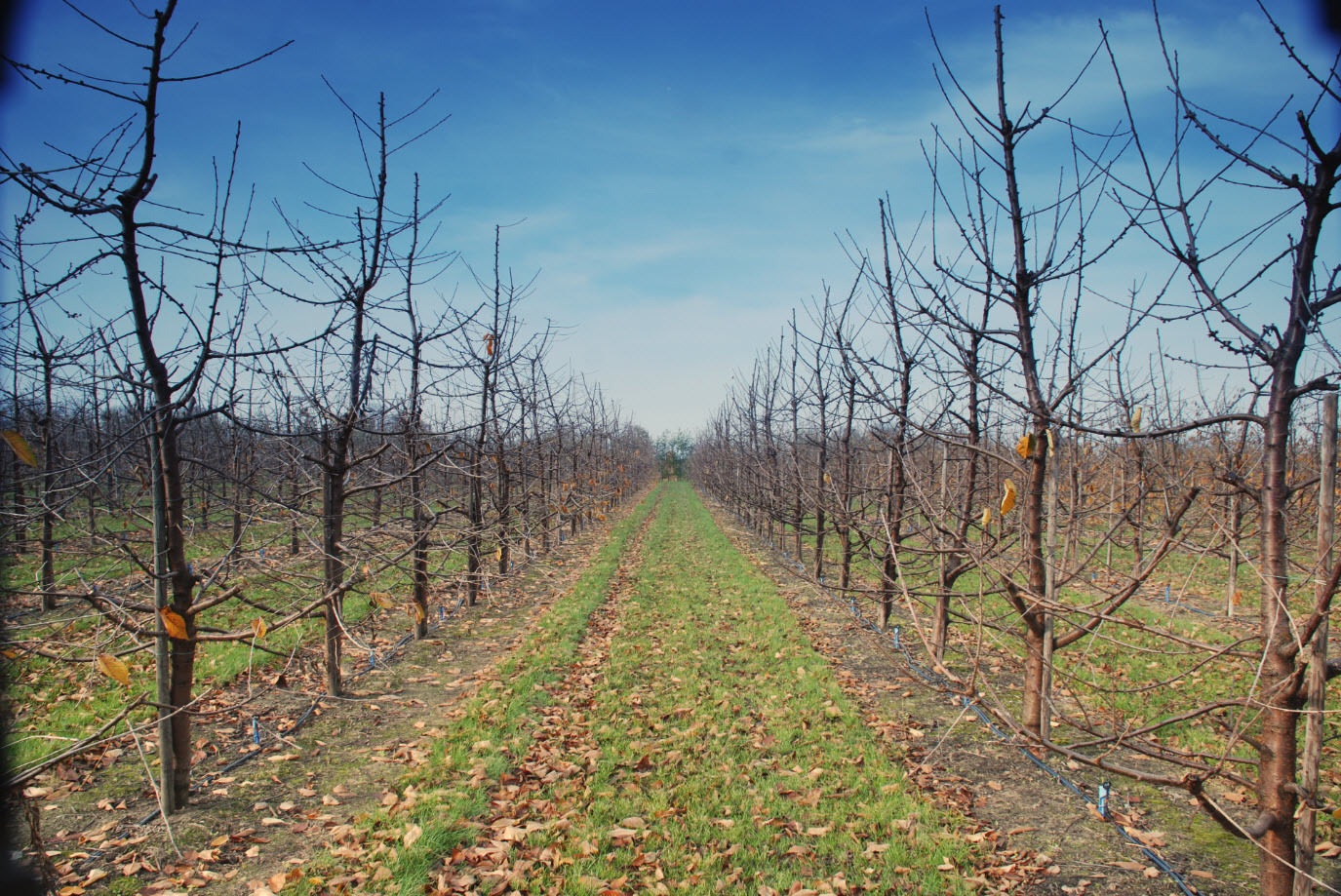
The ideal rootstock for spindles is the rootstock GiSelA 5. Compared to the seedling, it shows a weakening of growth by up to 50%, and this results in a positive result in the form of a very early onset of fertility. Another advantage is its plasticity to soil conditions, which means that it can be used in both heavier and lighter soils. A significant feature of this rootstock is that it supports horizontal branching, i.e. growing shoots and shoots have a blunt deviation from the median, the synthesis of auxins is suppressed, which causes vertical growth and thereby supports the differentiation of flower buds. Affinity with the varieties is good, we record the lowest yield on the site. A suitable rootstock is also GiSelA 6, which has a slightly stronger growth than Gisela 5 and therefore we recommend it above all for light soils. In heavier soils, the volume of the root system will be larger, growth will be strengthened, trees will be taller overall. In cases where you plan to grow spindles around 3m high, this rootstock can also be used for heavier and stronger soils. Due to its sensitivity to frost, we recommend it for southern areas. For the highest quality soils and flawless agrotechnics, it is also possible to use the rootstock GiSelA 3, which has weaker growth than Gisela 5. The rootstock is suitable for "lazy" varieties on strong soils with sufficient moisture and roofing in intensive systems.
Suitable varieties
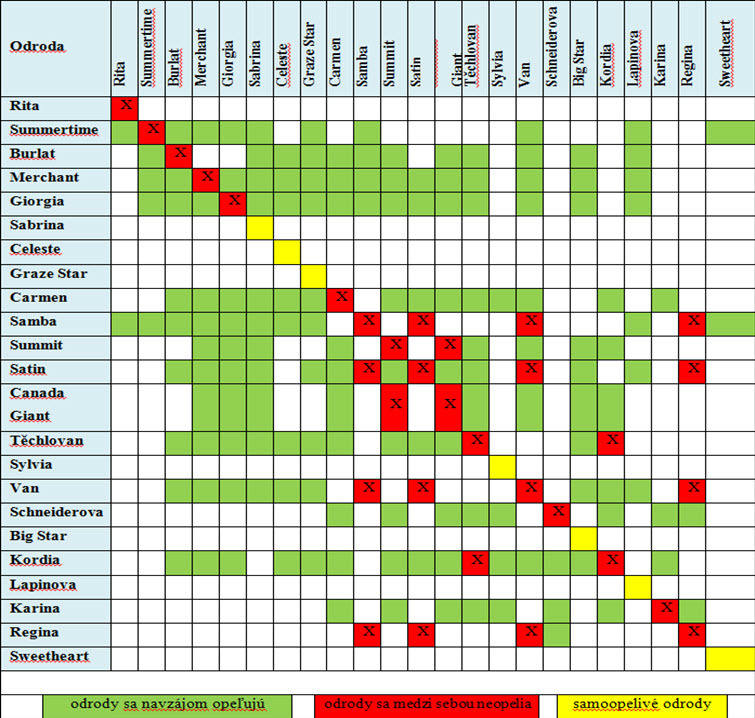
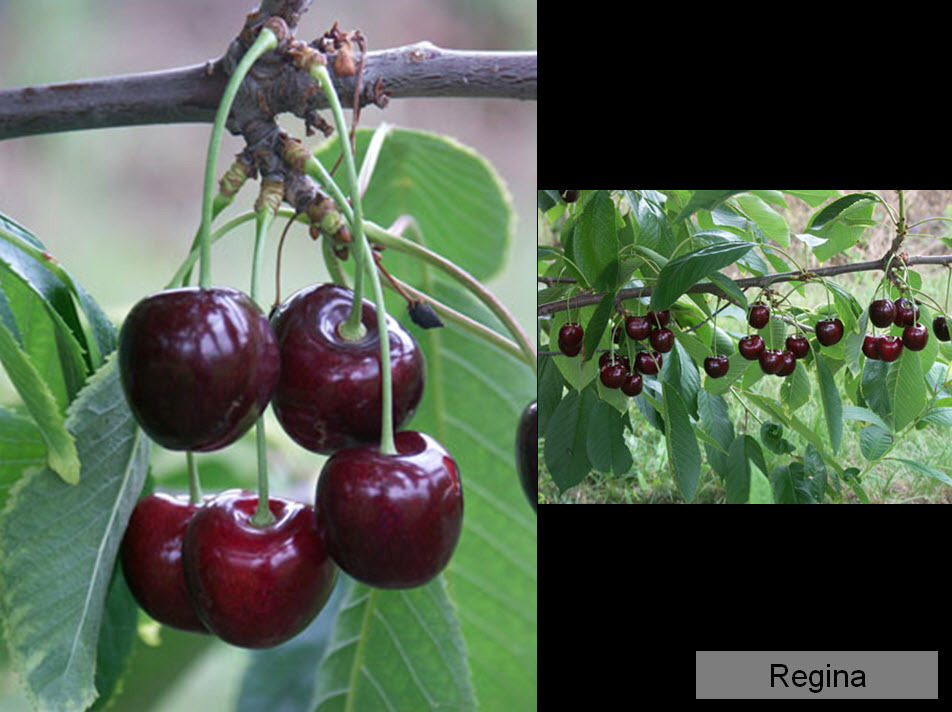
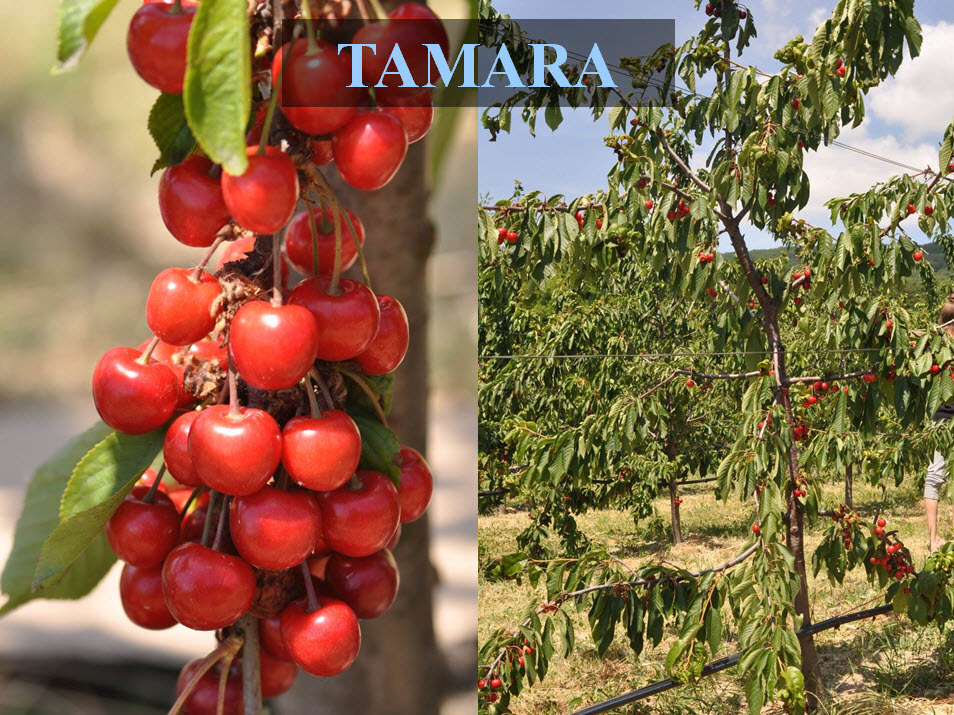
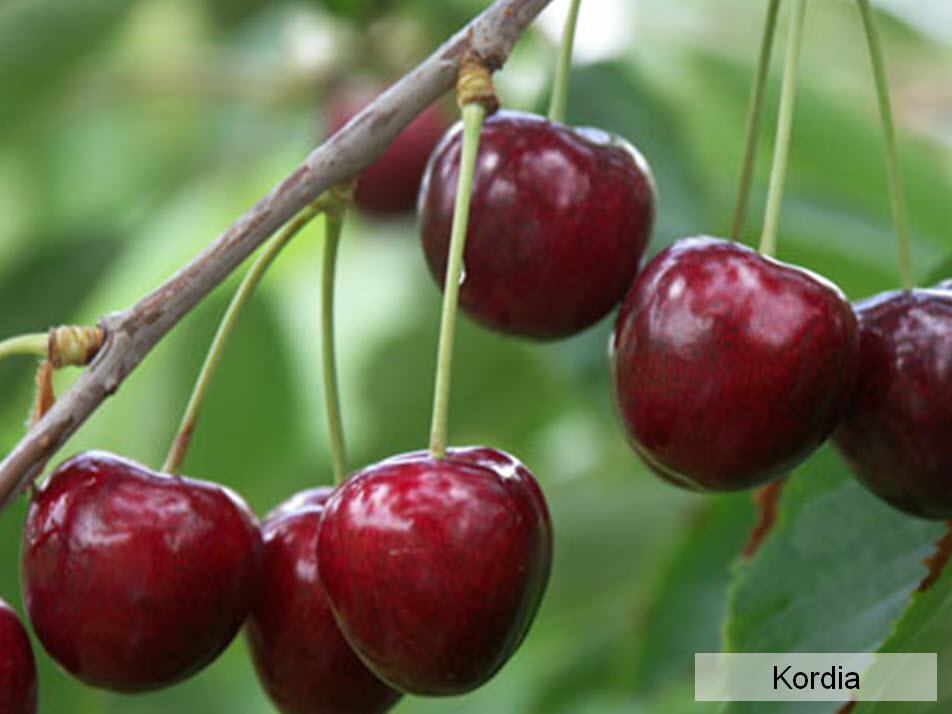
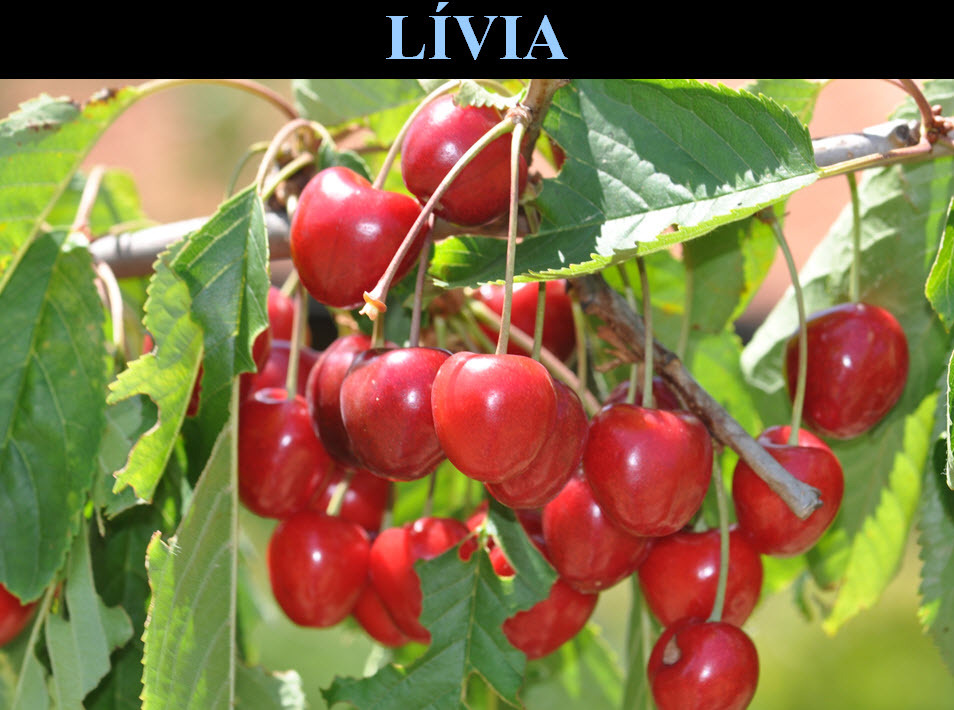
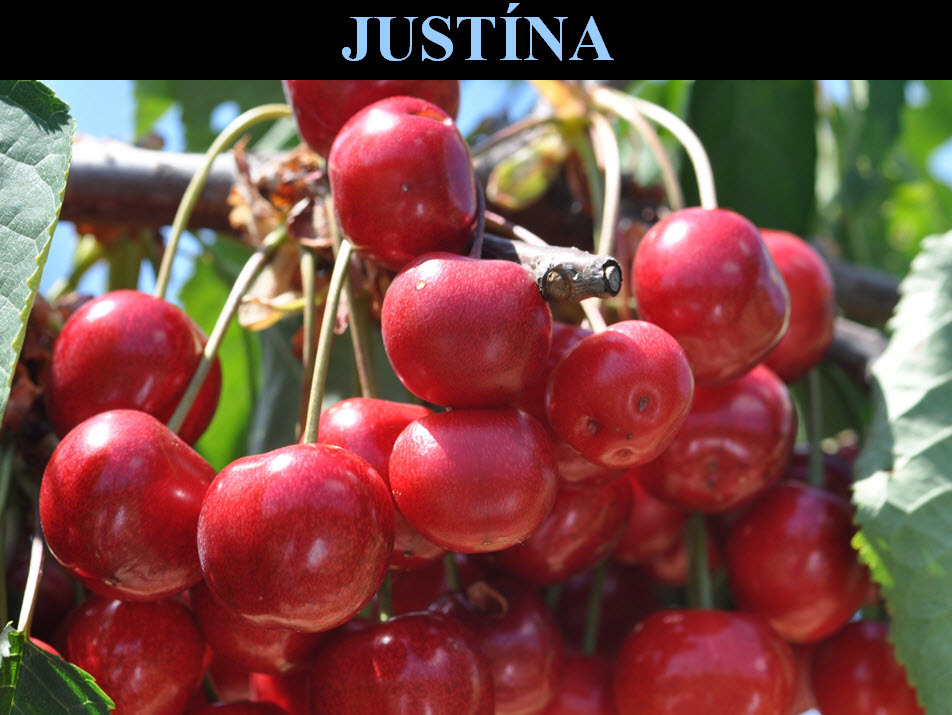
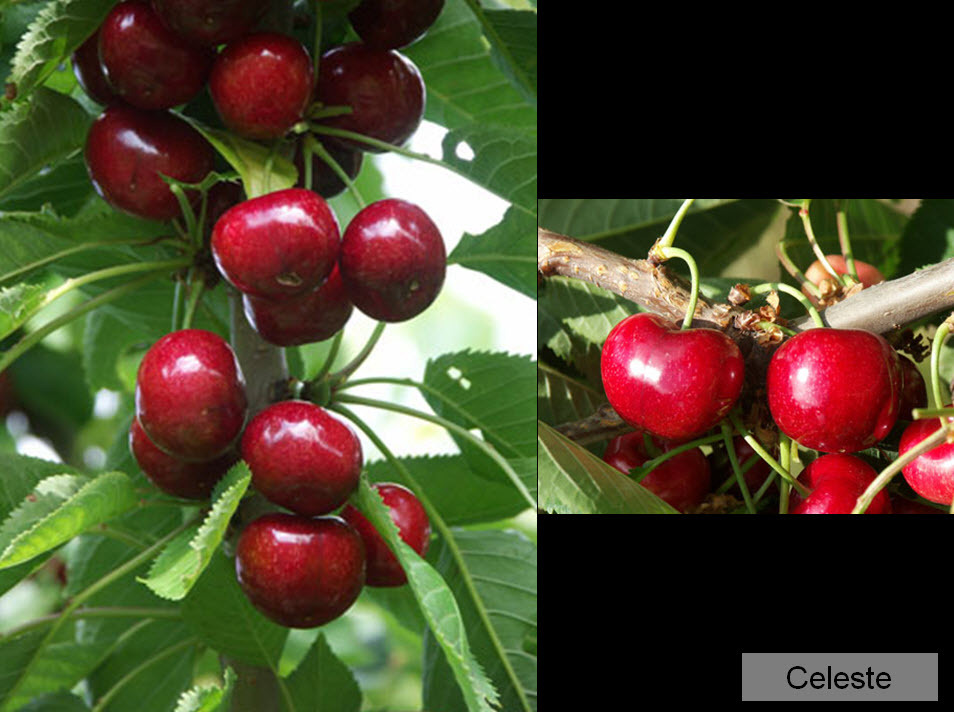
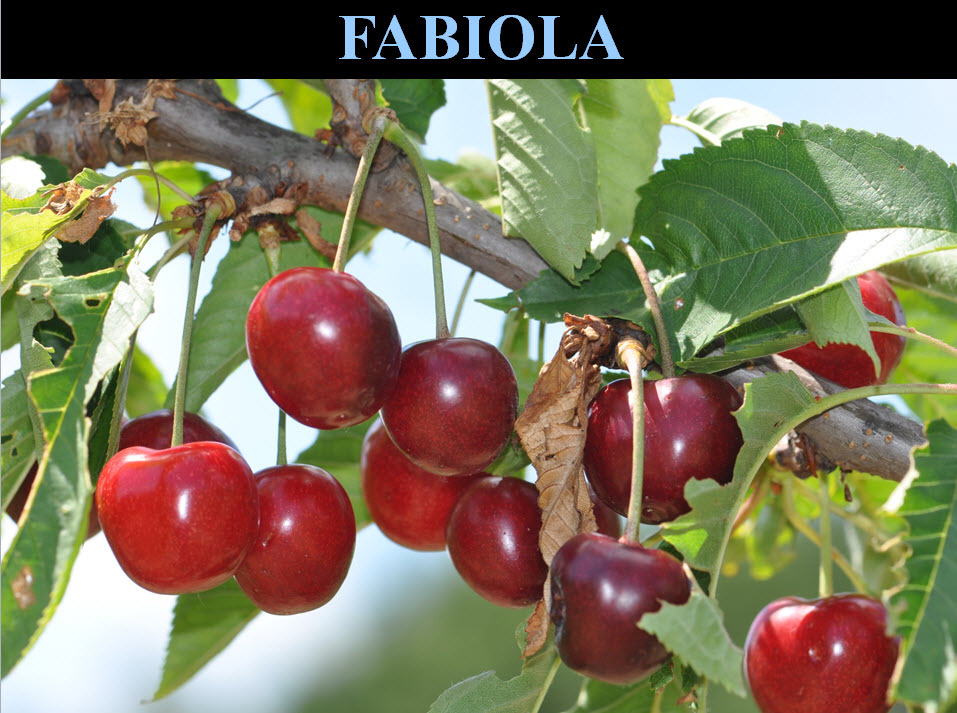
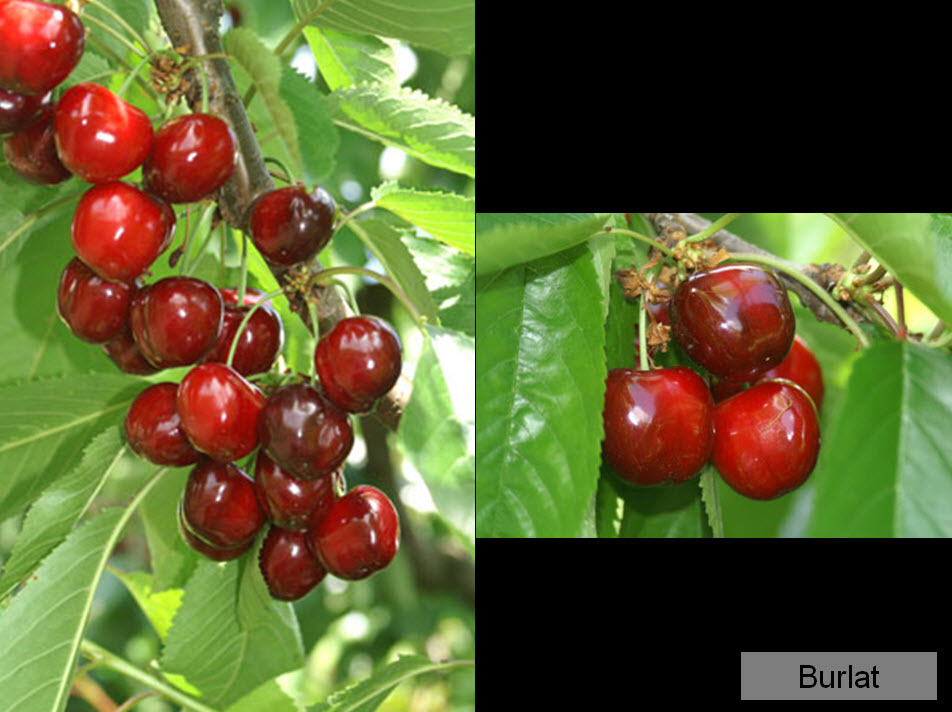
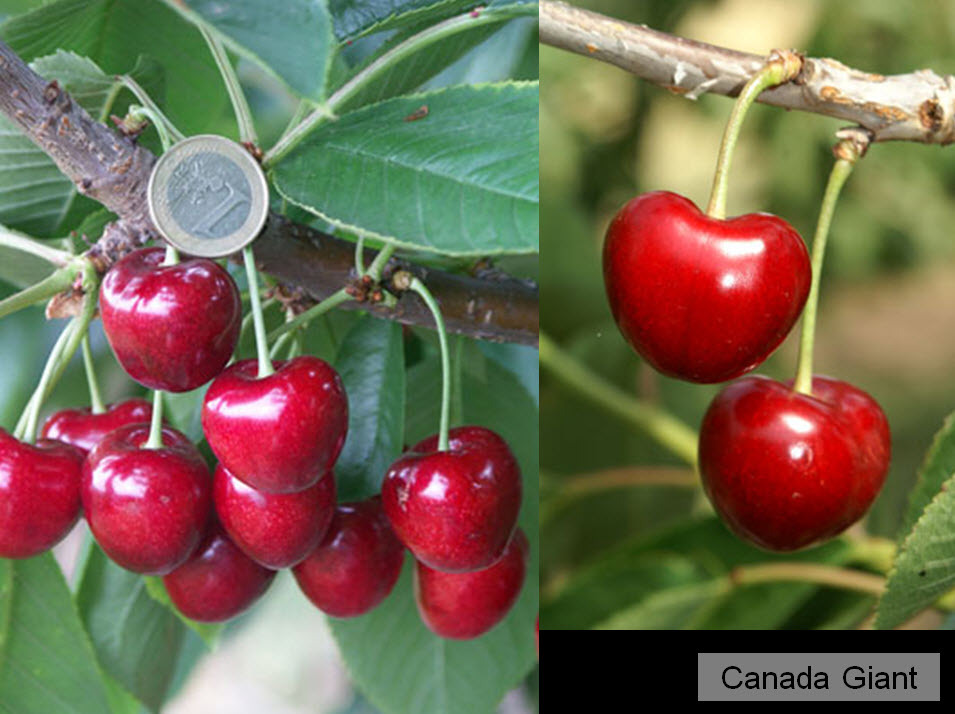
In the case of self-pollinated varieties, Lapins, Halka, Summit, or the modern Sweetheart and Celeste varieties appear suitable for gardens. However, it should be noted that although they are self-pollinating, better quality and larger fruits can be obtained if they are also pollinated with pollen from another variety. In the case of cross-pollinated varieties, it is necessary to be aware of the fact that it is not possible to combine any varieties in the planting. This applies to all cross-pollinated species, not only cherries. However, cherries are specific to this and form the so-called incompatible groups, i.e. varieties that cannot be combined in planting because pollination would not occur. In the table we list suitable pollinators for the respective varieties. Of the varieties widespread in commercial plantings, the Kordia variety is currently the most suitable, followed by the Regina, Karina, Těchlovan, or Van, Burlat and Celeste varieties.
Diseases and pests
diseases: brown rot, spots and holes in the leaves
pests: cherry blossom borer, Japanese drosophila, aphids
Labeling Plants with QR Codes
At the Faculty of Horticulture and Landscape Engineering at SPU in Nitra, we've created a project that offers visitors to our plantings a new way to discover the beauty and intriguing aspects of plants. Each plant in our plantings has its own unique QR code. All a visitor needs to do is scan this code with their smartphone.
Encyclopedy
Informácie
Kontakt
Fakulta záhradníctva a krajinného inžinierstva
Tulipánová 7, 949 76 Nitra
phone +421 (37) 641 4229 — study department
email henrieta.budayová@uniag.sk



Copyright © 2026 Faculty of Horticulture and Landscape Engineering