

 Slovenská verzia
Onion
Short description of the species
Usage
fresh and heat-treated; suitable for processing by drying, freezing and canningGrowth
1st. year of cultivation:
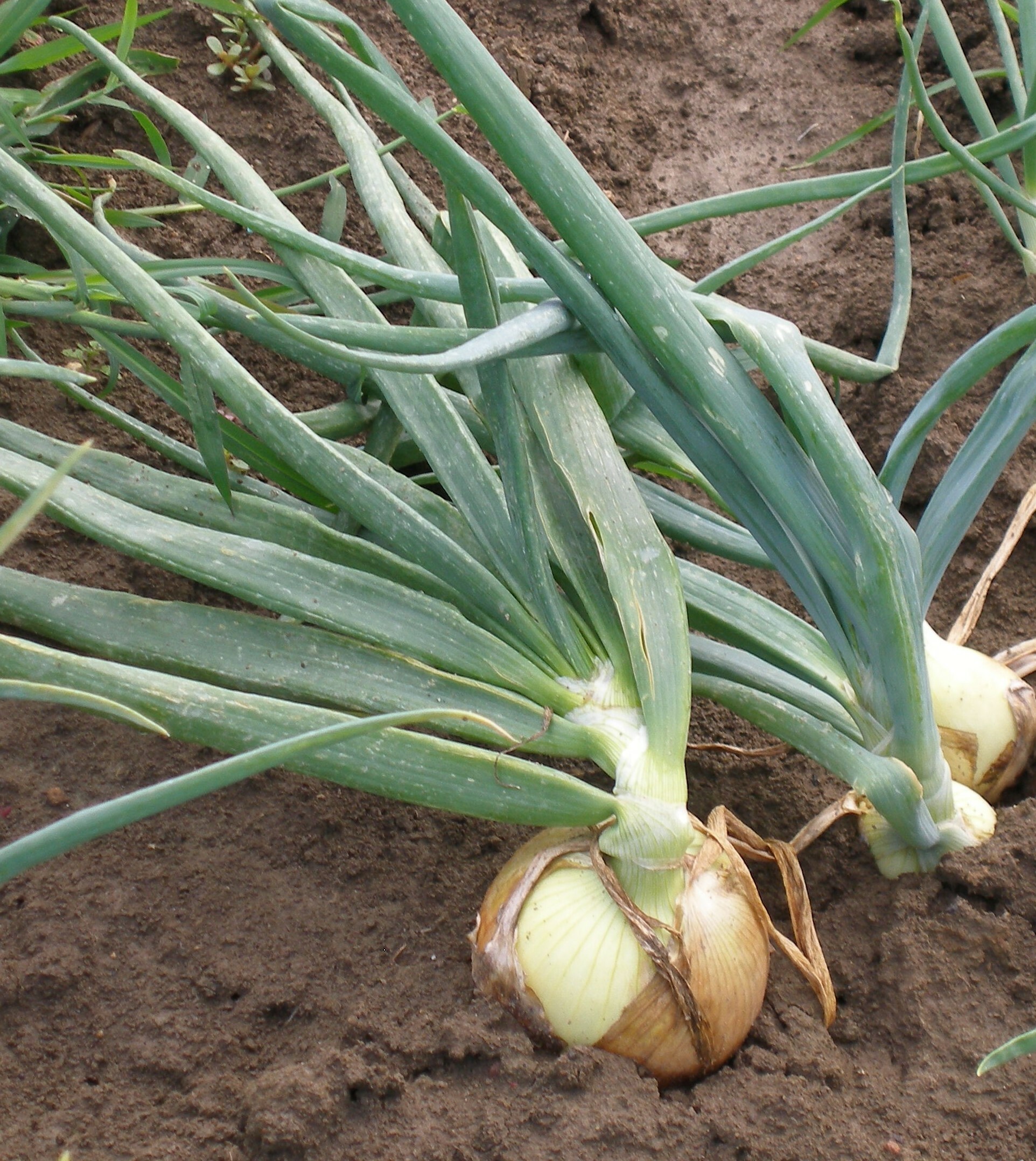
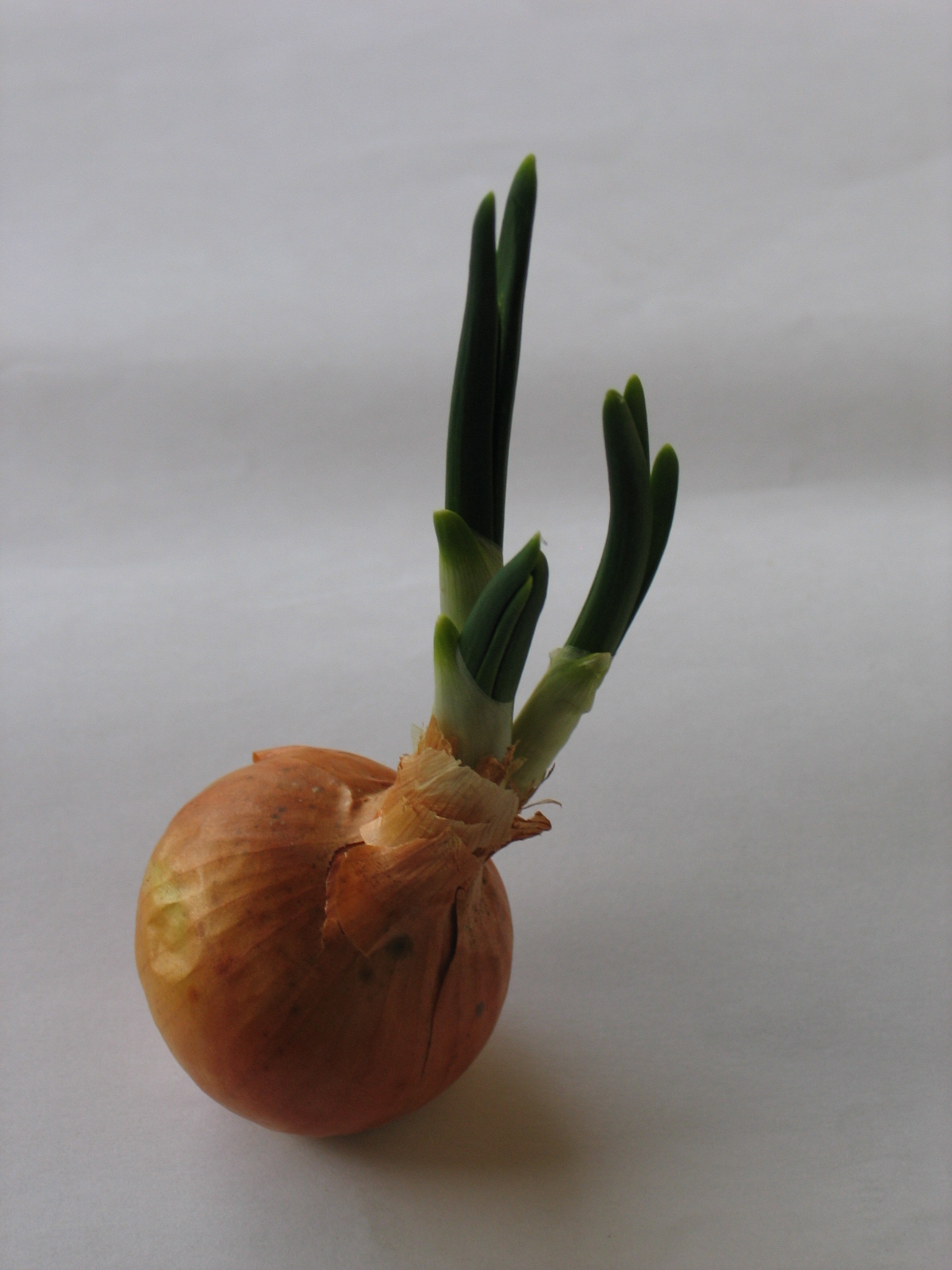
- leaves - (9 - 12) long, hollow, tubular, pointed, light to dark green with a fine waxy coating, usually grow to a height of 0.4 m
- root system - bundle-shaped, depending on the soil, roots to a depth of 0.3 - 0.4 m
- stem - strongly shortened and transformed into a bulb
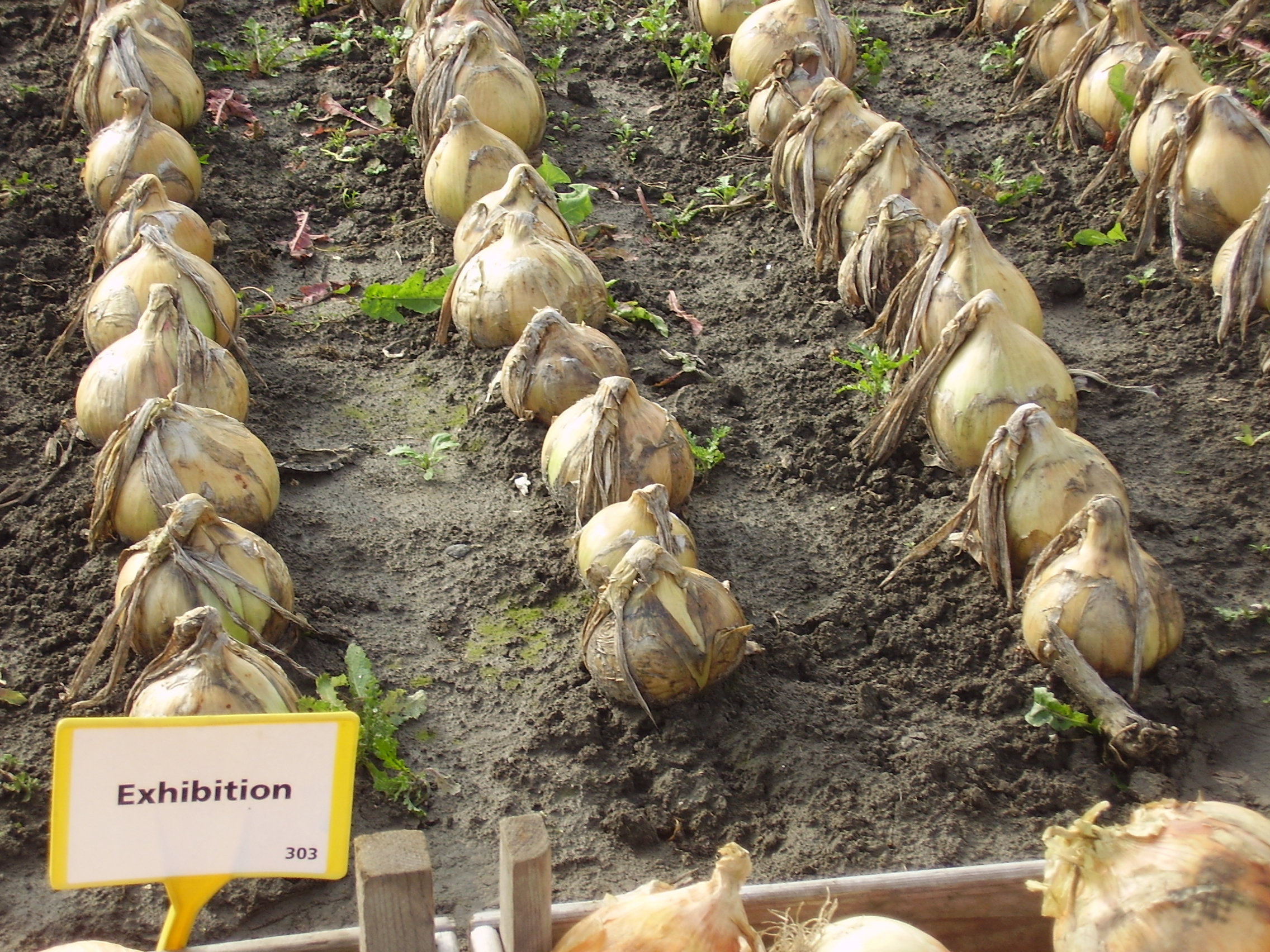
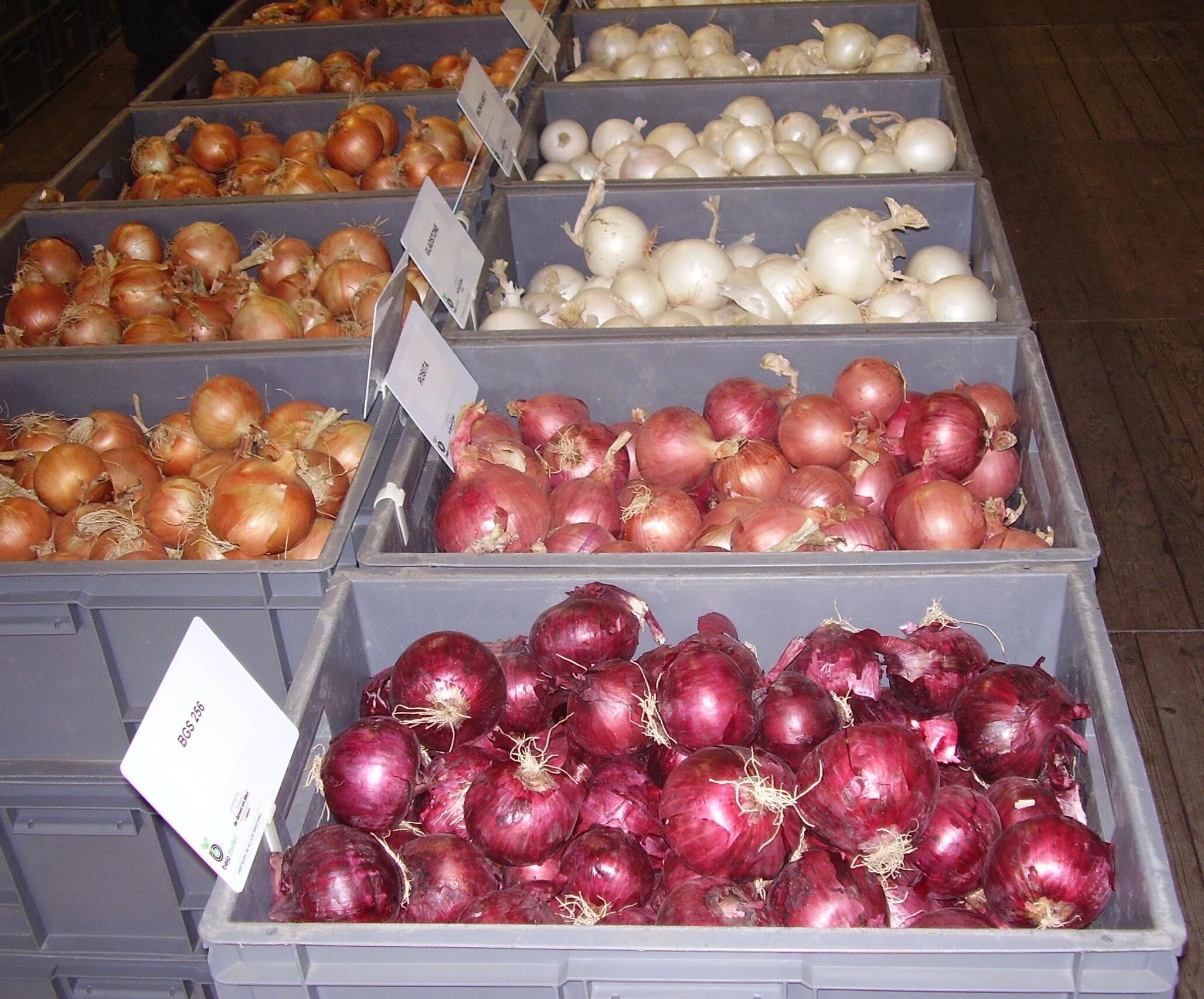
- bulb (lat. bulbus) - edible part; it is formed with arched leaf bases; on the surface there are external dry skirts; the shape of the bulb and the color of the skirts are an important varietal characteristic
2nd. year of cultivation
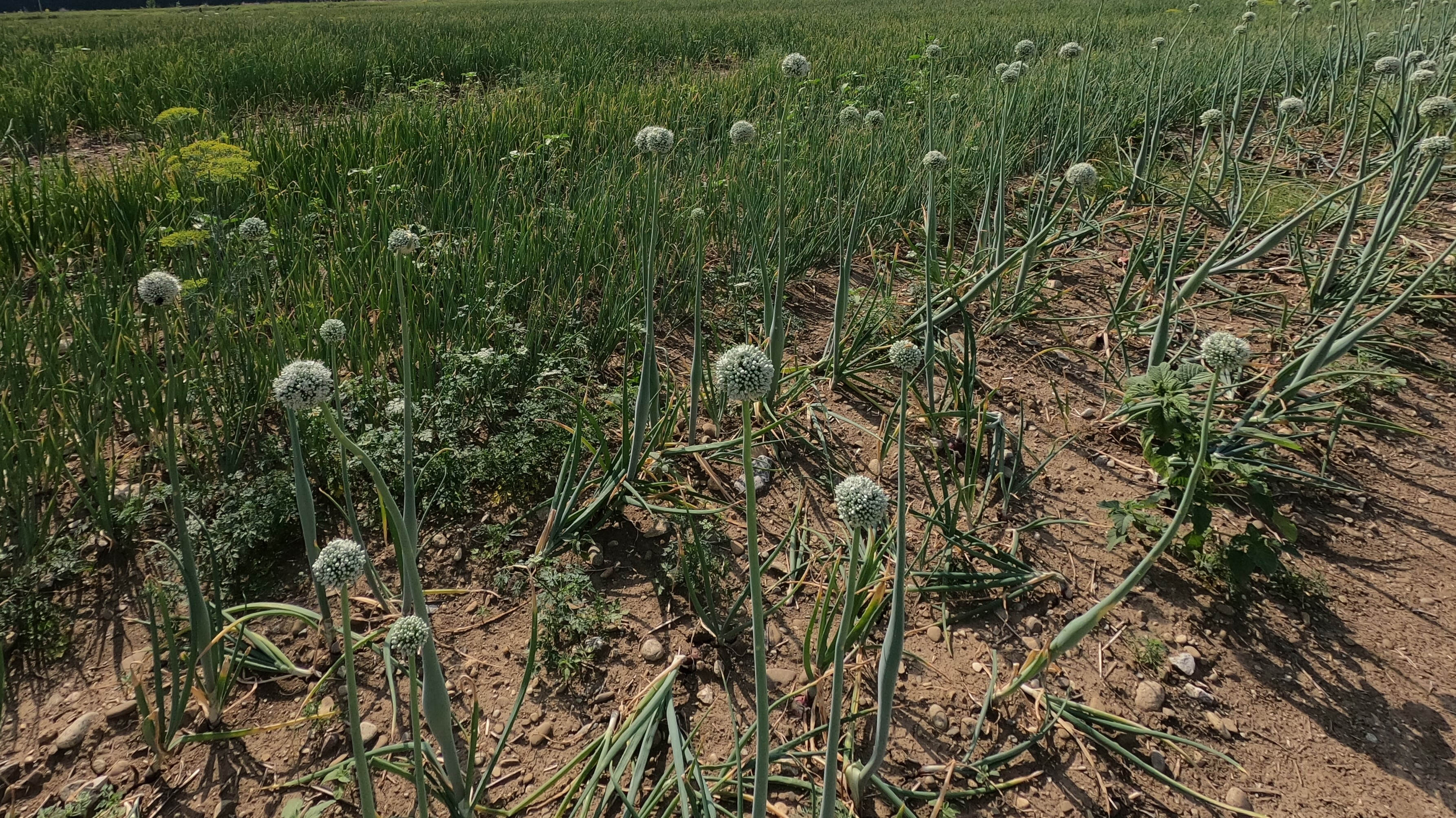
- forms a flower stem - it is hollow, 0.4 - 1.4 m high, ending in a dense pseudopericulum. The flowers are bisexual, have white, pink or yellow petals
- the bulb is cross-pollinated, pollinated by insects. Fruit - a three-cased capsule, containing 2-6 black seeds
Inclusion in the crop rotation and fertilization requirements
Track: II.; does not tolerate direct fertilization with manure
Suitable preceding crops: potatoes, legumes, mixed fodder; do not include in crop rotations after onion and root vegetables
Fertilization: The basic supply of soil nutrients for the production of 60 t.ha-1 onions for summer cultivation is: 108 kg N, 100 kg P2O5, 200 kg K2O, 15 kg MgO. Overfertilization with nitrogen results in a prolonged vegetation period, susceptibility to diseases and deterioration of storage life. Onion vegetables do not tend to accumulate nitrates.
Varieties:
- according to the color of the outer skirts, we distinguish varieties: yellow, white, red and pink
- according to the reaction to the length of the day, varieties:
- very long day - late to medium-early varieties with a vegetation period of 145 - 169 days
- semi-long and long day - American types of varieties, which are early to semi-late; Spanish-type varieties are very late, form very large bulbs, which are, however, less storable. The so-called intermediate types are also grown, which are characterized by a powerful root system, earliness and relatively good storability.
- short day - in our conditions grown as winter, i.e. from direct sowing with overwintering.
- according to the shelf life of onions: varieties suitable for
- short-term storage (most early varieties, sweet and semi-sweet varieties),
- varieties with medium shelf life
- varieties intended for long-term storage for direct consumption and industrial processing
Agrotechnics of cultivation and harvesting
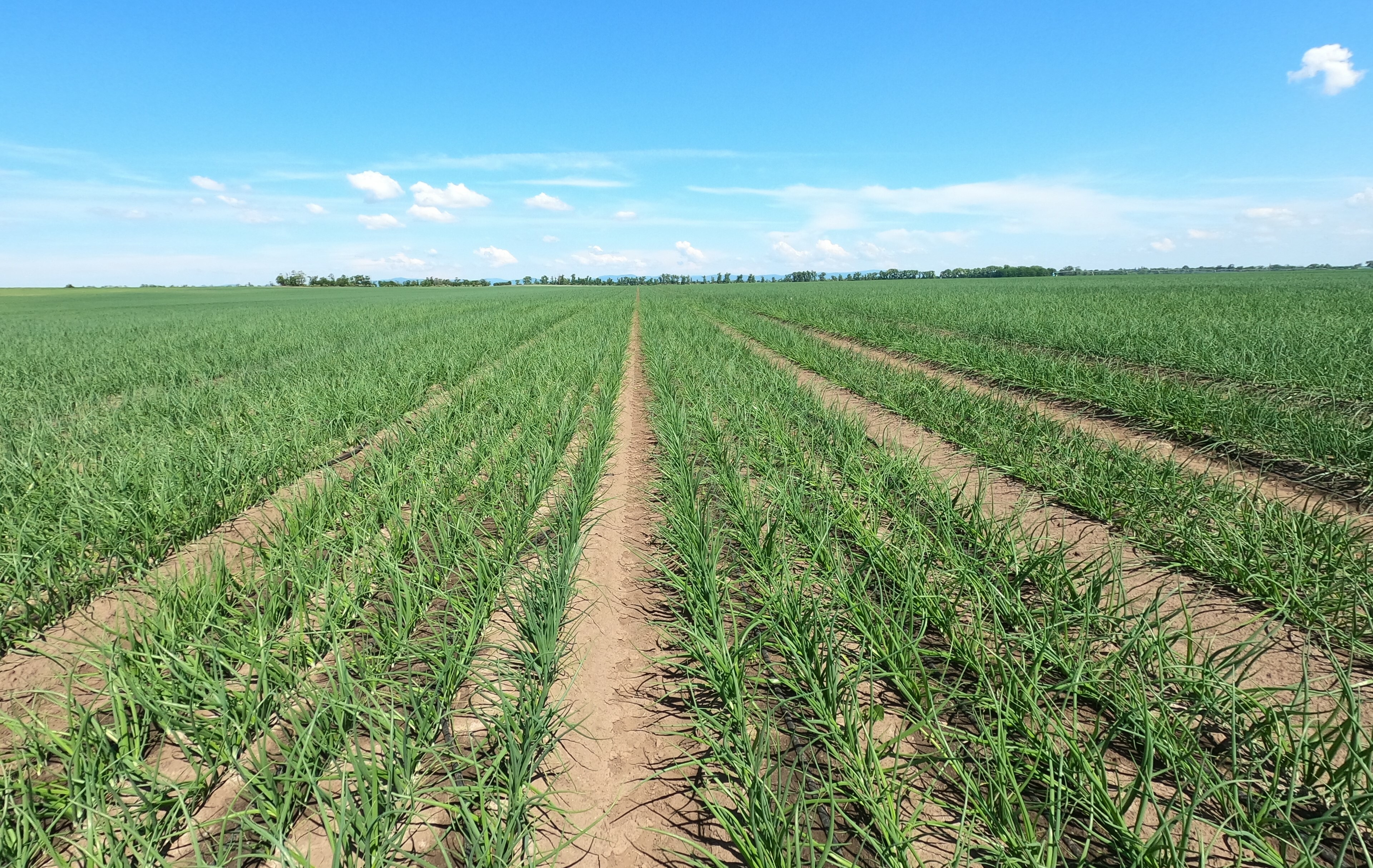
Propagation: generative
Spacing: bed method - 4 double rows or 5 - 6 rows per bed; 25 - 30 plants per 1 m
Sowing rate: 4 - 4.5 kg.ha-1 (spring sowing date); 4.5 - 5 kg.ha-1 (summer sowing date)
Harvesting:
- varieties for direct consumption - gradual harvesting of fruits by thinning at botanical maturity - varieties for industrial processing - one-time mechanized harvesting of fruits at botanical maturity Agrotechnics of cultivation - direct sowing in field conditions (spring sowing date)
Agrotechnics of cultivation - direct sowing in field conditions (spring term)
| Month | I. | II. | III. | IV. | V. | VI. | VII. | VIII. | IX. | X. | XI. | XII. |
|---|---|---|---|---|---|---|---|---|---|---|---|---|
| Sowing | xx | x | ||||||||||
| Harvest/bulbs | xxx |
Agrotechnical cultivation - direct sowing in field conditions (with overwintering)
| Month | I. | II. | III. | IV. | V. | VI. | VII. | VIII. | IX. | X. | XI. | XII. |
|---|---|---|---|---|---|---|---|---|---|---|---|---|
| Sowing | xx | x | ||||||||||
| Harvest/bulbs | xx |
Agrotechnics of growing from a seedling - planting in field conditions
| Mesiac | I. | II. | III. | IV. | V. | VI. | VII. | VIII. | IX. | X. | XI. | XII. |
|---|---|---|---|---|---|---|---|---|---|---|---|---|
| Výsev | x | x | ||||||||||
| Harvest/bulbs | xx | x |
Agrotechnics of cultivation – from seedlings (varieties for direct consumption in field conditions)
| Mesiac | I. | II. | III. | IV. | V. | VI. | VII. | VIII. | IX. | X. | XI. | XII. |
|---|---|---|---|---|---|---|---|---|---|---|---|---|
| Sowing/covered areas | xx | xx | ||||||||||
| Planting | xxx | |||||||||||
| Harvest/bulbs | xx |
Storage: at 0 – 2°C and relative humidity 60 – 70%; in air-conditioned warehouses for several months to a year
Use: fresh and heat-treated; suitable for processing by drying, freezing and preserving.
Diseases and pests:
• viral diseases: yellow stripe of onion (Onion yellow dwarf virus, OYDV)
• fungal diseases: downy mildew (Perenospora destructor), sclerotium rot (Sclerotium cepivorum), wet rot of onion (Erwinia carotovora), fusarium rot of onion (Fusarium oxysporum), phytophthora spot (Phytophthora porri), rust of garlic and leek (Puccinia porri Winter); neck rot (Botrytis allii).
• pests: leek leaf miner (Phytomyza gymnostoma Loew), onion flower borer (Delia antiqua Meig.), root knot nematode (Ditylenchus dipsaci Kühn.), garlic leaf curl (Aceria tulipae), onion sheathworm (Ophroninus suturalis Fabr.), garlic moth (Acrolepiopsis assectella), tobacco thrips (Thrips tabacci) and others.
Sources:
ANDREJIOVÁ, A. – HEGEDÜŠOVÁ, A. – GOLIAN, M. – MEZEYOVÁ, I. - ŠLOSÁR, M. 2025. Vegetable growing (field cultivation). Nitra: SPU. 262 p. ISBN 978-80-552-2565-4
ANDREJIOVÁ, A. – ŠLOSÁR,M. 2015. Instructions for exercises in vegetable growing. Nitra: SPU, 909 p. ISBN 978-80-552-1330-9.
CAGÁŇ, Ľ. Et al. 2015. Diseases and pests of horticultural plants. Nitra: SPU, 124 p. ISBN 978-80-552-1448-1.
Labeling Plants with QR Codes
At the Faculty of Horticulture and Landscape Engineering at SPU in Nitra, we've created a project that offers visitors to our plantings a new way to discover the beauty and intriguing aspects of plants. Each plant in our plantings has its own unique QR code. All a visitor needs to do is scan this code with their smartphone.
Encyclopedy
Informácie
Kontakt
Fakulta záhradníctva a krajinného inžinierstva
Tulipánová 7, 949 76 Nitra
phone +421 (37) 641 4229 — study department
email henrieta.budayová@uniag.sk



Copyright © 2026 Faculty of Horticulture and Landscape Engineering