

 Slovenská verzia
- home
- Fruits - general part
- Miscellaneous fruit
- Saskatoon serviceberry
Saskatoon serviceberry
Shrub to small tree, 1-5 m tall, bark smooth and dark gray to reddish, often spreads by rhizomes or rooting ends of branches, forming dense colonies.
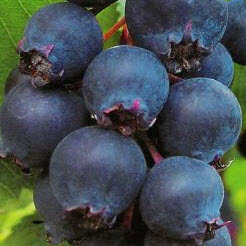
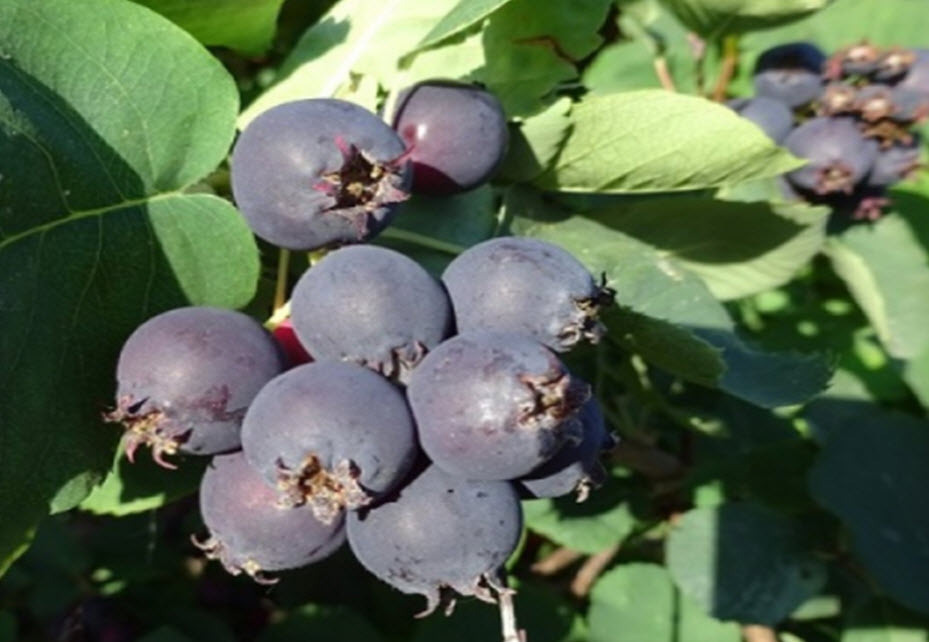
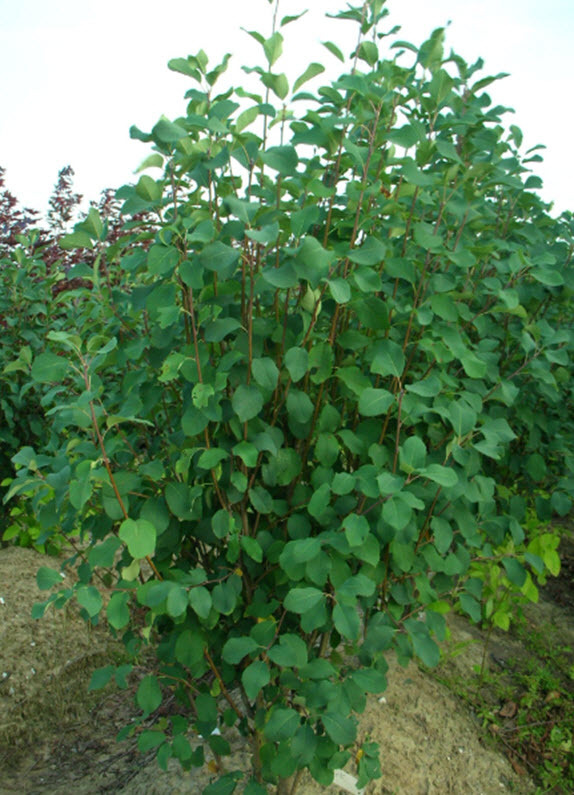
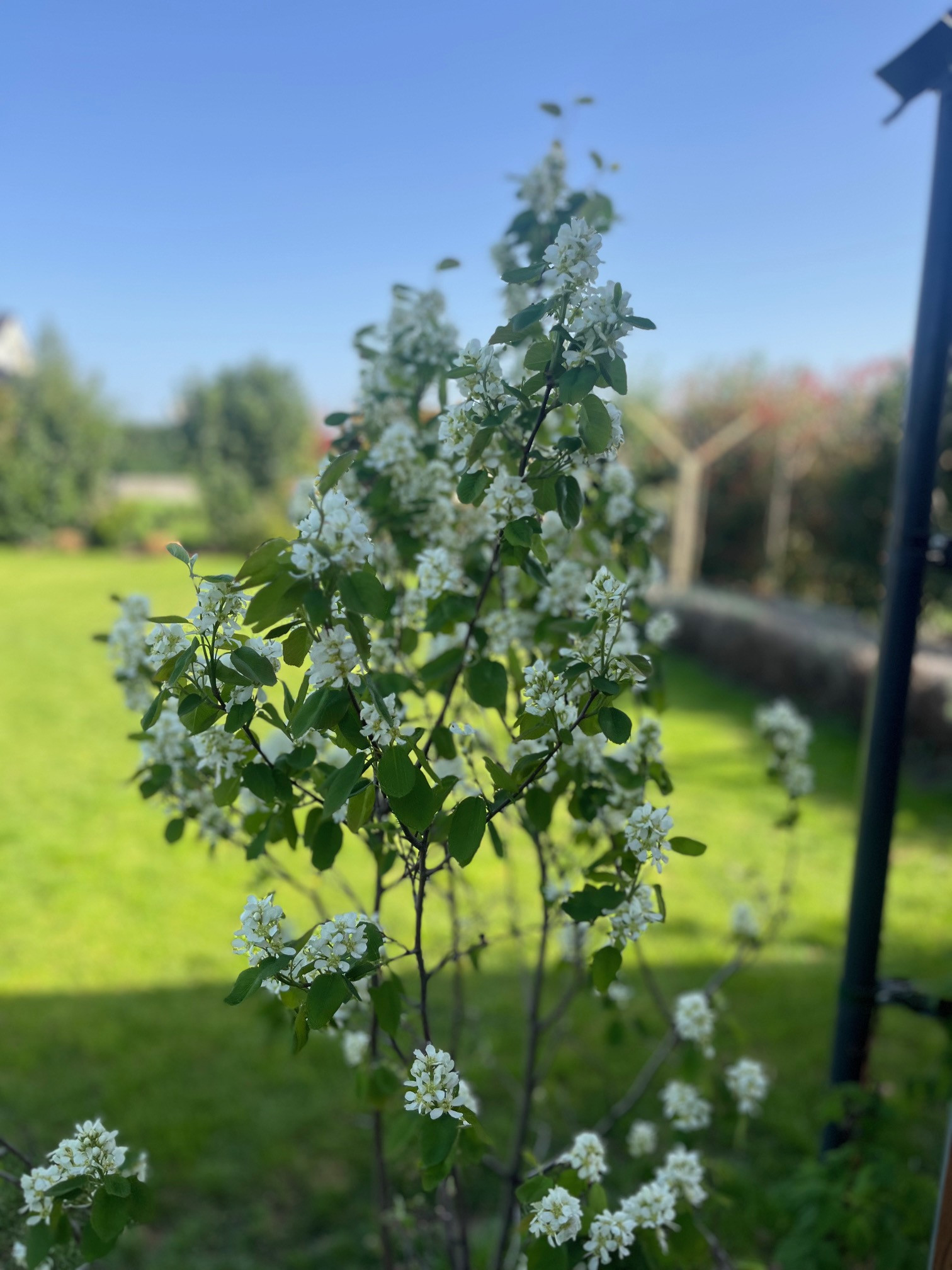
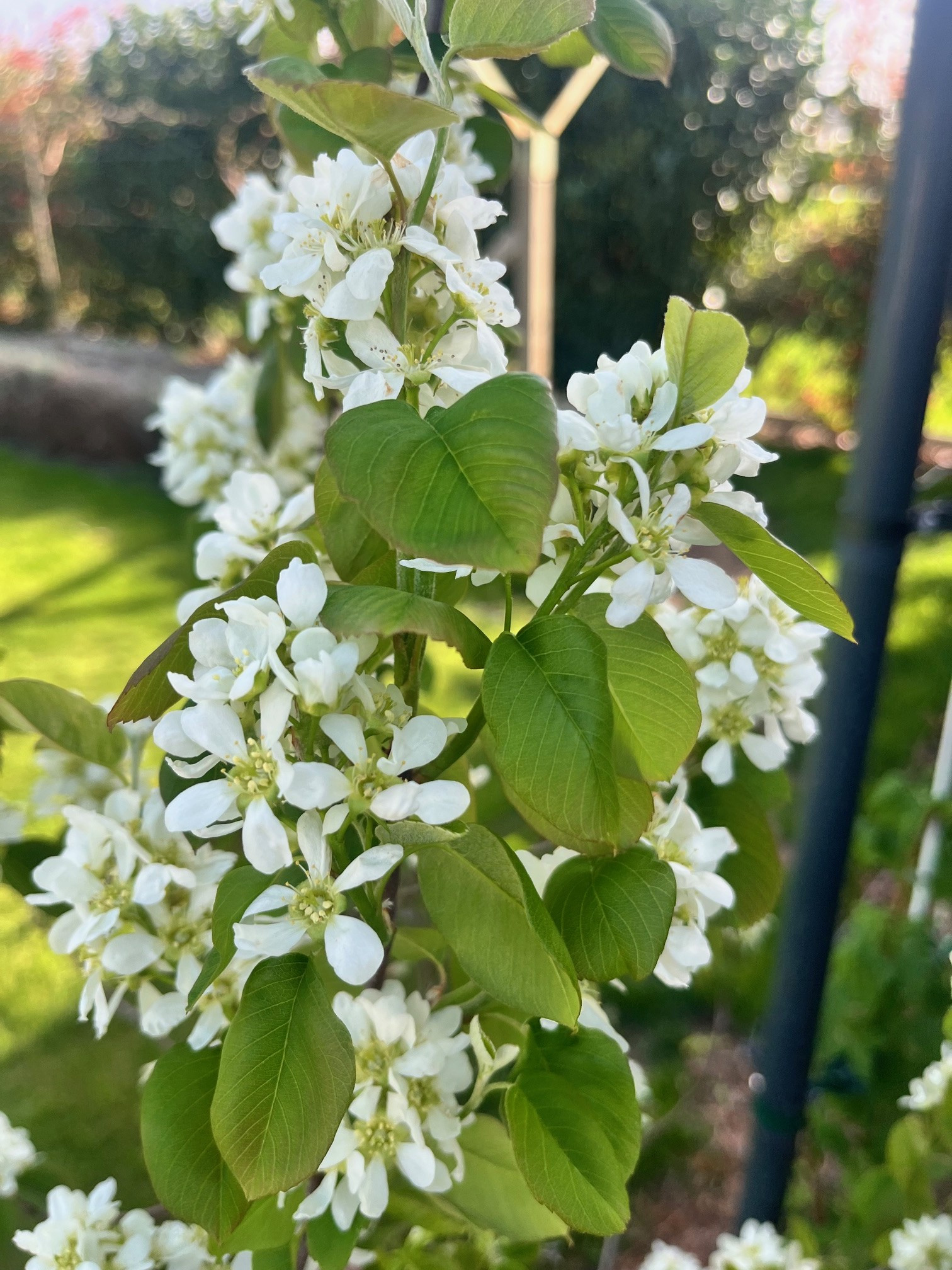
Short description of the species
Interesting
In addition to being a food source, early settlers on the North American prairies used the berries for disinfection and to prevent miscarriage. A tea made from the twigs and leaves has been used to treat diabetes.Usage
Above all as fresh fruit, such as syrup, cakes, jams, spreads, jellies, bakery products, cereals, wines, ciders, beers, snacks and ice cream.Suitable growing locations
It prefers full sun to partial shade and moderate temperatures. It requires regular watering, especially in dry periods, but the soil must be allowed to partially dry out between individual waterings. Otherwise, this shrub has no special demands for water beyond normal rainfall and is relatively resistant to drought. In longer periods of drought that last more than two weeks or more than a week with daily temperatures above 30°C, a stronger watering up to the roots is necessary. Prolonged drought can affect berry production. The plant thrives in moderate humidity and should be protected from extreme temperatures. This plant prefers well-drained loamy soil with a slightly acidic to neutral pH. It can tolerate a range of soil types, but does best in fertile, well-drained soils. Good drainage is essential to prevent root rot.
Growing technology
It flowers in May or June and the flowering period is relatively short, only about one week and even shorter in windy or too hot weather. It takes several years for the bushes to start flowering. The flowers develop on shoots that are two to four years old, and in terms of cutting, there is no need to do anything until then. Prune before the start of bearing should be kept to a minimum, do not remove any shoots, unless it is necessary, so that you do not accidentally remove flowering shoots. A balanced fertilizer with an N-P-K ratio of 10-10-10 is recommended. Fertilize in early spring before new growth begins and again in mid-summer. Avoid over-fertilizing as it can lead to excessive vegetative growth at the expense of fruit production. Pruning is necessary to maintain the shape and health of the plant. Prune in late winter or early spring before new growth begins. Remove any dead, diseased or crossing shoots to improve air circulation and light penetration.
Suitable varieties
Northline, Smoky, Martin, Lamarckii
Diseases and pests
diseases: rust, powdery mildew, rose blight
pests: American spinner, large-headed nun
Labeling Plants with QR Codes
At the Faculty of Horticulture and Landscape Engineering at SPU in Nitra, we've created a project that offers visitors to our plantings a new way to discover the beauty and intriguing aspects of plants. Each plant in our plantings has its own unique QR code. All a visitor needs to do is scan this code with their smartphone.
Encyclopedy
Informácie
Kontakt
Fakulta záhradníctva a krajinného inžinierstva
Tulipánová 7, 949 76 Nitra
phone +421 (37) 641 4229 — study department
email henrieta.budayová@uniag.sk



Copyright © 2026 Faculty of Horticulture and Landscape Engineering