
 Slovenská verzia
- home
- Fruits - general part
- Miscellaneous fruit
- Cornelian cherry (dogwood)
Cornelian cherry (dogwood)
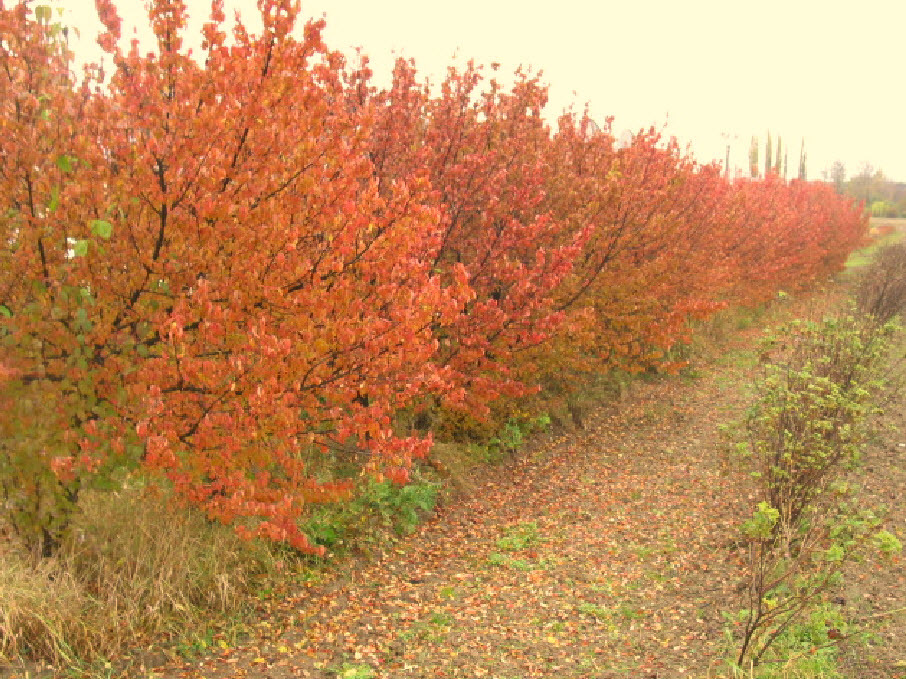
It is a medium-sized to large deciduous shrub or small tree growing to a height of 5–12 m.
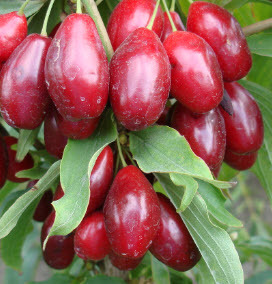
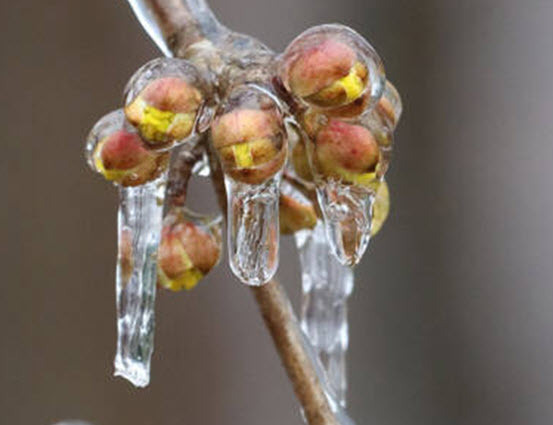
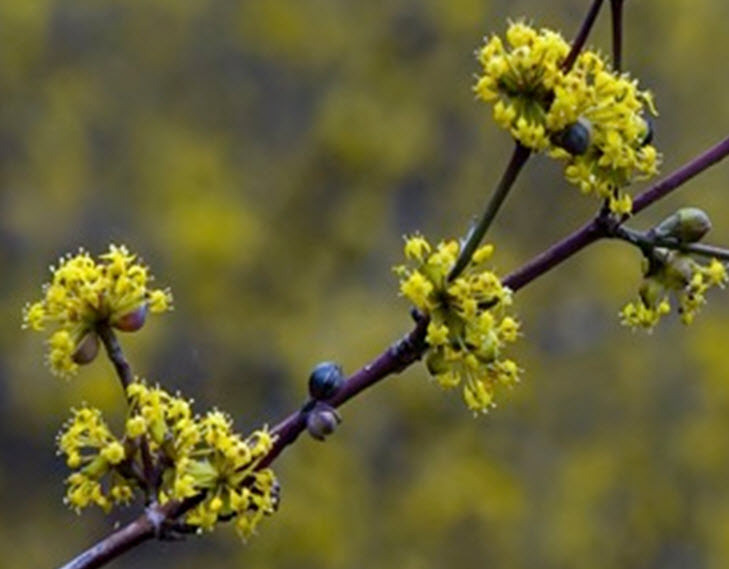
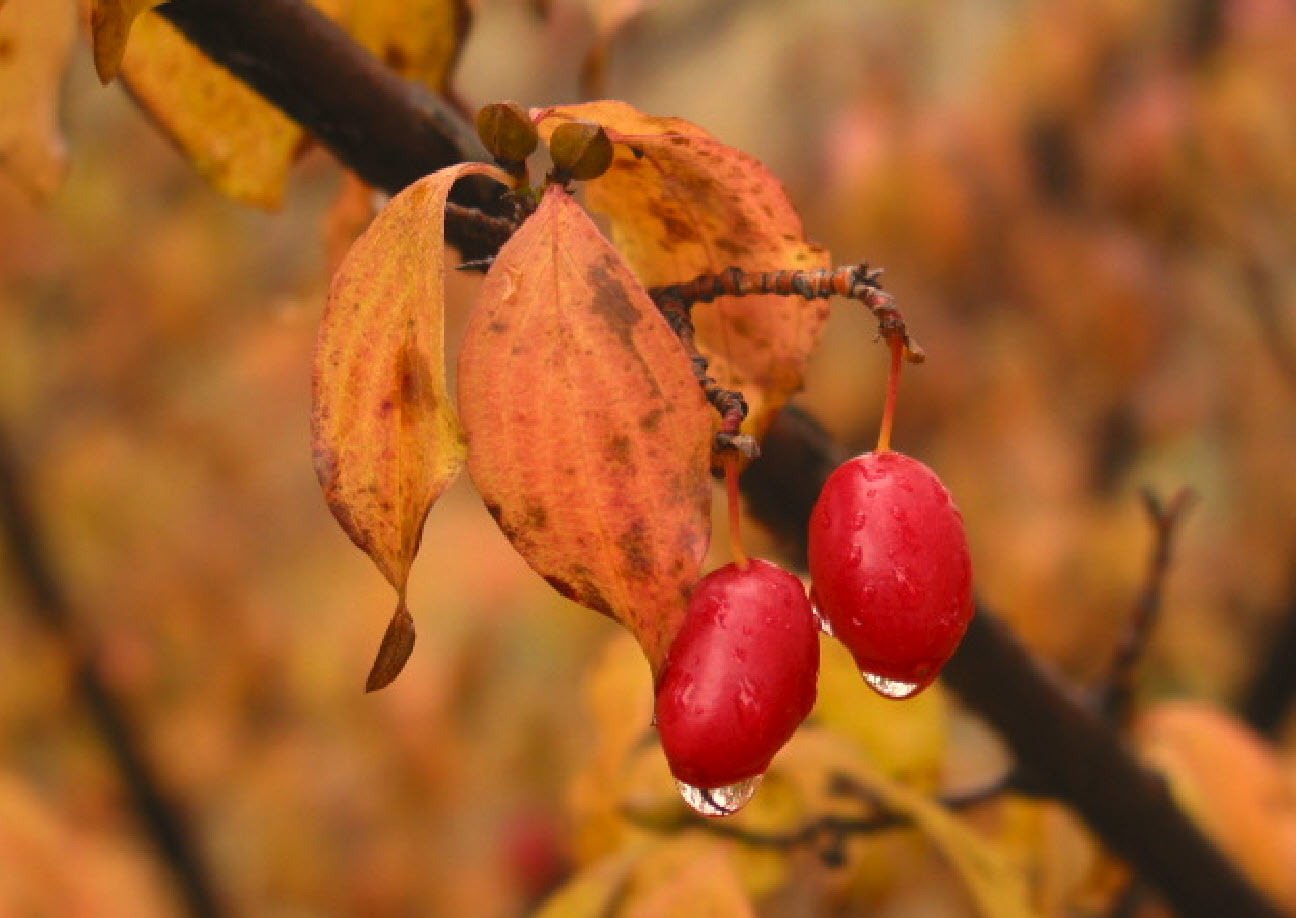

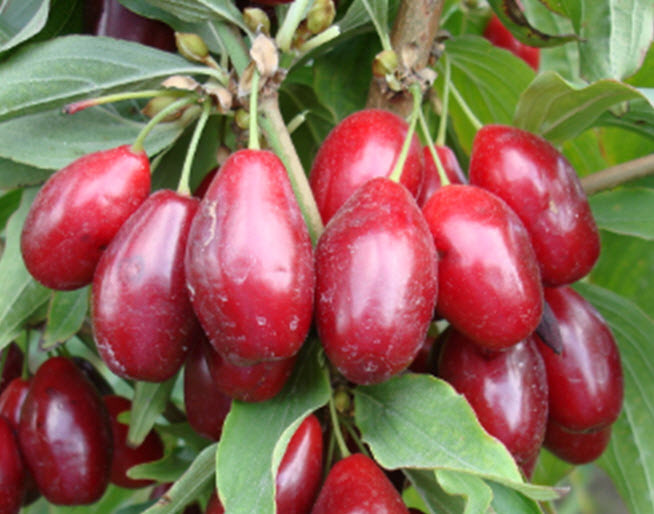
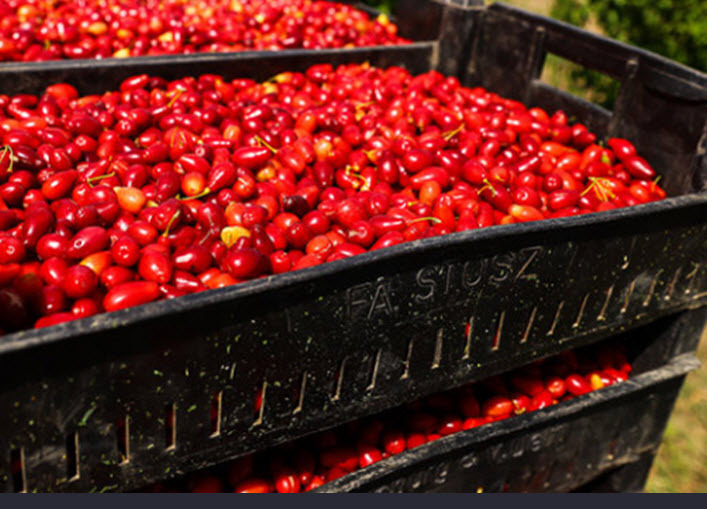
Short description of the species
Interesting
Dogwood wood is extremely dense and, unlike the wood of most other trees, sinks in water. This density makes it valuable for making tool handles, machine parts, etc. It was also used by Greek craftsmen from the seventh century BC to build spears, spears and bows, and was considered by the craftsmen to be far superior to any other wood.Usage
čersfresh, pickling, drying, salting, sour pepper, Chinese medicineSuitable growing locations
The shrub will grow well in almost any well-drained soil in a location that receives at least 4 hours of sunlight per day. Once established, it tolerates drought or occasional flooding well, but will not survive constant soaking in thick soil. This shrub prefers a location that offers full sun to partial shade. It requires a bit more sun than most dogwoods - less than 4 hours a day will result in reduced flowering and fruit production.
Cultivation technology, pruning and training
This shrub tends to produce multiple terminal shoots and you will need to use pruning to control size. If you want a crab-like shape, it is necessary to select one strong shoot that will become the trunk and then systematically cut competing shoots. This species can also be easily cut to maintain as a hedge. It is best to make cuts immediately after spring flowering. Subsequently, it does not require an annual cut if there is enough space. Flowers develop on annual wood. Therefore, if the pruning is strong, there will be no fruits in the year of the cut. However, the plants themselves tolerate pruning well, as well as a stronger cut. With radical pruning, they can even recover and form new shoots. However, less fruit is a frequent cut. The distance between plants in a row should be at least 3-4 m, in the middle row 4-5 m.
Suitable varieties
Flava, Paczoski, Koralowyj Marka, Jolico, Kazanlak, Pancharevo
Diseases and pests
Dogwood is rarely attacked by pests. Individual leaves can be damaged by caterpillars. Brown spots discovered on the leaves are caused by fungi such as Septoria or bacteria such as Pseudomonas syringae, but these rarely threaten the plant. This can be remedied by pruning to improve aeration and removing dead, diseased leaves. However, for land near fields and forests, tallow (wildlife) poses a much greater threat than pathogen attack.
Labeling Plants with QR Codes
At the Faculty of Horticulture and Landscape Engineering at SPU in Nitra, we've created a project that offers visitors to our plantings a new way to discover the beauty and intriguing aspects of plants. Each plant in our plantings has its own unique QR code. All a visitor needs to do is scan this code with their smartphone.
Encyclopedy
Informácie
Kontakt
Fakulta záhradníctva a krajinného inžinierstva
Tulipánová 7, 949 76 Nitra
phone +421 (37) 641 4229 — study department
email henrieta.budayová@uniag.sk



Copyright © 2026 Faculty of Horticulture and Landscape Engineering